Little Cleo’s recovery so fortunate, crime experts say
Source: WA Police
Little Cleo Smith’s dramatic rescue by police 18 days after being abducted by a stranger in remote WA defied the odds, experts agree.
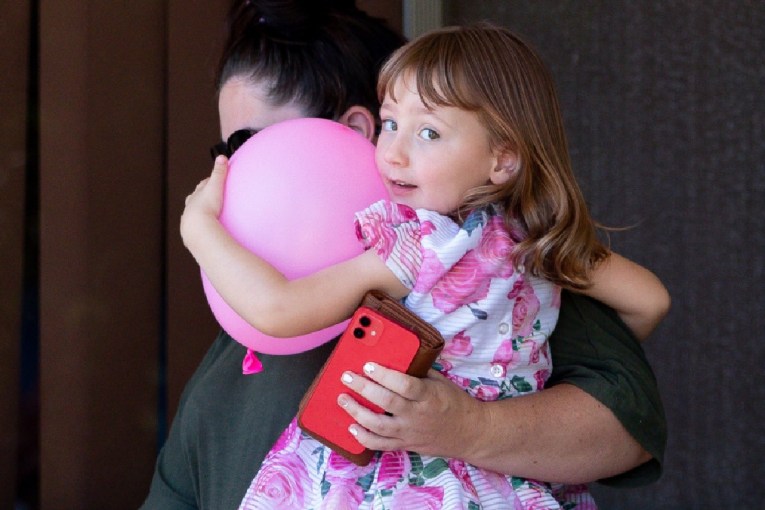
The image of little Cleo Smith, returned to her mother’s arms and clutching a pink balloon, touched the hearts of a nation that had feared the worst.
Her safe recovery 18 days after being snatched in the dead of night from a family tent in remote Western Australia instantly captured national and then international attention.
Cleo’s rescue, which was filmed, and the hunting down of her abductor, Terence Darrell Kelly, now 41, entered folklore as “the greatest story in WA policing history”.
For her mother Ellie Smith and stepfather Jake Gliddon, it no doubt triggered unimaginable relief.
Yet it could so easily have ended badly.
Five years on, experts agree the cherubic four-year-old was lucky to have survived and may still face troubled times ahead.
“I’m amazed she was found alive and safe,” criminal psychologist Tim Watson-Munro says.
“We all hoped for the best but we feared the worst.
“They can disappear in the twinkling of an eye.”
Kelly, who confessed to impulsively snatching Cleo while high on methamphetamine, was sentenced to 13 years and six months behind bars for this crime.
He drove Cleo 75 kilometres south-east to his Carnarvon home. She was held there until police found her alone in a bedroom playing with toys early on November 3, 2021.
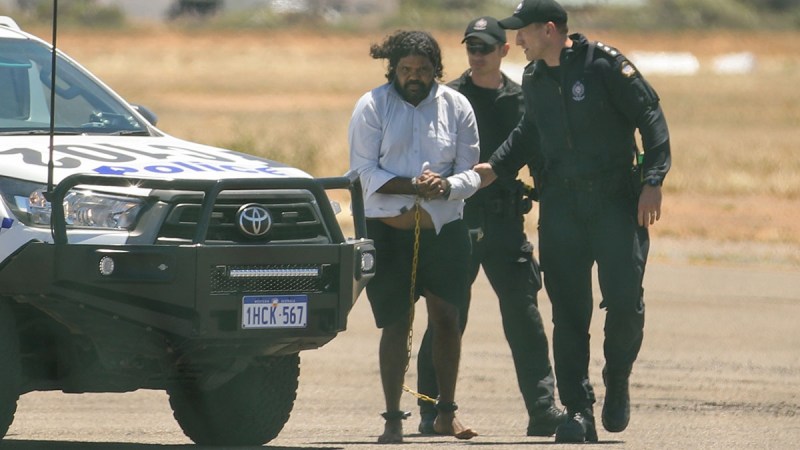
Terence Darrell Kelly pleaded guilty to Cleo’s abduction. Photo: AAP Photo: Getty
Asked gently three times by Detective Cameron Blain to tell him who she was, the little girl finally answered: “My name is Cleo.”
The tender exchange was recorded on the officer’s body-worn camera and eventually went viral.
“It was a very moving moment,” Watson-Munro says.
“The nation was fixated on this case; it was a high-priority press story.
“Everyone was praying for Cleo … hoping she would be all right.”
Kelly was arrested nearby, about the same time Cleo was discovered, after a massive police investigation and intense media interest.
“The longer the period of time between an abduction and the person’s arrest, the less likely it is the child will survive,” Watson-Munro says.
“It’s very fortunate Cleo did survive.”
While most missing children are recovered safely, genuine stranger abductions are rare and have vastly different survival odds, according to the FBI.
More than 75 per cent of those cases that prove fatal involve a rescue window of just three hours. Almost 90 per cent allow no longer than 24 hours.
Kelly had gone to the Blowholes campsite, 960 kilometres north of Perth, to look for items to steal. Instead, he came across the Smith family’s two-room tent, where Cleo and her baby sister were asleep in a separate compartment.
A loner obsessed with dolls, Kelly made the opportunistic decision to take Cleo as her parents slept nearby.
He lifted her up, along with her sleeping bag, and carried her to his car before driving south to his home.
Cleo’s parents awoke hours later to find her missing. They then endured 18 days of not knowing if she was alive or dead.
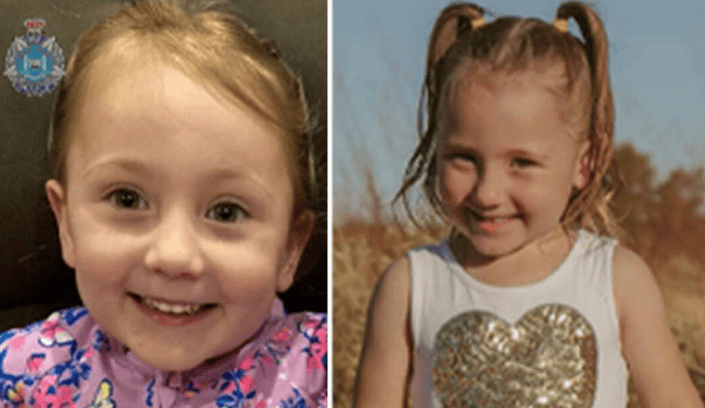
Little Cleo went to sleep with her parents in their family tent, but had vanished when they woke. Photo: WA Police
Now nine years old, Cleo is reportedly thriving and a keen member of her local swimming club and an accomplished young gymnast.
Ellie Smith told Nine’s 60 Minutes in June that Cleo was a happy child who loved her sister Isla and her many friends at school.
Watson-Munro says Cleo’s young age at the time and the fact she was abducted during a happy family camping trip in a remote part of Australia captivated the public.
“Anything to do with abduction and children always raises people’s antennae a bit because they can relate strongly to the situation,” he says.
Criminologist and clinical psychologist Michelle Noon says people identify with Cleo and her family because they were ordinary people enjoying a family activity.
“That’s what can really start to terrify people,” she says.
“We’ve all had those experiences as children and we have those experiences with our own families.
“When people start thinking like that, we see really strong public interest and also really strong public impact.”
Coming during the Covid-19 pandemic, Cleo’s rescue was the “antidote we all needed in terms of a good news day”, Noon says.
“What was refreshing about Cleo’s case is we got some answers and it gave the community something to hold onto at a time when there was lots of uncertainty in the world,” she says.
Cleo was what experts call an “ideal victim” and her family camping trip was a “respectable project” – the two requirements for a case to cross into public consciousness.
“When a crime has those qualities, to use a technical term, people really freak out,” Noon says.
“It draws you in and it makes you hold your kids a little tighter and a little closer.
“In this case, we’re just so lucky she found her way home in her own way, and that despite what happened.”
Noon says while discussing Cleo’s case in the public domain, it is important to be mindful she will eventually be able to access information published about her.
“She’s going to be a young person coming into a world where she’s not famous; her experience is infamous,” she says.
“We call that secondary victimisation and it’s all the stuff that happens because you’ve been a victim of crime that impacts you.”
Kelly, who received a discount for his early guilty plea, was sentenced in April 2023. He will be eligible for parole after serving 11½ years.
A 2024 legal appeal against his sentence failed.
-AAP