Iran ‘bounty’ on Barron Trump, US threatens ‘economic D-day’

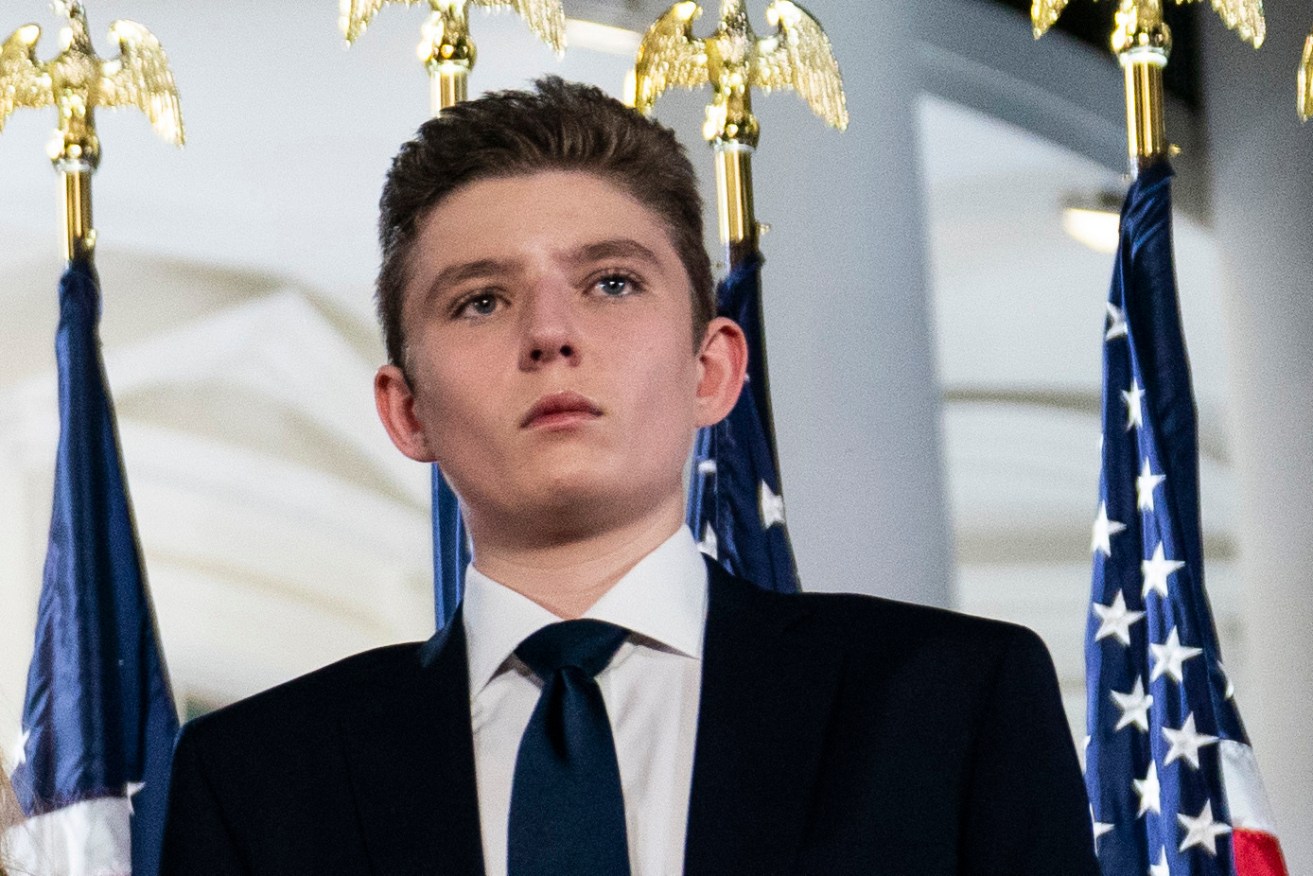
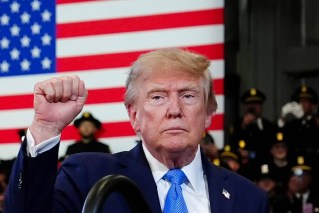
President Donald Trump's son Barron has been targeted in Iran's latest threat. Photo: AAP
Iran has broadcast a chilling video claiming there is a US$10 million bounty on Donald Trump’s son Barron and detailing the 20-year-old’s movements.
The clip released by Iranian state-run Channel 3 was titled ‘Where and how should we kill Barron Trump?’
Euronews reports the footage claims to show the location of Barron’s university campus, his escort vehicles and the positioning of his Secret Service detail.
It also boasts to have gathered such facts as Barron’s communications in voice and text on Xbox.
The details of the video, translated by Euronews, have not been independently verified.
Iran last month released a similar video about Trump’s wife Melania titled ‘Where and how is Melania Trump accessible?’.

The video broadcast by Iran state TV purported to know Barron Trump’s movements. Photo: Supplied
It comes as President Trump has escalated economic threats against Iran.
The Trump administration on Tuesday (AEST) unveiled its “economic D-day”, warning all nations to cut business ties with Iran or they would be cut off by the US.
It was designed to “sever every economic lifeline” sustaining Iran.
As the war with Iran nears its six-month mark, Treasury Secretary Scott Bessent said it was a final warning to countries still supporting Iran.
“We are launching an economic onslaught against Iran’s financial connections around the globe. Our objective is to sever every economic lifeline that sustains this tyrannical regime until Tehran stands alone,” Bessent said at a press conference.
But he declined to identify the countries that would be targeted or when those penalties would take effect.
“Why would I want to blow up the global financial system? We believe that it is important to level set and give people a cure period but they should know that that will move very quickly and that we are serious,” he said.
Bessent previewed a “major announcement” of sanctions on a financial institution by the end of the week.
China has for several years been the biggest buyer of Iranian oil, and the US has intensified its efforts to clamp down on Chinese purchases but has so far stopped short of targeting larger Chinese banks with sanctions.
With Trump and Chinese President Xi Jinping scheduled to meet in Washington DC in late September, new sanctions on Chinese banks could sour prospects for extending a deal struck last November to keep Chinese rare earths flowing and cap US tariffs.
Bessent also announced sanctions on nearly 60 entities, individuals and vessels, and said Treasury was targeting five sectors Iran was using to prop up its economy: digital assets, gold, technology, aviation and shipping.
The US war with Iran, which has pushed energy prices higher worldwide, is about to hit its six-month mark.
While heavy fighting has subsided, diplomatic efforts to end the war have stalled and oil and raw material shipping through the Strait of Hormuz remains largely blocked, keeping energy prices elevated.
The US has maintained sanctions against Iran for decades, most of which have been aimed at curtailing the country’s oil revenues, aviation sector, cryptocurrency, procurement of weapons components and other military hardware, and cutting off funding for business enterprises controlled by the Islamic Revolutionary Guard Corps, a dominant force in the Iranian economy.
The sanctions bar designated entities from the US dollar-based financial system but Iran has been successful in quickly standing up new front companies, other entities and vessel registrations to evade the sanctions.
The United States, United Nations and European Union have applied sanctions, implemented trade embargoes and frozen assets since the late 1970s over Iran’s nuclear program, human rights violations and support for militant groups.
US Treasury Department data shows it has imposed Iran-related sanctions on more than 1000 people, vessels and aircraft since Trump began his second term in 2025.
Iranian authorities issued a new warning to shipping on Monday not to pass through the Strait of Hormuz without its permission, listing 45 ships they said had violated its rules and threatening retaliation for any ship-to-ship transfers with them.
Pakistan’s army chief Asim Munir, who has built a personal rapport with Trump, arrived in Iran on Monday for talks, Iranian media said.
Pakistan said the visit was part of its efforts “to promote regional peace and stability” and a Pakistani source said Munir was expected to meet people close to Iran’s supreme leader.
Two Pakistani sources said Trump had called Munir last week, with another saying the main request was to bring Iran back to negotiations.
-with AAP
Want to see more stories from The New Daily in your Google search results?
- Click here to set The New Daily as a preferred source.
- Tick the box next to "The New Daily". That's it.

Woman dies on pedestrian crossing in horror crash



AFL boss speaks out amid twist in Swans saga