‘Grim news’: Penguin alert as bird flu outbreak worsens
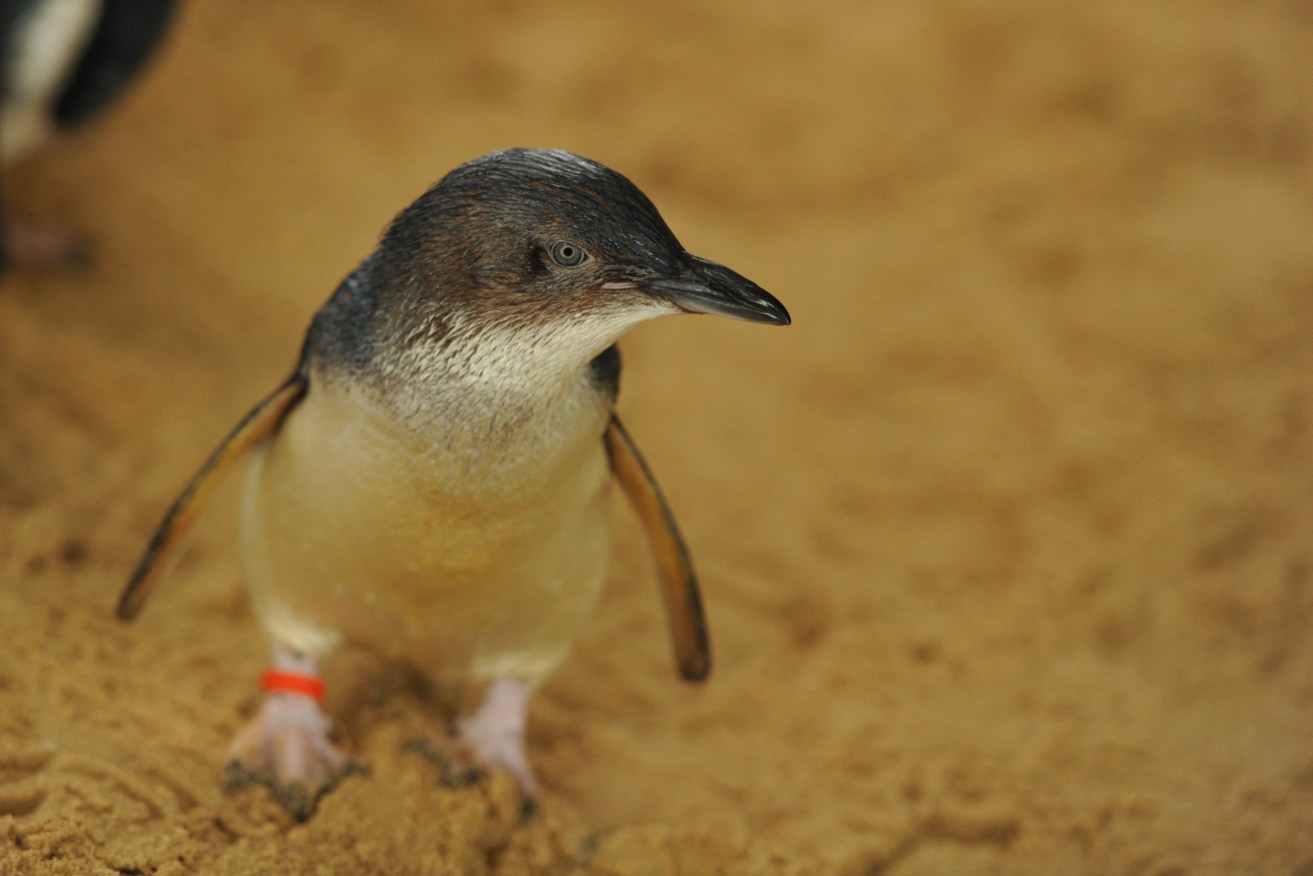
There's grave fears for a major city's little penguin population as a disease spreads. Photo: AAP
Australia is set to face more mass mortality events from bird flu, as fears grow that a popular penguin colony could lose almost half of its population due to the outbreak.
The deadly H5 strain’s national tally is continuing to rise after a large group of dead and sick greater crested terns at Baudin Rocks in South Australia tested positive for the virus.
Another six were confirmed in Victoria, bumping the total number of positive cases in Australia to 78.
Environment Minister Murray Watt said Australia will likely experience the “grim” reality of further mass mortalities.
“It was inevitable that it (the virus) would come here at some point,” he told ABC Radio.
“The fact that it has taken a bit of time means that we are well prepared as a country in terms of preparedness plans put together with different levels of governments and the broader community.
“It can potentially get into mammals as well, so grim news ahead.”
Ecologist Lana Austin, from conservation group Earthcare St Kilda, said bird flu was likely going to arrive at a little penguin colony in Melbourne’s bayside area, which consists of about 1400 of the birds.
“I’m pretty worried because I don’t want to lose one bird,” she told ABC Radio Melbourne on Tuesday.
“But the estimates we’re looking at about between 20 to 40 per cent of the population, which isn’t good.”
Austin said it was unclear how bad the impact of the virus would be on the colony, due to a lack of data for little penguins.
“Little penguins are only found in Australia and New Zealand, we’re really kind of waiting to see,” she said.
Another expert issued a warning about the potential for the disease to impact the poultry industry and its workers.
Associate Professor Lara Herrero, a specialist in infectious diseases and virology, said that while transmission of H5 to humans was rare, poultry industry workers and wildlife carers were the most vulnerable as the outbreak worsened.
She said H5 was spread in much the same way as human flu transmission — through close contact with airborne droplets and the bodily fluids of infected birds.
While no cases of bird flu have yet been detected in the Australian poultry industry, losses worldwide have been estimated at 140 million birds.
Herrero said while H5 transmission to livestock was also very rare, there had been cases in the United States where dairy farmers had become infected because the virus could enter the milk of infected cows.
“It’ll look similar to during COVID, to be honest,” she said.
“You want your N95 masks, you want gloves, you want to avoid any contact with infected airborne droplets, any fluid or anything that can be transmitted into your respiratory system.”
However, she said those symptoms could be more severe.
There was also a higher correlation of conjunctive and gastrointestinal symptoms.
Herrero also sounded a warning for people to strictly control their dogs on beaches to prevent them from investigating or attacking sick birds.
“If you have a dog that has been in close contact with a sick bird, I would quarantine your dog,” she said.
People are advised not to approach or touch any sick birds they find, and to report suspected cases to the Emergency Animal Disease Hotline on 1800 675 888, recording the date, time and location.
Want to see more stories from The New Daily in your Google search results?
- Click here to set The New Daily as a preferred source.
- Tick the box next to "The New Daily". That's it.
Gagging and blacklisting: What's going on in the NT



How Pauline Hanson might have finally gone too far