DNA twist: Grisham fan cracks life-and-death case
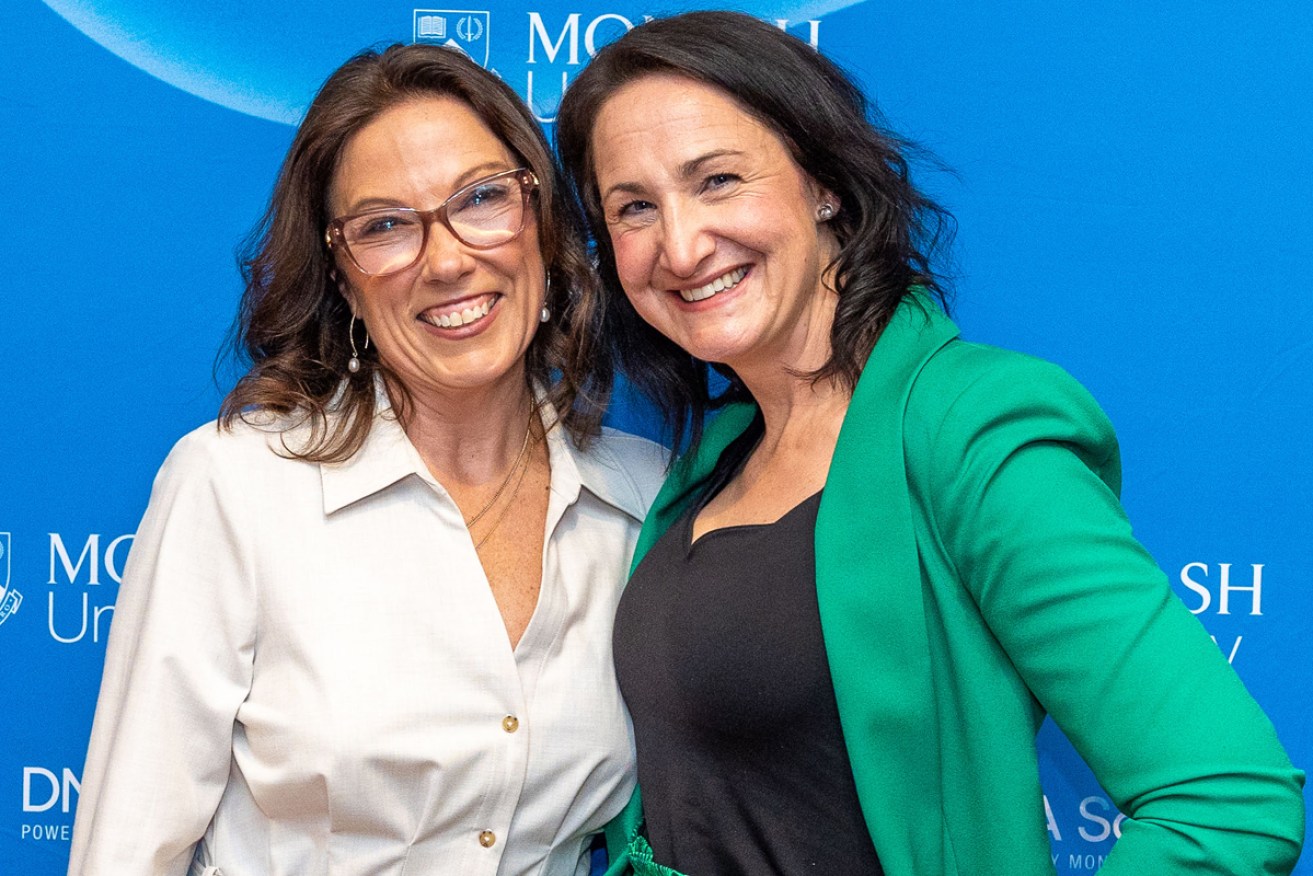
Jane Tiller (right) with Vicki Durston. Photo: AAP
A childhood obsession with John Grisham thrillers and an ingrained sense of justice were powerful forces for aspiring lawyer Jane Tiller.
She knew she wanted to change the world but not quite how.
“I’d pretend Grisham books were absolute fact about everything law-related,” she said.
“I was quite argumentative as a kid.
“My family used to laugh at me and say, ‘Save it for the courtroom, Jane, you can argue like this when you’re a lawyer’.”
The 12-year-old did eventually graduate to the world of corporate law but it was her pivot into public health that has changed both laws and lives.
Her decade-long crusade led to legislation passed in April that has opened the way for genetic testing to become a viable – and life-saving – tool for people with preventable and treatable diseases.
As a result, Tiller has been shortlisted in the Emerging Leader category for the 2026 Australian Museum Eureka Prizes for science.
The Toowoomba-raised public health researcher initially embarked on a legal career after studying science and law in Melbourne.
“I loved science, loved genetics, I just didn’t want to work in a lab,” she said.
“But I loved the concept and the opportunities around genomics and what it meant for public health.”
Her pursuit of corporate law, though, led to tough questions about her values.
“I went into a top tier law firm and people went, ‘That doesn’t sound like what we thought you would do … this whole sense of justice, you wanted to fight for people and you’ve just become this corporate lawyer’,” Tiller said.
“I was a good lawyer, I really enjoyed it, but I missed science, and the thing I loved most about trials was … dealing with scientific reports and witnesses.”
So she stepped away from law and returned to study, gaining a master’s degree in genetics that she hoped would somehow mean a career change.
She met now-colleague Paul Lacaze, who started the public health genomics program at Monash University. In 2016, they began tackling a crucial hurdle deterring people from using genetic testing.
In Australia, life insurers were legally allowed to use applicants’ genetic test results to decline cover or increase premiums, even in the absence of disease.
“There was this giant mountain in the way of my real goal, which was moving preventive health into using genomics to prevent disease,” Tiller said.
The question she asked herself was: “What’s the thing I can do with my skills to move us closer to that?”
It kickstarted a decade of strategic research and advocacy to end genetic discrimination through policy change.
The eventual legal victory was worthy of a Grisham protagonist, with federal parliament banning life insurers from using genetic test results to deny or restrict cover.
Breast Cancer Network Australia’s director of policy Vicki Durston said she remembered Tiller “relentlessly trawling the halls of Parliament House, advocating to get this up”.
“I learned so much from her; how to build those connections and relationships, and sticking with a goal and an outcome you’re trying to achieve, no matter how long it takes,” she said.
“She’s gone up against this huge industry that has a lot of power and she’s been able to influence a huge outcome in this legislative change that really is going to provide protections, especially for young women.”
Durston said the new law safeguarded the notion of prevention and “and being empowered to manage your risk accordingly without being penalised financially”.
The Australian Medical Association asserts the “landmark” law, effective from October 8, will strengthen public confidence in genetic testing and modernise Australia’s healthcare system.
Yet Tiller is quick to hose down the belief the issue is resolved.
“People say to me, ‘Oh, the law changed, you’re going to retire’. In no way am I done,” she said.
“The point of this is, genomics has an opportunity to transform preventive health and we can find people who are at high risk and we can save lives.”
Monash University’s DNA Screen, co-led by Tiller, offered free genomic screening to 10,000 Australians, testing for 10 genes linked to hereditary breast and ovarian cancer, Lynch syndrome and familial hypercholesterolemia.
The pilot found one in 50 young people carry a high-risk genetic variant for the above conditions.
“The potential to save lives, to save the system money, is mind-blowing,” Tiller said.
“It used to be thousands of dollars just to test for a [breast cancer] gene variant, now we can test for a number of different things in the hundreds of dollars.”
“So let’s build a program that is all about giving people results for preventive health – only things that are very high risk, only things we can prevent that will make really dramatic differences and save lives.”
DNA Screen wants to develop and evaluate healthcare models to prepare for the use of preventive genomics on a national scale.
“If you find tens of thousands of people at very high risk of cancers and heart disease, you need the preventive healthcare system to look after them,” Tiller said.
“More colonoscopy spots, more MRI spots … you need to shift some of your healthcare into prevention.”
But with one giant mountain scaled, a new Everest presents itself.
“Prevention is invisible and not funding prevention is very hard to paint as an urgent fire to be put out,” Tiller said.
“The best, most dramatic story is the people in our program who don’t get cancer, get up, make their kids lunch, drive them to school and go to work.
“That is the story of prevention but ‘Jill went to work and didn’t die of cancer today’ isn’t really a front-page story.”
This year’s federal budget didn’t fund DNA Screen’s $50 million proposal to scale up research to 100,000 people. It did commit future funding for the Precision Health Research Program.
The Australian Museum Eureka Prizes for science will be announced on September 3.
-AAP




‘Super pest’ detected in Sydney warehouse