Dogs really can tell when you’re happy, sad or even scared

Source: Laura V Cuaya
Does your dog match your happy mood with a waggy tail or try to comfort you when you’re feeling blue and under the weather?
A new study adds weight to the belief of many dog owners that their pooch can read their own human emotions – even going so far as to suggest they can tell the difference between fear and sadness.
Researchers from the University of Vienna in Austria studied the brain scans of 12 pet dogs as the animals viewed images of different human expressions.
“Humans are really good at picking up small details on the face, and so are dogs,” study author Raúl Hernández-Pérez said.
“This makes dogs very interesting. By studying their brains, we can understand what adaptations have developed to support their remarkable social and emotional understanding of humans.”
For the first part of the study, published this week in the journal iScience, dogs were shown images of strangers with either happy or neutral expressions.
The scans showed that the happy faces lit up regions of the brain associated with higher cognitive and reward processing (the temporal cortex and caudate nucleus).
“The activity in the caudate nucleus is particularly interesting,” said researcher Laura Cuaya. “It suggests that happy human faces may have emotional significance for dogs.”
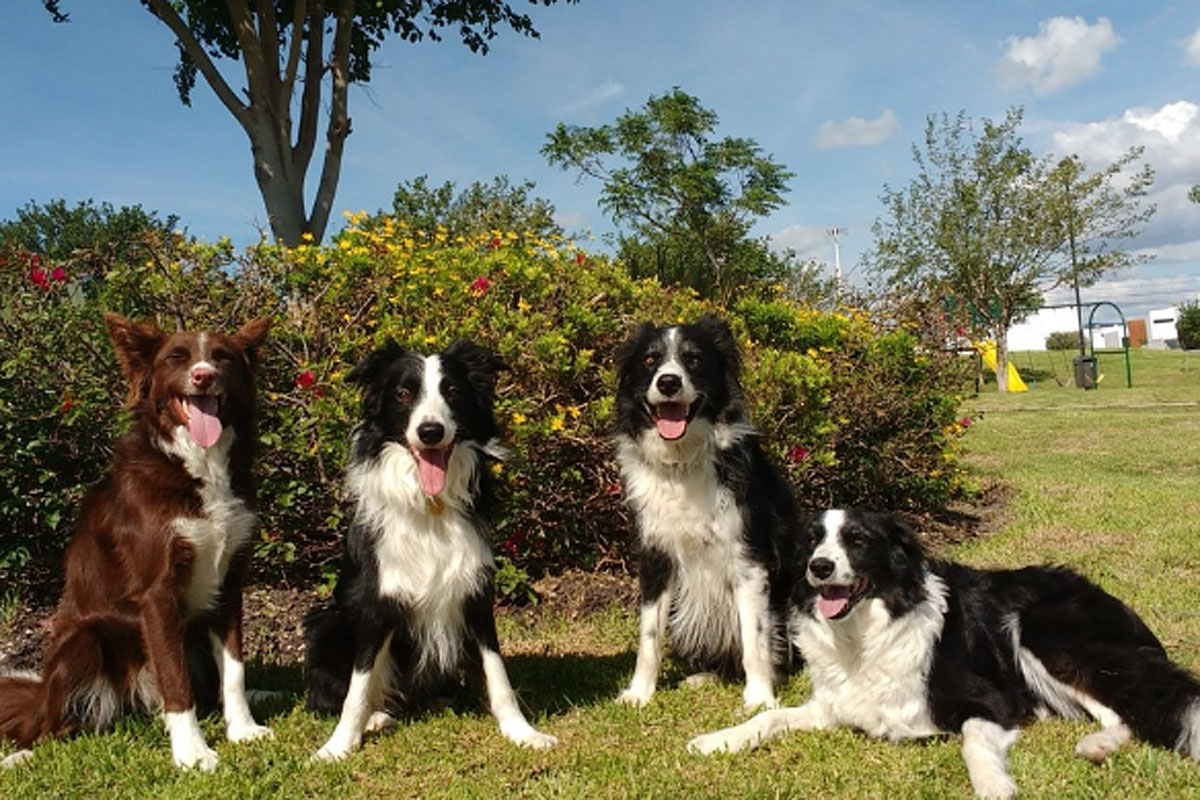
The study participants were all pets from loving families. Photo: Laura V Cuaya
Further analysis showed that the dogs did not react the same way to photos of people with expressions of anger, fear and sadness.
However, the researchers said a whole-brain analysis revealed distinct patterns of activity that separated fear from anger and sadness, “providing the first evidence that dogs can distinguish between specific negative facial expressions”.
Cuaya said domestication had helped dogs to develop social abilities needed to understand and cooperate with humans.
The researchers noted that dogs also pick up cues by watching body language, listening to people’s voices and processing scents – something that has been explored in previous studies.
British research released in 2024 suggested that the smell of human stress can affect dogs’ emotions and behaviour, while another study looking at scans found that “emotionally charged” sounds – such as a cry, angry shout or laugh – activated a region of the brain that helps process emotions.
Scientists have even found that long-held mutual gazes between dogs and their owners can significantly increase oxytocin levels in both.
Like the researchers in Austria, neuroscientist Laura Elin Pigott says dogs’ evolutionary journey has enabled them to excel at picking up what humans are projecting and respond accordingly.
“In dogs, thousands of years living as our companions have fine-tuned brain pathways for reading human social signals,” she wrote last year in The Conversation.
“While your dog’s brain may be smaller than a wolf’s (their wild ancestor), it may be uniquely optimised to love and understand humans.”
The researchers at the University of Vienna plan to adopt what they call “a more dog-centric perspective” to see how the animals integrate the brain signals triggered by different expressions to make sense of the humans around them.
They will also compare how human and dog brains process the same emotional signals.
“I would like people to see dogs as emotional beings,” Cuaya said.
“They have evolved with us to understand our expressions and cooperate with us, and recognising that can change how we communicate with and care for them.”
Want to see more stories from The New Daily in your Google search results?
- Click here to set The New Daily as a preferred source.
- Tick the box next to "The New Daily". That's it.