Europe hit by heatwave and hailstorms as experts warn Greenland ice could melt
Soaring temperatures have broken records in Germany, France and the Netherlands, as a heatwave gripped Europe for the second time in a month, while experts warned the heat could move north towards Greenland causing record ice melts.
On Friday (AEST), temperatures reached as high as 43.6 degrees near Paris as fires devastated some 6500 hectares of forests, farm fields and other land.
Belgium, where temperatures topped 41 degrees in some areas, suffered the first death recorded this year as a direct result of the record-breaking heat when a woman was found dead near her caravan close to the beach.
In Europe, a historic heat wave is crushing all-time national temperature records with astonishing ease, It may also hasten Arctic melt as it builds north to Scandinavia.
The 66-year-old woman was found by a neighbour late Thursday afternoon (local time) after she had apparently been basking in the blazing sun.
An all-time record temperature was measured in Germany for the second day running, with 42.6 degrees measured in the north-western town of Lingen.
Temperatures remained above 30 degrees across swathes of Germany on Friday.
The UN’s weather agency is warning that record-breaking temperatures will become more frequent in the near future due to climate change.
World Meteorological Organisation spokesperson Clare Nullis described temperatures in Europe during the past week’s heatwave as “absolutely incredible.”
“What’s significant is that normally when you get a temperature record broken it’s by a fraction of a degree,” she said.
“What we saw yesterday was records being broken by two, three, four degrees.”
Hailstorms cause flight delays, halt Tour de France
But the heat was closely followed by hailstorms, forcing an extraordinary halt to the Tour de France.
The riders had pushed through a sweltering 40 degrees – riding with ice vests and drinking double the usual amount of liquids – before organisers stopped the world’s premier cycling event for the safety of riders when the sudden storm made the route through the Alps too dangerous.
TV coverage showed a snowplough desperately trying to clear the road the racers were heading toward, which was awash with streams of water and ice.
The dramatic weather conditions eventually forced organisers to stop Stage 19 of the race altogether.
In Britain, flights were delayed by storms that followed the hottest day on record for some towns and cities across the UK and Europe.
The UK’s air traffic controller said the “weather is continuing to cause significant unrelated disruption across the country and more widely across Europe, which has further complicated today’s operation”.
High temperatures could melt Greenland ice sheet
The UN’s weather agency voiced concern that the hot air which produced the extreme heatwave is headed towards Greenland, where it could contribute to increased melting of ice.
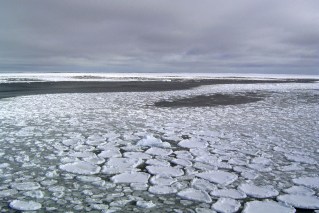
Ice has been melting at high levels over the last few weeks in Greenland, which is home to the world’s second-largest ice sheet.
“According to forecasts, and this is of concern, the atmospheric flow is now going to transport that heat towards Greenland,” Ms Nullis said during a UN briefing in Geneva.
“This will result in high temperatures and consequently enhanced melting of the Greenland ice sheet. We don’t know yet whether it will beat the 2012 level, but it’s close.”
Ms Nullis cited data from Denmark’s Polar Portal, which measures the daily gains and losses in surface mass of the Greenland ice sheet.
“In July alone, it lost 160 billion tonnes of ice through surface melting,” she said.
“That’s roughly the equivalent of 64 million Olympic-sized swimming pools. Just in July. Just surface melt — it’s not including ocean melt as well.”
The Greenland Ice Sheet covers 80 per cent of the island and has developed over many thousands of years, with layers of snow compressed into ice.
The dome of ice rises to a height of 3000 metres and the total volume of the ice sheet is approximately 2,900,000 cubic kilometres, which would raise global sea levels by 7 metres if it melted entirely, according to the Polar Portal website.

‘Super pest’ detected in Sydney warehouse