From pay to taxes, big changes are coming for Australians from July 1
Source: AAP
July 1 ushers in a new financial year – and a raft of changes that will affect both workers and businesses.
From changes in superannuation payments and parental leave to an above-inflation increase in the minimum wage, here’s what you need to know.
Modest tax cuts are coming
From July 1, the current lowest income tax rate, which applies to income from $18,201 to $45,000, will be reduced from 16 per cent to 15 per cent.
So a person earning $45,000 or more will save $268 a year.
New ‘instant’ $1000 tax deduction
If you’re someone who hates keeping track of receipts, there’s good news.
While the proposal still has to pass parliament, the federal government will introduce an “instant” $1000 work-related tax deduction to start this financial year. That’s higher than the little-known $300 limit on receipt-free work deductions available already.
It’s forecast to leave about 6.2 million Australians better off than now.
But be warned: If you’re among the majority of Australians who claim more than $1000 in work expenses, you’ll be better off still collecting those receipts and claiming the way you have before.
National minimum wage increase
Around 2.8 million of Australia’s lowest-paid workers will get a 4.75 per cent pay rise from July 1. The very lowest-paid workers – about 100,000 people on entry-level and minimum pay – get a bigger 5.97 per cent pay bump.
The national minimum wage will rise from $24.95 an hour to $26.44, or up from $948 a week to $1004.90 per week.
Yet even after the new rises, Australia’s lowest-paid employees will still have less buying power at the shops than they did five years ago.
Payday super
From July 1, all Australian businesses need to pay their employees’ superannuation on the same day as they pay salaries. It’s expected to leave ordinary workers thousands of dollars better off in the long term, while guarding against a persistent problem of super being underpaid.
If you’re an employer worried about meeting the July 1 deadline, you can find more resources here.
Parental leave pay changes
The length of paid parental leave is increasing slightly, by 10 days, to a total of 26 weeks from July 1, and the payment will increase to $1004.70 per week.
The government says this will provide families with more financial support and parents will still need to meet an income test and work test.
There’s more information for employers on how the scheme works here.
Instant asset write-off extended
For small businesses, an instant writeoff for assets costing less than $20,000 will be extended permanently from July 1. This applies to small businesses with annual turnover of less than $10 million.
SMS register to fight scams
For years, scammers have used a simple trick to lure people into clicking links they shouldn’t.
You get a message from “AusGov” and assume it’s from the Australian government. In fact, that’s a fake “sender ID” – the identity of who’s sending a text – close enough to the real “myGov” that it has fooled people.
From July 1, those scam text messages should show up on your phone under a single, “unverified” message thread.
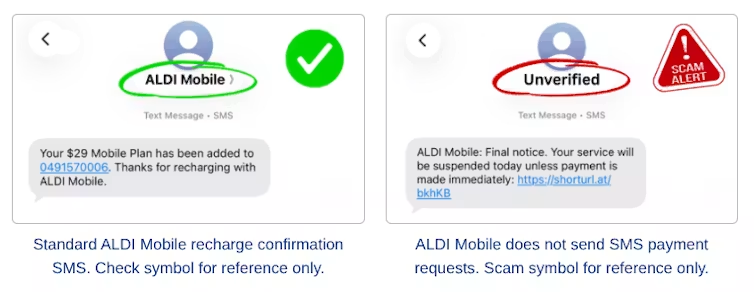
A message sent by mobile phone provider Aldi Mobile to customers. Photo: Aldi Mobile
While it’s a welcome move, it is expected to catch some businesses and community groups off-guard. If they haven’t registered their legitimate sender ID by July 1, their messages risk ending up in that “unverified” scam thread too.
Supermarket price-gouging law
From July 1, it will be harder for our two largest supermarkets – Coles and Woolworths – to charge “excessive prices”.
A new law has been brought in to increase scrutiny on their pricing practices, following similar rules in the European Union.
Penalties will apply for any breach, although “excessive pricing” may be difficult to prove.
Anti-money laundering rules widened
Updated laws covering anti-money laundering and counterterrorism financing (known as “AML/CTF”) will apply to more businesses from July 1.
The rules will now apply to real estate professionals, lawyers, accountants and conveyancers and some other businesses. These services will need to register with the regulator, AUSTRAC, and meet certain requirements, such as checking the identity of customers and reporting certain transactions.
What’s not changing from July 1
- Changes proposed in the May federal budget to negative gearing and the 50 per cent capital gains tax discount are not yet law. They are currently being debated in parliament and are due to begin on July 1 2027.
- A new minimum tax on discretionary trusts, also flagged in the budget, is not due to start until July 1, 2028. These types of trusts are typically used for income splitting, so a high income earner pays a lower rate of tax.
- The Working Australians Tax Offset announced in the May budget provides an additional tax offset of $250 each year. But this only starts from July 2027.
For more changes from July 1 – including on business and company fees – check the federal government’s Business website
 This article is republished from The Conversation under a Creative Commons licence. Read the original article
Want to see more stories from The New Daily in your Google search results?
- Click here to set The New Daily as a preferred source.
- Tick the box next to "The New Daily". That's it.
RBA rate hike to hit 15-year high
Labor reveals $6b budget boost as rate hike looms