Why gen Z is bringing back the lost art of mending clothes

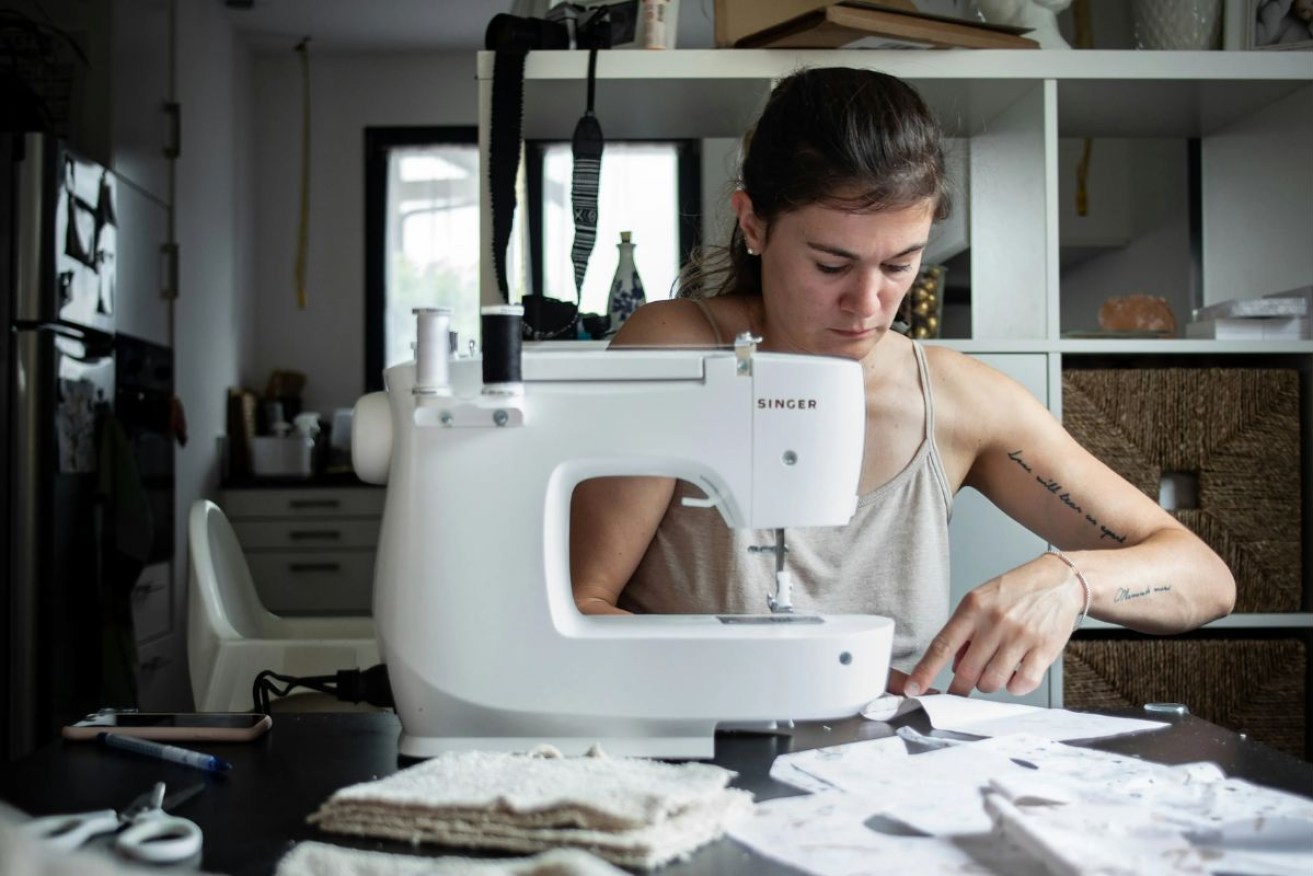
Young people are learning to get crafty with their fashion. Photo: Unsplash
When was the last time you mended a hem, sewed on a button or darned a sock? Would you even know how?
Once an everyday household skill, mending has become something of a lost art in the age of fast fashion, when replacing a cheap T-shirt or pair of jeans can seem easier than repairing them.
Now, after decades of promoting a buy-and-replace culture, some of the world’s biggest fashion brands are encouraging gen Z to pick up a needle and thread.
Levi’s, Uniqlo, Zara and other major retailers are investing in repairs, alterations and even sewing lessons as they attempt to win over younger shoppers interested in saving money, buying second-hand and reducing clothing waste.
Through its Wear Longer project, Levi’s is teaching teenagers hand-stitching and mending skills through free digital lessons, as well as workshops in selected schools and communities.
The program builds on repair and customisation services already offered at hundreds of Levi’s stores worldwide.
Uniqlo offers repairs, embroidery, creative restyling and traditional Japanese sashiko mending at selected stores, while Zara has launched a program in overseas markets allowing customers to repair damaged garments, resell unwanted clothes or donate them.
The push comes as younger shoppers increasingly embrace second-hand fashion, with gen Z and millennials expected to drive more than 70 per cent of market growth through 2030, according to research from GlobalData and resale platform ThredUp.
For retailers, repair services offer a way to tap into that shift while keeping customers connected to their brands.
“It puts a halo on the brand,” GlobalData retail analyst Neil Saunders said.
But behind the return to mending is a bigger question for the fashion industry: Can brands convince customers they’re serious about making clothes last longer while continuing to sell them more?
The problem with throwaway fashion
There’s also a lot of clothing in need of a second life.
Global clothing production roughly doubled between 2000 and 2015, according to the Ellen MacArthur Foundation, while the average number of times each garment was worn fell by about 36 per cent.
Less than 1 per cent of discarded clothing material is recycled into new garments.
Meanwhile, the world generates textile waste at a rate equivalent to a garbage truck load being dumped or burned every second, according to the United Nations Environment Program.
In Australia, consumers bought more than 1.5 billion new items of clothing in 2024 – about 55 pieces for every person – according to national clothing stewardship scheme Seamless.
That same year, about 220,000 tonnes of clothing – equivalent to 880 million garments – ended up in Australian landfill.
Repairing clothes can help. Extending the life of a garment can reduce its environmental impact, particularly when it means buying something new can be put off or avoided altogether.
But there’s a catch.
Can fashion mend its ways?
Critics question how much difference repair programs can make while the fashion industry continues to produce enormous volumes of new clothing.
Kate Fletcher, professor of sustainability, design and fashion systems at Manchester Metropolitan University, said overproduction remained the industry’s biggest problem.
“The fashion sector’s primary source of impact is due to the overproduction of pieces and growing volumes of garments created,” Fletcher said.
H&M has acknowledged another challenge the fashion industry faces in relation to sustainability, pointing out while repair and resale are desirable goals, it’s cheaper to manufacture new items.
Saunders said repairing clothes was labour intensive and needed to be cheap enough to convince consumers it was worth fixing something old rather than simply buying new.
And younger shoppers aren’t necessarily giving up fast fashion.
“I think younger shoppers still shop fast fashion because even though it goes against some of their principles, it is one of the most accessible parts of the market,” he said.
“But what they’re doing as well, though, is they’re buying into alternative channels like resale. And they’re having things repaired.”