Mapping reveals vast true size of Nullarbor’s hidden caves
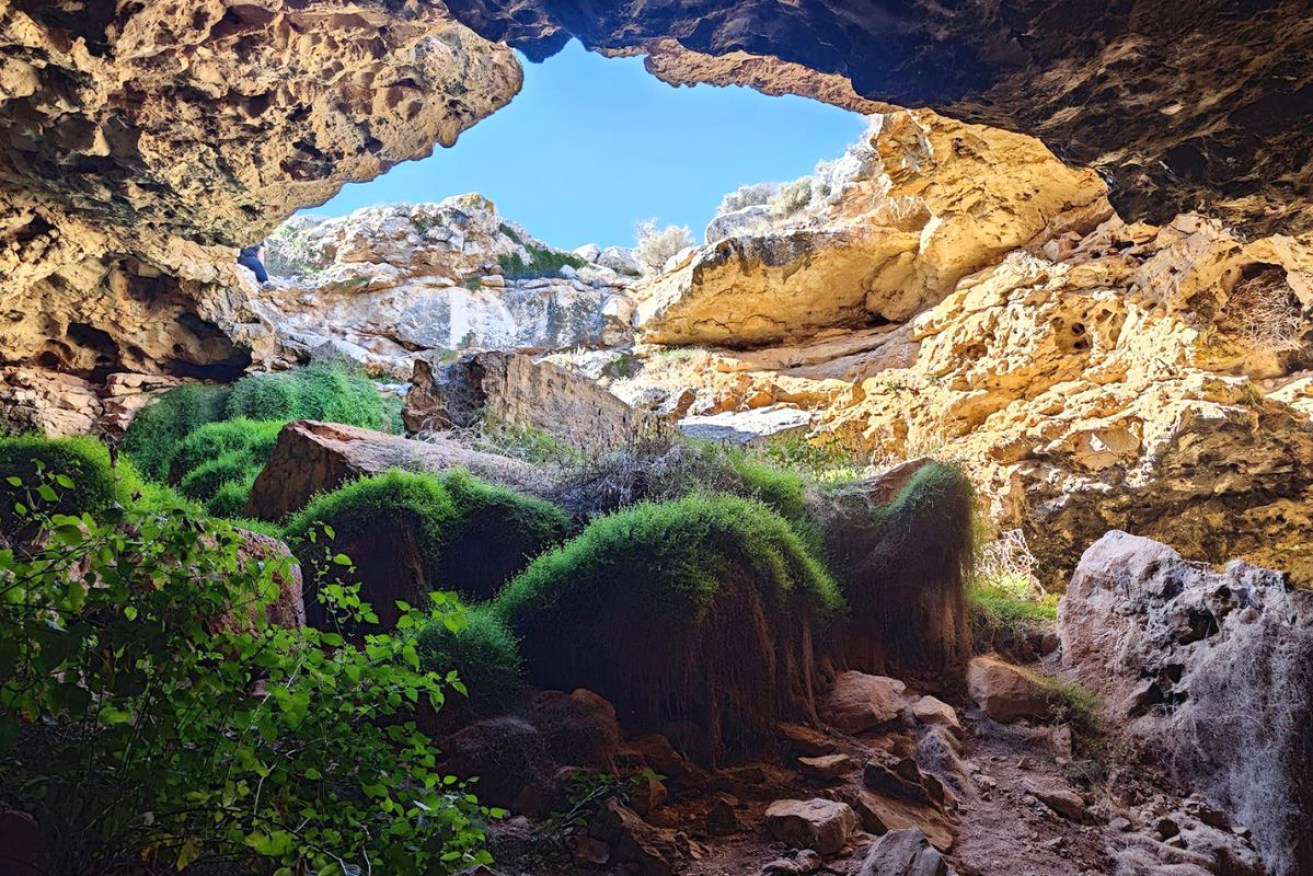
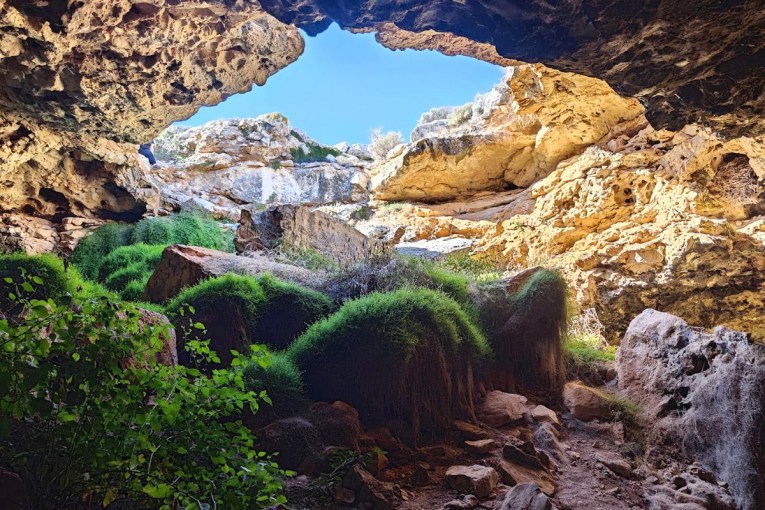
Geoscientists have discovered hidden cave systems along the Nullarbor, some just metres underground. Photo: Matej Lipar
Crossing the Nullarbor Plain, it is easy to feel overwhelmed by its vast emptiness and isolation.
At its most remote sections in the almost 500-kilometre stretch between Eucla and Ceduna, saltbush and roadkill might be appear to be the only things that road trains and four-wheel-drives towing caravans pass.
However, there are ancient worlds hidden beneath its limestone flats, with cave systems that spread kilometres underground.
A study has revealed the systems are much larger than previously thought, thanks to a new mapping technique.
Matej Lipar, adjunct research fellow at Western Australia’s Curtin University’s School of Earth and Planetary Sciences, said the study found trenches were being formed when caves gradually collapsed, eventually breaching the surface.
The new technique allowed Lipar’s team to detect cave systems buried beneath the surface.
“What we discovered, was a footprint of an old cave,” he said.
“What it means is that when trenches ended, you can assume that there’s actually a cave, just if you keep on following that line.
“In geological scale, it’s all going very slow but it is still ongoing.”
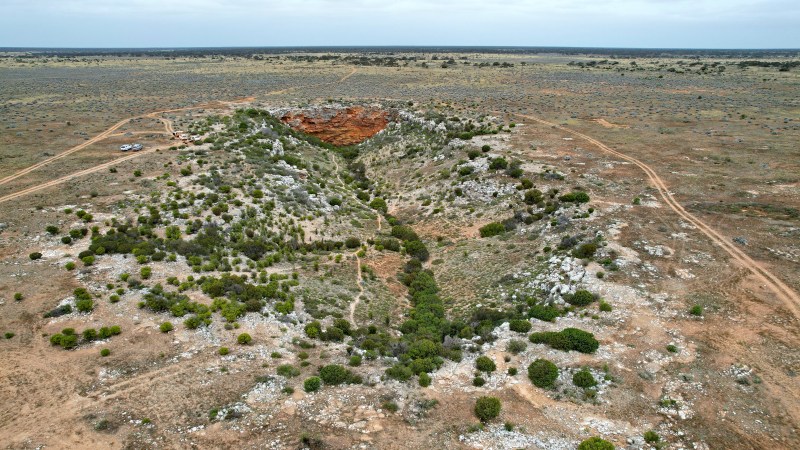
Scientists have mapped hidden cave systems along the Nullarbor at the head of the Bight in South Australia. Photo: AAP
Lipar said motorists were driving above the trenches – often only five metres below the surface – when they crossed the Nullarbor.
“The deepest one is nine metres. You don’t really feel that, that’s why it’s been overlooked for a while,” he said.
“Something that hasn’t collapsed yet is more dangerous. It’s what you don’t see.”
Lipar, who is based in Slovenia, has studied the Nullarbor for 15 years. He said the region provided some of the most protected ecological sites on the planet.
“The Nullarbor hasn’t gone through other Earth processes or some other forms. It was nicely uplifted, slightly tilted, but you’ve got it on a plate,” he said.
Some of the trenches are a few kilometres long, while the longers are more than 20 kilometres. They are generally about 100-500 metres wide but, at least than nine metres deep, are hard to see on the huge expanse of the Nullarbor Plain.
“Because the landscape is so vast, it appears to be a flat, endless plain. But when we created exaggerated digital models of the terrain, the trenches became much easier to see and identify,” Lipar said.
“Unlike typical valleys, the trenches don’t have connected streams or other signs that water once flowed through them. Instead, geophysical surveys found deep underground cavities, while several trenches lined up with known caves and areas where the ground has collapsed.”
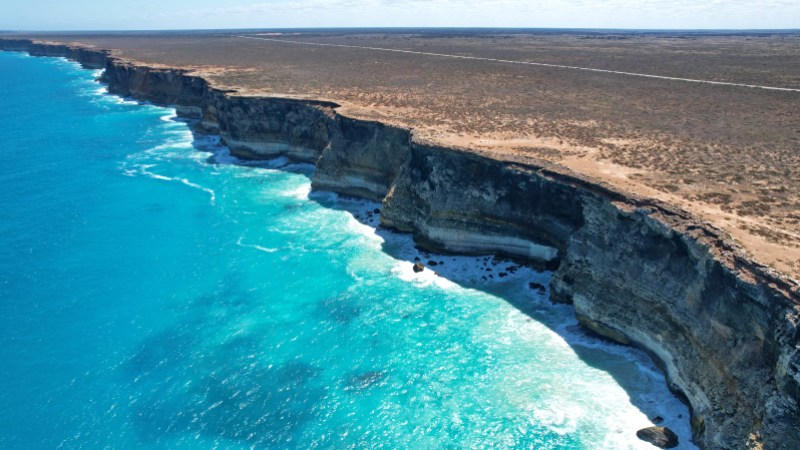
Drones helped discover cave openings on cliffs off the Great Australian Bight. Photo: AAP
The technique also used satellite radar and drone technology to scan the landscape and reach cave openings on cliffs off the Great Australian Bight.
The data will be used to study similar features elsewhere on Earth, with the possibility these techniques could also help space exploration.
Curtin co-author Associate Professor Milo Barham, from the Curtin Frontier Institute for Geoscience Solutions and School of Earth and Planetary Sciences, said the findings could change how scientists interpreted similar subtle landscape features else on Earth.
“Cave systems are not always obvious from the surface, but the dry and stable landscape of the Nullarbor is excellent for removing a lot of ‘noise’ to allow us to recognise subtle landscape characteristics,” Barham said.
“This gives us a useful set of indicators for identifying hidden cave systems elsewhere – including on other planets such as Mars.
“Caves are important as they can preserve evidence of past environments on Earth and impact our engineering and access to clean drinking water, while potential caves on other planets could provide protected subsurface environments relevant to the search for evidence of extraterrestrial life or act as bases for future astronauts.”
The research has been published in Communications Earth & Environment journal.
-AAP