From neon gallery to plague pit: Ten of London’s oddest sights

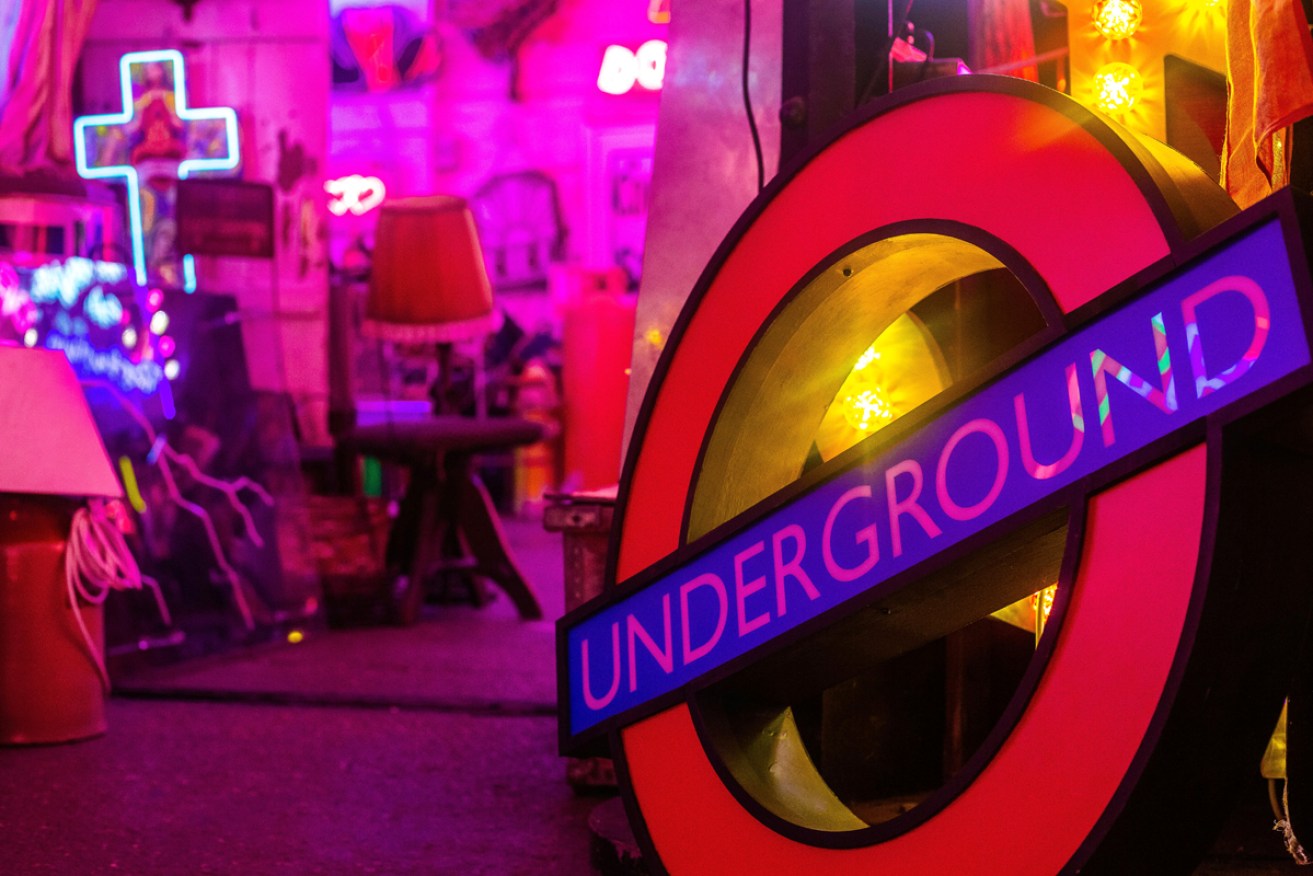
God's Own Junkyard is a vivid glimpse into the neon lights of Soho. Photo: Unsplash
The British capital is practically defined by eccentricity, and even its best-known attractions have peculiar legends attached – whether it’s the ghostly carriage of Hyde Park or the Tower of London’s guardian ravens.
But to hear stories less told about London’s oft-forgotten communities, you need to head to small-scale sights – like unhallowed cemeteries, uncommon art galleries and Roman-era ruins.
1. Walthamstow: God’s Own Junkyard
Winking lights, rainbow-coloured bulbs, lipstick-pink lettering and
saucy silhouettes create a carnivalesque atmosphere at this showcase of works by the artist Chris Bracey, the luminous mind behind many of Soho’s neon signs.
Walking through this glowing gallery in London’s north-east is an instant mood boost, as well as a colourful glimpse into past decades of Soho’s titillating nightlife.
2. West End: Soho noses
From 1996 to 2005, artist Rick Buckley secreted up to 35 plaster noses, casts of his own, around Soho.
The project is thought to be a statement about the nosiness of London’s widespread CCTV cameras. Seek out the seven or so that remain via a guided tour.
3. Aldersgate: The memorial to heroic self-sacrifice
Near St Paul’s Cathedral, Postman’s Park holds a memorial that’s humble in size but mighty in moral stature: Ordinary people’s extraordinary acts of heroism are inscribed in ceramic tiles along a
wall.
Stroll a while and consider what history remembers and forgets.
4. Farringdon: Charterhouse plague pit
Dig anywhere in London and you risk unearthing a hidden cemetery.
Excavations for a railway tunnel unearthed the largest Black Death plague pit at Charterhouse Square, repository of the (thankfully noncontagious) remains of 50,000 people.
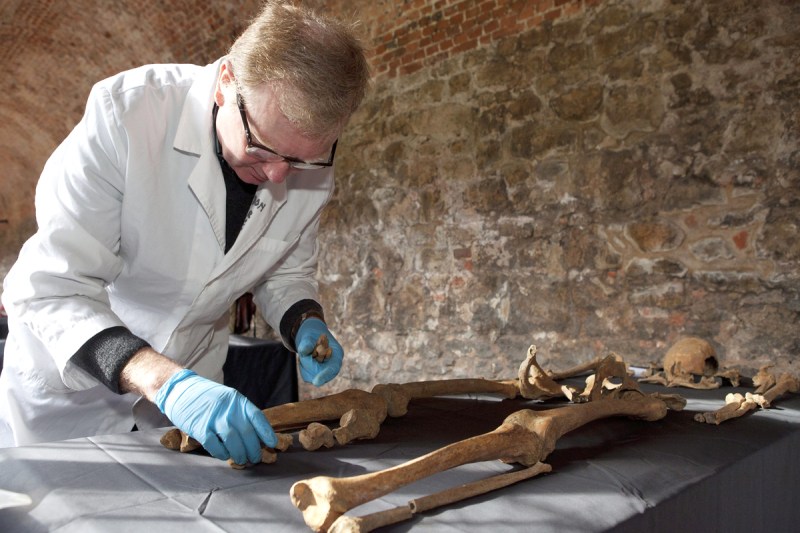
A skeleton of a Black Plague victim discovered in the Charterhouse Square. Photo: AAP
5. Bloomsbury: Eisenhower air-raid shelter
Eight London Tube stations had deep air-raid shelters during World War II –including this pill box-shaped building on Chenies Street, which was used by US Army Signal Corps in the run-up to D-Day.
6. Hyde Park pet cemetery
This pint-sized cemetery, established in Hyde Park in 1881, is the final resting place of beloved Buddys and Fidos. The first stone laid here is engraved with “Poor Cherry”, in memory of a terrier.
7. Bayswater: Fake houses of Leinster Gardens
No.23 and 24 Leinster Gardens are not what they seem.
Walk around the corner to Porchester Terrace and you’ll see they’re just a facade, built to preserve architectural integrity after demolitions during construction of the Metropolitan Line in the 1860s.
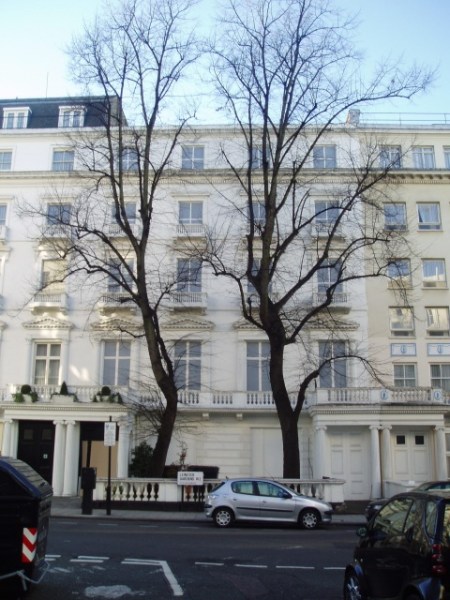
The fake houses of Leinster Gardens. Photo: Wikimedia Commons
8. Southwark: Cross Bones graveyard
Corpses considered too unseemly for holy ground, such as prostitutes, were buried here. This resting place near Borough Station is now a monument to London’s outsiders.
9. Soho: Broad Street water pump
In 1854, a cholera epidemic in the capital was halted simply by turning off a tap. A replica pump at the corner of Lexington Street and Broadwick Street marks where John Snow traced the outbreak and removed the handle.

10. City of London: London Mithraeum
In 1954, the remains of a temple from the secretive Roman cult of Mithras were discovered in the heart of London’s financial district.
Town planners were undeterred and simply relocated the ruins nearby, under what’s now Bloomberg’s European HQ, near Bank Station.
Taken from Lonely Planet’s Secret Wonders of the World, $44.99 RRP. Contact shop.lonelyplanet.com
Australia’s coolest neighbourhood



New Aussie bucket-list holiday is a white Xmas