‘They call it de-touristing’: TV icon Lee Lin Chin returns to screens in new role

Source: Tourism Tasmania
Former SBS television icon Lee Lin Chin is back on Australian screens – not reading the news, but exploring what she describes as the “strange phenomenon of de-touristing”.
Chin was once a familiar face to millions of TV viewers as the long-time presenter of SBS World News, known and loved for her famously stern delivery and unique fashion sense.
When she signed off from the bulletin for the last time in 2018 – wearing an outfit one fan described as “Half Darth Vader, half Black Widow, 100 per cent legend” – she insisted in a social media post that she not retired, adding: “Retirement is death.”
Since then, however, Chin has kept a low profile, despite being listed on a number of websites as a sought-after celebrity speaker.
Now, in what seems like an inspired move, Tourism Tasmania has brought the former Gold Logie nominee on board to front a series of quirky videos in its new tongue-in-cheek “Not Really for Tourists” campaign.
“Join me, Lee Lin Chin, as I investigate a strange phenomenon taking hold in Tasmania,” she says in one clip.
“They call it ‘de-touristing’ – travellers abandoning itineraries, putting down their phones, stepping out of queues and, rather remarkably, striking up conversations with complete strangers.”
The videos maximise Chin’s dry wit, whether she’s donning a strange-looking insulating hat and joking about self-flagellation during a visit to a Hobart sauna, or discussing the benefits of “conversational intercourse” with a restaurateur in the Huon Valley.
The former host of SBS’s Fashionista series – who is the subject of two portraits acquired by Australia’s National Portrait Gallery – also shows that she has lost none of her sartorial style.
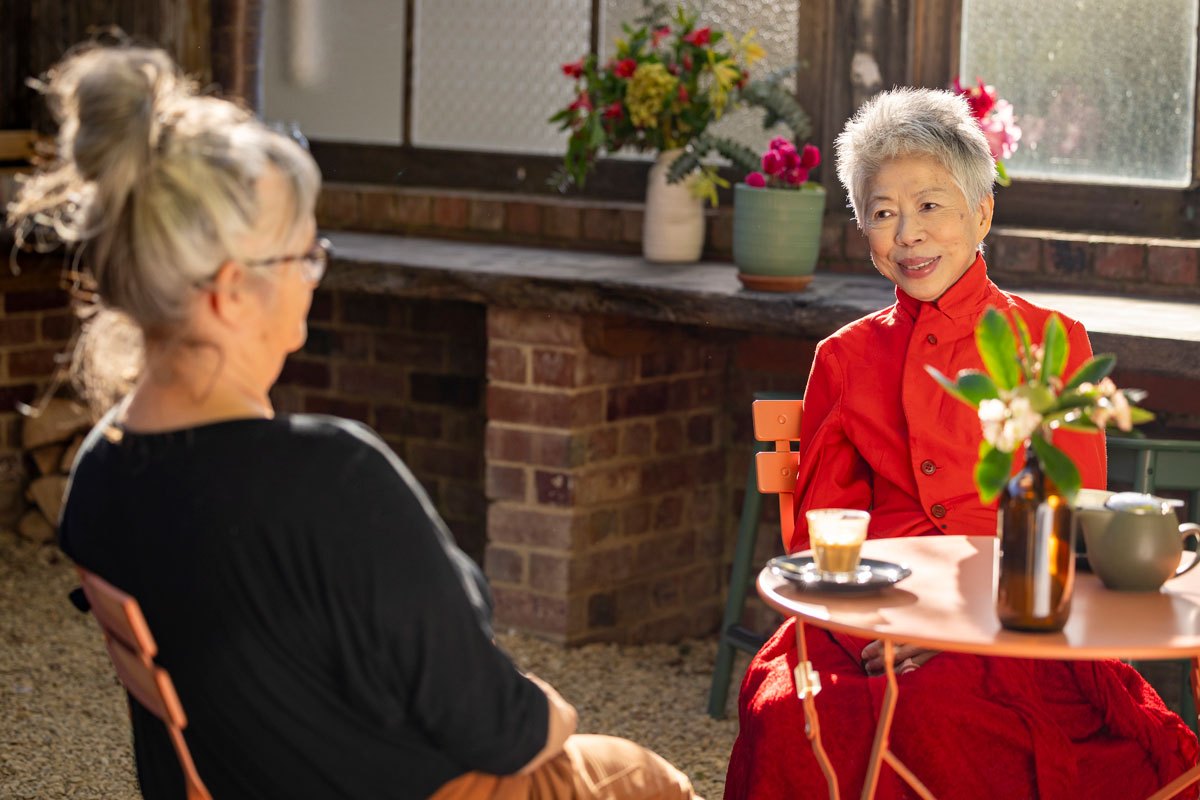
Chin visits chef Analiese Gregory’s Huon Valley restaurant. Photo: Tourism Tasmania
According to Tourism Tasmania, Chin had never previously visited the Apple Isle. But given her well-publicised disdain for modern devices – including mobile phones – she was seen as the ideal person to front a campaign that is all about “unplugging”.
“I’ve always thought it odd that people spend hours researching how to discover a place. It’s a very organised way of missing the point,” Chin says.
“I find it far more interesting to discover things for myself: A curious bookshop, a good pub or a fascinating character you happen upon simply because you took a wrong turn or struck up a conversation over a beer.
“Surely that’s more interesting than having the rest of the world decide what’s worth doing for you.”
Chin’s expression, when asked by bookshop owner Alexander Okenyo if she uses a Kindle, is priceless.
“This obsession with digital devices is lost on me,” she says in the campaign media notes.
“I don’t want to spend so much time looking at myself or what everyone else is doing that I miss what’s happening right in front of me. It makes life rather boring.
“And please, don’t ask me to take a selfie.”
The broader Tourism Tasmania campaign – which is anchored by a film featuring a tourist in a long queue for a viral pastry that leads across the ocean – will span television, cinemas, print, digital and social media.
It has been released alongside new research commissioned by the authority which found most Australians would rather be called a “traveller” than a “tourist”. Seventy per cent also said modern travel could sometimes feel more exhausting than relaxing.
The organisation’s CEO Sarah Kingston Clark said “Not Really for Tourists” was a tongue-in-cheek response to holidaymakers’ desire for more “authentic and immersive experiences”.
The so-called “de-tourist trails” highlighted in the Chin videos encourage visitors to explore Tasmania more deeply as she ventures to places ranging from an ancient forest housing the world’s tallest flowering trees, to a record store dedicated to music by women.
“One doesn’t need to plan every moment or know what’s around the next corner when travelling,” Chin says.
“In fact, I’d strongly advise against it. Although I would recommend knowing where you’re sleeping.”