Khawaja cancels appearances as sandpaper scandal grows
Source: ABC News
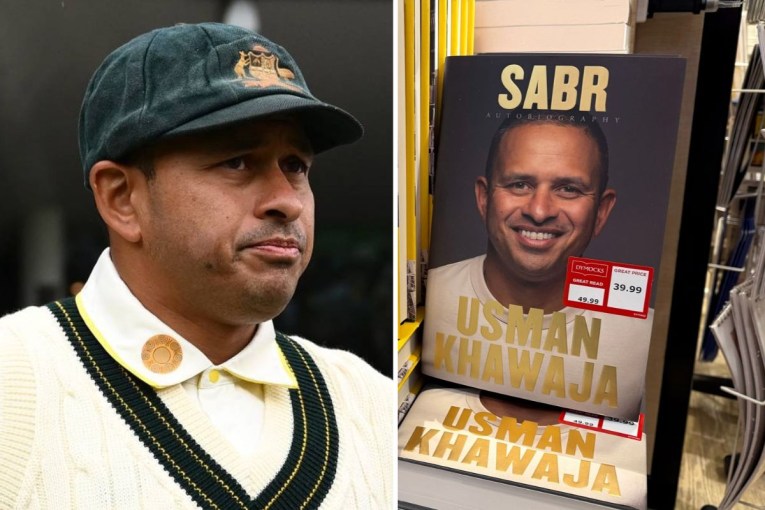
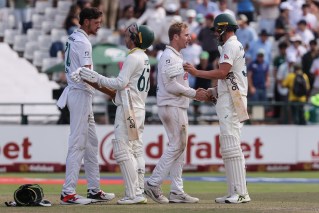
Usman Khawaja has scrapped some promotional appearances for his controversial book which claims Australia’s Test cricketers tampered with the ball before the ill-fated South African series.
Khawaja canned a series of scheduled media appearances on Wednesday after insisting he wasn’t on a “witch hunt” during a tense television interview.
He was uneasy while refusing to elaborate on much of his book’s content about the sandpaper scandal when grilled by the ABC’s 7.30 report on Tuesday.
“This has never been a witch-hunt for me…,” he told journalist Sarah Ferguson.
“I’m hoping other people will come up and talk about it honestly, that’s what I’m hoping, but I’m not forcing anyone to do anything.”
He added: “All I’ve ever wanted was for us to take accountability as a team.”
Khawaja pulled out of radio and television spots on Wednesday, with his publisher Penguin saying adjustments had been made to his promotional tour.
While attention on Khawaja’s book has centred on Australia’s use of sandpaper on the ball in Tests in South Africa in 2018 – and especially his claim that the whole team knew of the plans – he also wrote of ball tampering in the preceding Ashes series against England.
“We were reverse swinging it late on day five,” Khawaja wrote of the Perth Test, won by Australia by an innings and 41 runs.
“Actually, we were reverse swinging the ball the game before, too – except it was much tougher, because it was the pink ball.
“But we – and I say ‘we’, because we’re a team, whether you did the deed or not – had worked out that, if we raised the flaps up on the quarter seam on that ball, it was almost like it had a rudder on it and it’d start reverse swinging.”
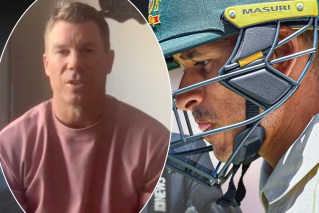
Meanwhile, David Warner has fired an indirect jab at Darren Lehmann, suggesting the ex-Australian coach knew of the use of sandpaper in the 2018 ball-tampering scandal.
Warner agreed with former International Cricket Council match referee Chris Broad that Lehmann must have known of Australia’s use of sandpaper on the ball – and if not, he shouldn’t have been coach.
“Darren Lehman surely knew all about it,” Broad told Track Radio.
“And if he didn’t, he shouldn’t have been the coach at the time.”
😡 “He took the moral high ground against my son Stuart, he said he wanted to make him cry… but he’s the coach of a team who knew about sandpaper gate’
👀 Chris Broad, Father of @StuartBroad8 , is ‘angry’ at the hypocrisy of Ex-Australia head coach Darren Lehmann https://t.co/3gp7MIikfX
— Track Radio (@wearetrackradio) November 10, 2026
Warner replied to Track Radio’s social media post of Broad’s comments, writing on X: “I couldn’t agree more and that’s hard for me to say!”
Lehmann, who stepped down as Australia’s coach in the aftermath of the 2018 scandal in South Africa, has denied personal knowledge of the Test team using sandpaper on the ball.
His comments are at odds with Khawaja’s claims the whole team knew of the sandpaper plans, and the illegal tactic was also used in the match prior to being uncovered by television cameras at the infamous 2018 Test in Cape Town.
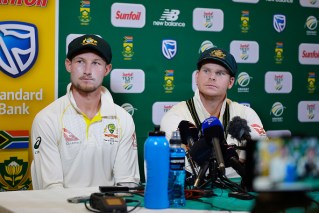
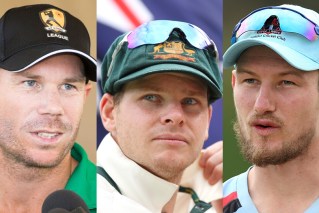
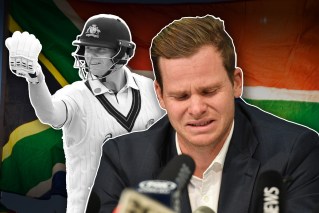
Cricket Australia has ruled out reopening its investigation, which found only Warner, Steve Smith and Cameron Bancroft knew of the plan.
Paceman Mitchell Starc repeated his denial of bowlers being aware of the sandpaper plot when he became the first player from the match to front media since excerpts of Khawaja’s book were published.
“We (bowlers) weren’t aware anything was taken on to the field to be tampered with,” Starc said on Tuesday.
Australian Cricketers Association chief executive Paul Marsh said it was understandable players’ versions of events could differ.
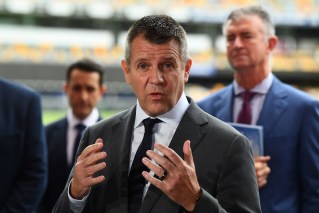
“Players and staff at the heart of the issue are entitled to share their experiences, just as others are entitled to put such a challenging period in their life behind them,” Marsh said in a statement.
His statement attracted the ire of former Test batsman Damien Martyn, who posted on X: “This statement from our players union does not reflect all ex players’ opinions.”
And Simon Longstaff, the author of a review into Australia’s cricket culture leading to the 2018 South African series, said he may have been lied to by players.
“All I can say is that if what Khawaja alleges turns out to be true, then I was also lied to,” Longstaff wrote in the Australian Financial Review.
–AAP