Scientists say wayward SpaceX rocket hit the moon

Source: NASA
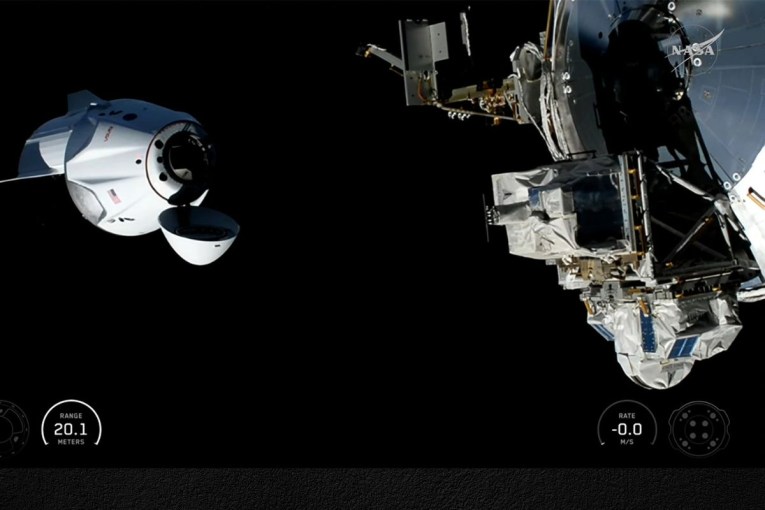
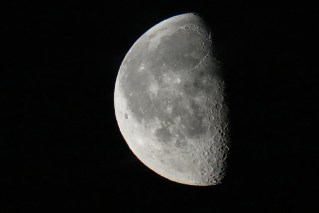
Eagle-eyed astronomers had their telescopes pointed at the moon for the anticipated collision of a 4000kg chunk of SpaceX rocket, but surprisingly no one saw a thing.
The anticipated crash site was a dusty, barren patch near Einstein Crater on the moon’s sunlit western limb — near the edge of the near and far sides, which is especially difficult to observe from Earth.
“There’s no doubt in my mind” that the rocket “is now in teeny, little pieces scattered over the moon near Einstein Crater,” said retired astrophysicist Jonathan McDowell.
Although no one observed the collision, a telescope in Chile spotted what astronomers have identified as the debris plume resulting from the crash.
Visual confirmation will have to wait until next week when NASA’s Lunar Reconnaissance Orbiter will fly over the crash scene and send back photos of the impact crater.

Space tracking experts said it was inevitable that the leftover rocket segment ploughed into the moon.
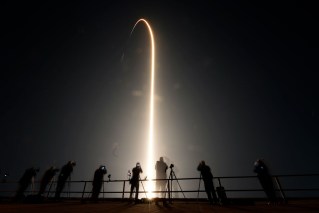
The school-bus-size object is the second stage of a SpaceX Falcon 9 rocket that had launched a lunar lander from Firefly Aerospace toward the moon in January 2025.
Weighing 4000kg, the rocket body had been due to hit the moon about 4.35pm AEST on Wednesday, travelling at 8690km/h.
It is the latest instance of lunar litter, a problem that many fear could worsen as the United States and China race to put astronauts on the moon.
In 2022, a Chinese rocket unintentionally hit the moon following a lunar mission, and many more stray rocket pieces likely struck the moon in decades past without scientists’ knowledge.
Boston University’s Carl Schmidt said he was “100 per cent certain” that his team’s observations revealed signs of the lunar crash.
The European Southern Observatory’s Very Large Telescope detected a stream of sodium and lithium stretching for tens of kilometres into space for at least five to 10 minutes following the impact, he added.
“We don’t have images of the impact” but there is telescope evidence, Schmidt said in an email.
Even before signs of the debris plume were spotted by the telescope in Chile, McDowell noted that observations of the dead upper stage on showed it heading straight for the moon.
Stargazers knew it would be difficult, if not impossible, from the ground to see the plume of dust and rock ejected from the resulting crater, let alone the flash of light from the impact.
Orbiting spacecraft had the best chance of witnessing anything — or at least observing the crater after the fact.
Dutch scientist Marco Langbroek was among those aiming his telescope at the moon at the appointed time but he came up empty.
“We knew this would be a long shot,” Langbroek said.
Like McDowell, Langbroek said he had “no doubt” the rocket met its doom.
SpaceX’s Julianna Scheiman said this week that the company was working with NASA to avoid future wrecks, stressing that this projected crash was not deliberate.
A combination of solar activity and gravity accidentally put it on a collision course with the moon, she said.
-with AAP/AP