Forget the ‘politics of joy’. Australians are rightfully getting angry


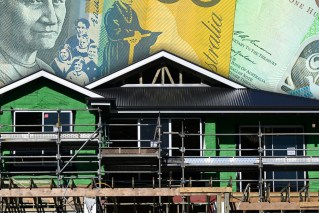
People are angry because it’s one of the few things they can still afford. Photo: AAP/Pexels
When did we decide joy was a commodity we couldn’t afford?
Much has been written on the ‘politics of joy’, the term coined to explain New York Mayor Zohran Mamdani’s mission as a politician.
While still in the race, Mamdani addressed the absence of joy in people’s lives and said:
“When I speak about making our city more affordable, my vision is not limited to the homes that we live in or the childcare that we’re making universal—it’s also a vision where we make it possible for working people to afford lives of joy, of art, of rest, of expression.”
In Australia, do we expect working people to live lives of joy, art, rest and expression? Do we even afford workers the expectation of living a life of joy and rest?
Increasingly no.
The ABS measure of our satisfaction levels, is falling and financial stress is one of the key reasons for our falling levels of joy.
As you are reading this, things are about to get harder with the fuel excise discount now phased out, meaning fuel prices will jump by about 16 cents. That comes at the same time as economists are betting on when the RBA will raise interest rates again this year, not if.
And it comes at the same time as workers feel, in real time, that they are going backwards even without the most recent cost of living increases – because they are.
An analysis looking at real wages by my colleague at the Australia Institute Greg Jericho found a 5 per cent fall from March 2021 to March 2026, which brings them back to the level they were at the end of 2010.
Which tracks – according to the ABS we were all happier in 2020 during the pandemic, where you can see that real wages last spiked.
Real wages increased slowly, but at least steadily leading up to 2020. Since then, it’s been a sharp decrease.
And the joy we could afford has filtered from our lives at the same rate.
We are less trusting, less caring, and less motivated because we are barely holding on. We have watched our dollars buy less as prices increased – in some cases beyond our reach – and we’re all being told to brace for more.
It’s not hard to see why the politics of grievance is flourishing in this environment. It has fertile ground.
People are angry because it’s one of the only things they can still afford, and yet the economy is still being viewed through the lenses of those who have the most.
Take the most recent ‘debate’ around the capital gains tax discount changes, led by people who had investments and multi-millionaires like comedian Dave Hughes, angry they might not make as much money in the future.
Given the real-world trend of wages, we are unlikely to see relief there in time for people to experience the small joys afforded to the financially less stressed.
There is time in the sun when you don’t have to juggle multiple jobs and shifts. There are hot-girl walks for those able to take a lunch break, or with time not dedicated to caring or earning.
There is time with friends for those who can afford leisure. There is reading and art, and movies and sport for those with the freedom of spare time, or even agency over their time.
For the rest of us there is no time for joy, and no one offering us hope there could be.
In the absence of wage increases, there is room for a supposed centre-left government to fill the gaps.
It doesn’t have to be the politics of joy – call it the politics of productivity – but it creates the same space.
If wages won’t increase, then a government with a view to insulating its citizens and upholding faith and hope in a democracy should be making services like childcare, aged care, or health services, like dental in Medicare.
A government could increase its spending on schools or address educational inequity. It could provide free access to the arts or sports.
Instead we are being increasingly tied to war, fossil fuels (despite the RBA Governor commenting just last week about what oil price shock exposure does to the economy as a whole).
All this amid warnings things will probably get worse, with AI, inflation and, as is usually the case when the world ponzi schemes start to crumble, austerity.
You do not have to go too far back in history to see what happens when austerity combines with hopelessness and anger.
The politics of joy isn’t about sunshine and lollipops, and rainbows and unicorns. It’s not about left or right, or socialist or conservative.
It should be about people. The workers who represent that above graft, seeing their capacity for joy diminishing and their ability to live it moving further and further away every day.
Amy Remeikis is a contributing editor for The New Daily and chief political analyst for The Australia Institute
Want to see more stories from The New Daily in your Google search results?
- Click here to set The New Daily as a preferred source.
- Tick the box next to "The New Daily". That's it.