Houthi attacks threaten oil supply ‘plan B’ and the consequence may be catastrophic

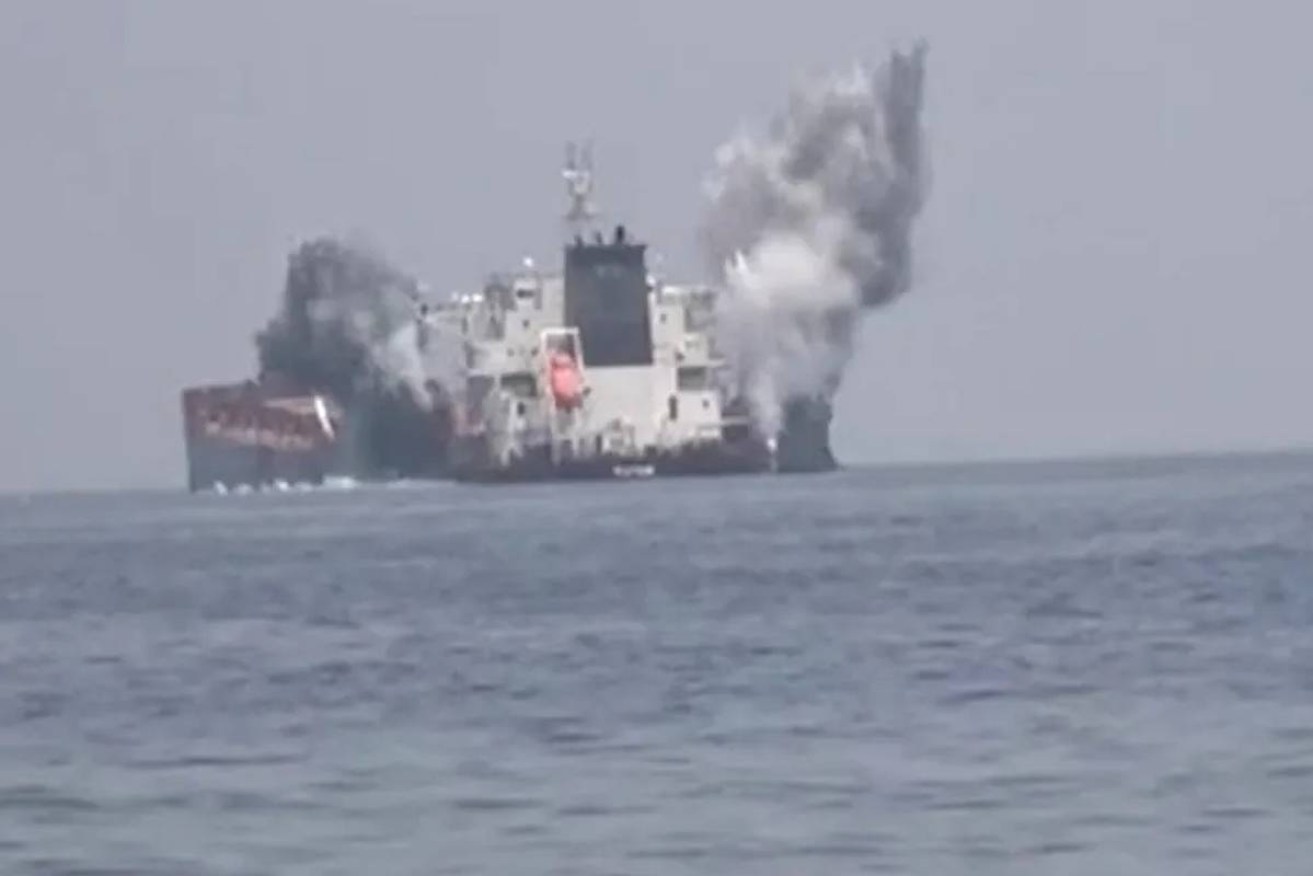
Houthi attacks have threatened the global supply chain, again. Photo: AAP
As oil supply chains are adapting to disruptions in the Strait of Hormuz, Houthi attacks on Saudi Arabian ships in the Red Sea threaten this backup shipping route.
The current attacks come at a time when the oil supply chain is already battling repeated and long blockades in the Strait of Hormuz, a critical shipping waterway that carries about 20 per cent of global energy needs.
The Red Sea maritime waterway connects the Suez Canal in the north and the Bab el-Mandeb Strait in the south, carrying about 10-12 per cent of global trade.
It is not the first time Houthis have attacked commercial ships on this maritime shipping route. Their attacks on vessels in the Red Sea in 2023 and 2024 disrupted global trade for a long time.
In the past few months, the Red Sea has worked effectively as a plan B for oil shipping in response to the closure of the Strait of Hormuz.
Saudi Arabia established pipelines to transport oil to the Yanbu port in the Red Sea and then shipped it to the global market, especially Asian countries such as China, Japan, South Korea and India, via the Bab el-Mandeb Strait.
The Red Sea waterway now carries most of South Arabian crude oil after the closure of the Strait of Hormuz.
In June, about 7.4 million barrels a day, which is about 7 per cent of global energy demand, has been transported via the Red Sea and the Bab el-Mandeb Strait.
The attacks on ships in the Red Sea have now disrupted plan B for global oil shipping.
The consequences of closures and attacks in dual-critical maritime waterways on supply chain operations, oil prices, and the global economy are catastrophic.
Further shortages and price increases
The attacks on ships in the Red Sea severely disrupt the shipping operations of crude oil.
Several Asian countries, including China, Japan, South Korea, and India, could have their oil imports disrupted again.
The flow-on effect also disrupts the oil supply to Australia, as it heavily relies on refined oil from some of these impacted countries.
Consequently, there could be a chronic shortage of oil and prices could surge heavily for businesses and consumers to match the demand.
With no evidence that these geopolitical conflicts in the Middle East will end soon, global supply chains of critical product will be disrupted for a longer period.
Hence, the recovery of shipping and supply chain operations could take many months to years.
Plan C for oil shipping
As plan B, via the Red Sea and Bab el-Mandeb Strait for oil shipping is now disrupted, the alternative option is plan C.
It involves an alternate route via the Suez Canal in the north through to South Africa’s Cape of Good Hope.
Plan C comes with extended travel time and delays in shipping operations, and becomes more expensive.
When oil supply and prices are impacted, it hurts many other sectors and their supply chains.
Food and agricultural operations, logistics and transportation of goods and commodities, and manufacturing operations are simultaneously impacted.
Overall, it results in shortages of many goods and services and ends up increasing their prices.
The additional shipping, insurance, and shortage costs are passed on to consumers, influencing their abilities to handle cost-of-living challenges and elevating the consumer price index and inflation.
Sanjoy Paul is Associate Professor, Operations and Supply Chain Management at University of Technology Sydney