Are we being misled about NDIS fraud? Yes, we are

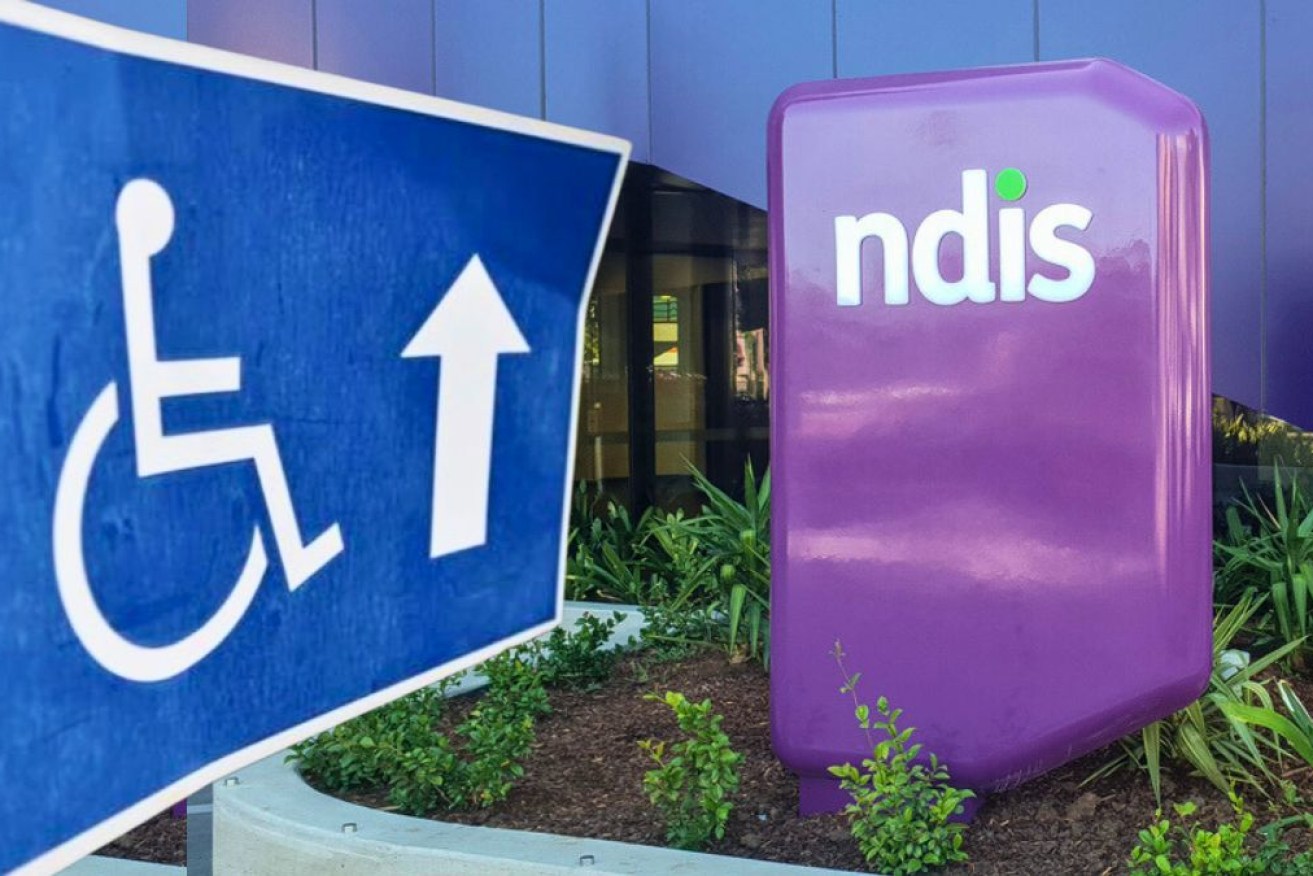
Why do we hear so much about NDIS fraud? Because it works. Photo: AAP
Current changes to the National Disability Insurance Scheme will remove at least 241,000 people from the by the end of the decade. Some estimates are as high as 341,000.
Think about that for a second. That’s equivalent to the entire population of Hobart losing support that makes their lives significantly better.
Why is Australia accepting this “broken promise” to people with disability?
It can’t be because we can’t afford it – the hundreds of billions in free gas giveaways and submarine deals prove that.
No, the public was softened up by relentless claims about NDIS fraud.
While some of these claims come from conservative, ideological opponents to the NDIS, they are so common that the ABC can now report on “a tsunami of rorting estimated to be worth up to $8 billion a year”, without even referencing where the number comes from, let alone putting it under any scrutiny.
Where did this ‘tsunami’ start?
Rewind to August 2022 when Australia’s Criminal Intelligence Commission’s chief Michael Phelan went on 60 Minutes with then-NDIS minister Bill Shorten to talk about NDIS fraud.
In the interview, Phelan estimated that “rorting from the NDIS by criminals … could be anywhere up to 15 to 20 per cent”.
That’s it. This 2022 percentage is the basis for the big dollar figures that get thrown around. Keep in mind that Phelan is not an auditor or an accountant, but a former AFP officer and a controversial one at that.
So how is that $8 billion tsunami working out?
In 2022-23, an Australian National Audit Office report on claimant compliance halved that estimate to 6-10 per cent, or about $2 billion-$3.5 billion.
Except, this revised figure includes not only fraud but also errors, claims with insufficient evidence and honest mistakes. Of this figure, National Disability Insurance Agency deputy CEO John Dardo told the Senate, “only a very tiny amount would be cases that have gone to prosecution”.
And now, in Treasury modelling released last week in Labor’s proposed NDIS bill, we get a very different story about the scale of the fraud in the scheme.
While the reform package will reduce spending on the NDIS by $38.1 billion by the end of the decade, only 2.3 per cent ($0.9 billion in total or $0.3 billion a year from 2027-28) of these total savings actually come from addressing “fraud measures”.
The actual savings will come from hundreds of changes set to pass parliament within weeks. The main savings include:
- Re-work the access criteria to remove 241,000 people from the scheme by the end of the decade;
- Cutting people’s “community budgets” progressively by 50 per cent from October. These are the budgets that allow people with disability support to commute to work, do groceries, and study;
- Reduce therapy budgets by 10 per cent;
- Increase barriers to early plan reviews as needs change;
- Giving NDIA staff more powers to decide that families should do more for their disabled relatives and shifting responsibility onto other systems, like health services.
In more than a hundred pages of amendments in the bill, only a handful of changes relate to providers, let alone “criminal rorters”.
So why do we hear so much about NDIS fraud? Because it works.
The public isn’t particularly worried about the cost of caring for people with disability.
The public knows that Australia is a rich country that can afford to look after its people. But no one likes tsunamis of fraud.
This was the conclusion of research commissioned by the NDIA on “Reform Communications Testing” in 2023.
According to the focus group research, “there is a strong resistance to any discussion of costs alone as a driver of reforms. Indeed, cost discussion without prior contextualisation … led to opposition that was considerable and intense”.
In the same report, however, “when we presented rorts, fraud, and unreasonable pricing as posing an existential threat to the NDIS, we were able to create an environment in which respondents were amenable to reforms designed to counter these things”.
The media understands this instinctively and not just the ABC.
In January, news.com.au ran multiple stories claiming that fraudulent NDIS providers outnumber cafes in some suburbs, and linked to racist conspiracy theories for good measure. The stories claimed that Lakemba, a Sydney suburb with a large Muslim community, had 1300 NDIS providers.
This was all easy to debunk. There are in fact only 205 providers in Lakemba, 17 of which are registered there.
NDIA deputy CEO John Dardo explained to Senate estimates that the claims in these articles were likely based on the misuse of the provider finder on the NDIA’s website.
This platform captures every service that indicates it offers supports in that region, regardless of whether they have a client there. A Perth lawn-mowing business can list its services in Lakemba, without cutting a blade of grass there.
But months later, the articles remain online uncorrected, and loads of Senate time has been spent discussing the debunked claims.
Fraud is bad. But if the government is expecting integrity of providers and participants, it too must also be honest.
The NDIS and providers are far from perfect, but the scale of problems is hardly worse than in other service systems like taxation or defence.
The NDIS requires a trusting, educated and confident ecosystem of providers and consumers.
It’s time for Minister Mark Butler and the Albanese government more broadly to set the record straight and use their own numbers around the real scale of problems in the NDIS.
Chris Coombes delivers training, conferences and consulting and is an independent expert reviewer for participants and providers on the NDIS
Republished from The Point

Epic, landmark finale for Aussie star at Games

Housing reform is cooling demand. That's the point

Reform is hard. Labor needs to hold course


This budget will make most people better off