Thoughts for the friend of my enemy – a personal reckoning from the Bondi tragedy

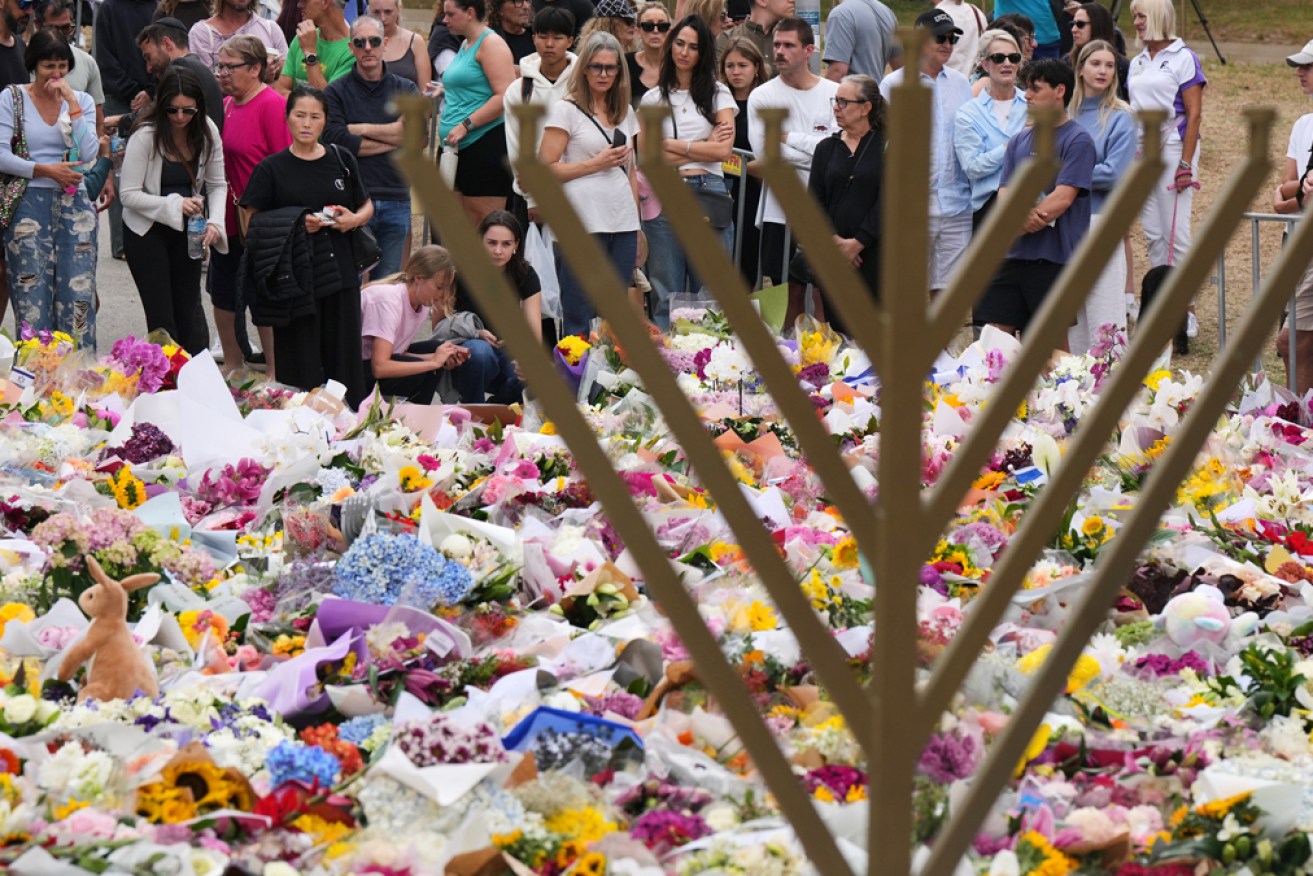
A man has been imprisoned for impersonating the alleged terrorists behind the Bondi shootings. Photo: AAP
Some often say that the reason our people have survived persecution for so long is that we use our brains, not our hearts.
That we can read the signs earlier than most, and that that is when we leave. Flee. Resettle. Stay quiet and close in case they catch us again. They say that our intellect precedes our emotion.
And perhaps after so many years of devastation, this is true, but today I cannot understand, I can only feel. I feel panicked, fearful, enraged, but most depressingly, I feel the eery sensation of being unsurprised. This unspeakable act was not unprecedented, it was not out of the blue, and, of course, it was not random.
On the first night of Hanukkah, my mother brought a little aluminium menorah to my share house in Fitzroy, in Melbourne’s inner-north. Along with it she brought a few small non-religious gifts; moisturiser, a notepad, body scrub, and a white tote bag for my groceries.
We lit the first candle together and said our prayer in unison while the sun was still high. The prayer rolled off my lips without thought or attention, “asher kid’shanu …”, just oral muscle memory, a few words from language I do not understand, but have spoken my whole life.
We were hasty with the whole procedure, failing to wait for the sky to turn orange and for the sun to dip lower toward the horizon. I had places to go and people to see. The wax burnt quickly for the candles were thin and cheap.
My Christmas-and-Easter housemate asked what was Hanukkah all about anyway and so I sat on the floor and humbly explained: “It is a festival of light. We celebrate resilience after the destruction of our sacred temple and the occupation of Jerusalem. It sounds grim but its actually one of the few fun ones”.
She laughed a bit. “Sounds fun.”
I had plans that evening not to celebrate with community or to visit shul (a synagogue), but instead to go drinking with my non-Jewish friends, like we do almost every Sunday, Wednesday, and most Fridays. My mother dropped me at the pub, after first a brief stop at a bar for one of our own.
We talked about work, a little politics, university, writing, hair, my relationship. We both smoked one cigarette each. We did not talk or think about the candles burning back at home. We did not talk or think about Hanukkah because we did not have to. We knew somewhere between practicality and symbolism, that we needn’t have to worry, because the candles would still be there when we returned. I figured that that was the gift we were given with at the summit of Sinai, the eternal path of return. It is always there, it is always pure and good, it is always waiting. There is no judgment, there is no shame. There is only return.
Mum left me to my comrades and we drank and drank and a friend mentioned a shooting, “two dead!”, and we drank and carried on. We exchange stories from our respective weekends, we talk about the parties we attended, the music we saw, the people we met, we debated at length the right way to eat a Maxibon.
It was a joyful and ordinary time. I thought about mentioning Hanukkah, but I didn’t, I had discovered over my life that people can get fussy if you bring up your religion too much, or bring it up at all. I did not want to dampen this lovely afternoon with my Jewy stuff.
An hour later my phone began to ignite. I was receiving messages from people I wouldn’t normally. They were concerned for my safety. But I still didn’t look because I knew. I knew. Something was very wrong.
I turned off my phone. I chose darkness in that moment, over light. I chose ignorance over information. I pushed it down; for a couple more hours, reality slid down my gullet with each gulp of beer.
“L’chaim!” I toasted.
I was overjoyed in these few hours with the freedom of being 20, of living in this wonderful city, of being surrounded by young, beautiful people, of being free.
Alas, eventually, my joy was shattered. In the bathroom, I read the news.
Then I took myself home.
I sat down on the concrete footpath.
And I cried on the street for hours.
I cried many tears for many reasons. I cried for my people. First for Alexander Kleytman, a Holocaust survivor, murdered. To have lived an entire life carrying the weight of survival against unfathomable persecution, of social, systematic, military and industrial antisemitism. To have survived! To have prospered! To have migrated from the Ukraine to Australia and to have watched your community find peace on the shores of this foreign land. To have been welcomed. You and your language and your prayers and your people. To have witnessed synagogues erected and congregations formed and heard prayers sung not quietly behind bookshelves but loudly on beaches toward the great open sea.
And then, years later, once your body became frail but your heart and your faith strong, to be murdered for the very same crime your grandparents were killed for. For, of course, simply being Jewish. I cried for him.
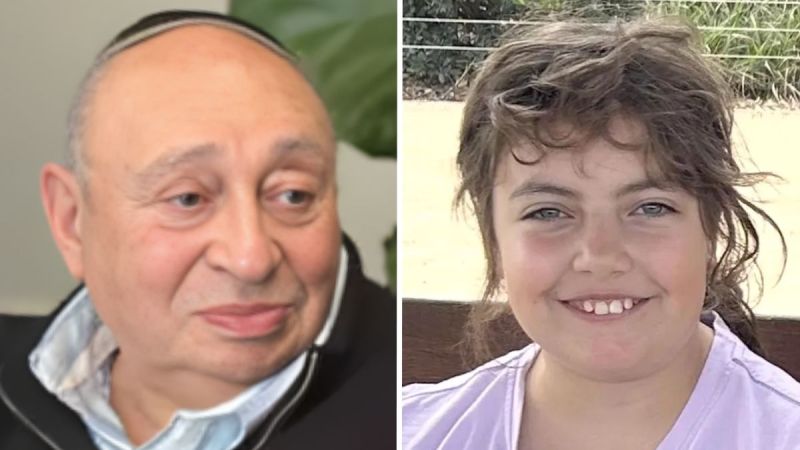
Holocaust survivor Alexander Kleytman and 10-year-old Matilda were both killed at Bondi. Photos: Supplied
Then I cried for the 10-year-old girl, Matilda, who likely had only just began to understand that not everyone was like her. That Judaism was a religion, and that there were many more out there, equally beautiful, equally important. Who in the coming years would be bat mitzvah-ed. Who would pick her dress. Who would learn her portion.
Who would have been asked to go on a journey. Spiritual and intellectual, from child to adult. Who would have had to meanwhile learn what it meant to be born a woman, Jewish or otherwise. She would have started high school, found her passion, made lifelong friends, tasted the world.
In the coming years, Matilda would have experienced much joy, many hot summers, countless shabbat (sabbath) dinners, many costumes for (the holiday of) Purim, and the endless small heartbreaks of adolescence. She would have had to have grown up to be able to answer difficult questions, to walk a difficult line of faith and modernity.
She would be pushed early into conversations of morality and justice, as Jews have always been. She would be poked on her own views as a Jew. She would have to make her own mind up. She would be shamed for being Jewish by some, celebrated by others. People would make assumptions about her, both right and wrong. I cried in sadness for the loss of her perfect soul, but also in relief that perhaps she now gets to live her life in eternal peace, while we fight her battles down here.
Then I cried for the thousands of other children. For the babies, and for the young men, women, elderly and adolescents, for those who have died in the name of expansion, occupation, oil money, political interest, and pure greed.
I cried because I knew that not a single life would be saved or bettered by this violent act. I cried because I knew that this instead put us all in harm’s way. Muslims, Jews, immigrants, Palestinians and Israelis would all suffer. There would be only one beneficiary; a handful of fascists at the top, hiding behind bulletproof glass.
Eventually my tears stopped, and they would not start again. Now I was crushed by something much heavier than pure emotion. At the bloodied feet of the deceased, we are left with nothing but moral crises. What is the lighting of a single candle against the firing of a gun? What is a community of faithful against an army of men? What is fairness to greed? What is harmony to warfare? What is humility to wealth? How can we go on? Where is up?
“There are no answers,” my Irish Catholic father decrees, “there is only analysis”.
“Dad, that might have been the most Jewish thing you’ve ever said”, we laugh.
And I know he is right. This is not the first time we have faced moral turmoil as a result of murder, brutality and hatred toward our community. This is not the first time we have questioned where to go, what to grab ahold of, who to take with us.
I encourage you to recall the Purim story, of Esther’s great act of bravery against the violent Haman, of the tremendous exodus from Egypt, our emancipation from slavery, of the Hanukkah story, of course, of Maccabees’ revolt against Syrian-Greek occupation.
I beg you to consider the thousands of non-Jews who hid our grandparents in their walls and under their floors, of the German soldiers who refused service although they knew it would mean their demise, and of Ahmed al-Ahmed, the man who – in an act of Shakespearean courage – disarmed one of the gunmen on Sunday, likely saving many lives.

NSW Premier Chris Minns visits Ahmed Al Ahmed in hospital. Photo: Chris Minns
Do not forget that with all of these acts of great courage came acts of great moral fortitude. Let us all be conscious now that what these stories of unimaginable bravery have in common is the most fundamental of God’s teachings: “Thou shall not kill”. These people did not forget, despite their despair and anger and fear, that human life is sacred.
So, now, instead of labouring towards answers, action, retribution, let us sit shivah (mourning) in peace. Let us pray for the victims of vile antisemitism; for the victims of gun violence across the globe. Let us, in time, lobby for reform and progression as we have always done, as is the nature of our religion. Let us, under no circumstance, let this horrendous tragedy allow for the proliferation of hate.
Please, please, please, be reminded that when we humbly gather to ponder the spiritual and moral pathway forward, we are not joined by the company of political leaders or by wealthy governments. We are not joined by presidents and prime ministers who wear our beautiful Magen David (Star of David) on their ironed breast pocket. We are not joined by military generals or treasurers of state. We are joined only by our community, our families, and by God.
Our neighbour is not our enemy, even if they are holding a gun. Our enemy is the hatred it took for them to pick it up, and the businessmen who take a profit.
One last thing my father said to me.
He said: “Esther, darling, this is the nature of light, before and after it, there is always darkness. It is a universal and divine rule”.
There has been darkness before. There will be darkness again. Do not turn on your neighbour, do not blame the innocent. Do not be distracted, for it is exactly what they want. There are evil forces and corrupt men much larger than us that we ought to turn our attention toward.
But for now let us rest, let us mourn, let us pray, let us light our final candles.
For there is hope, somewhere, in darkness.
Chag Sameach (happy holiday) to you all.
May the dead rest in peace. May we all find a way to go on.
Esther Wright is a 20-year-old Melbourne writer