Strongmen, daggy dads and state daddies: Elections and the different styles of political leaders

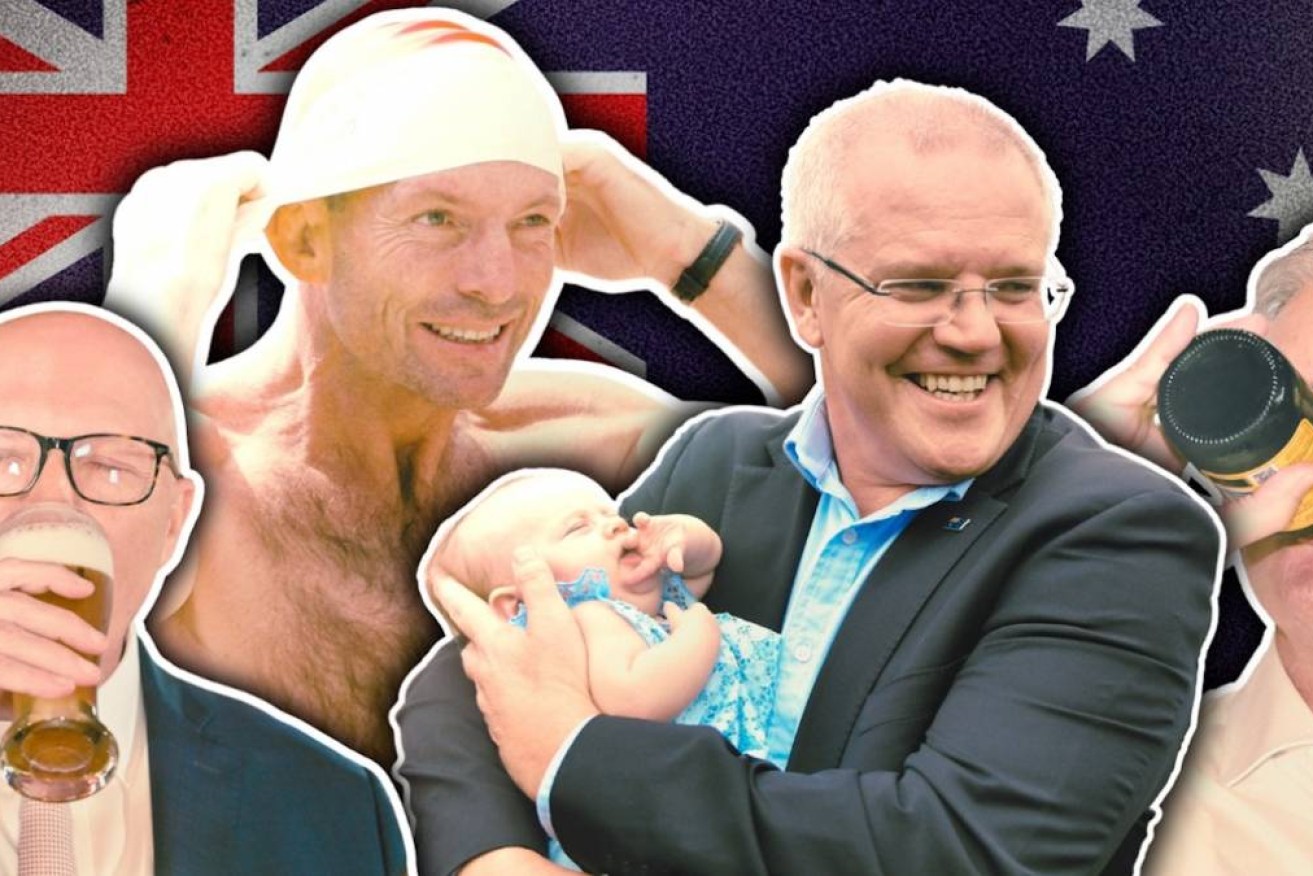
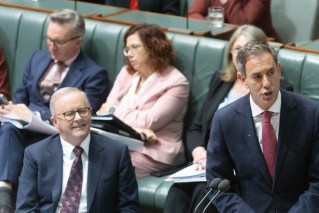
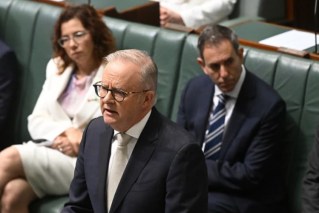
Halfway through the election campaign we can see the differences in the masculine performances of Albanese and Dutton. Photo: The Conversation/AAP
Australian politics has historically been a male domain with an overwhelmingly masculine culture. Manhood and a certain kind of masculinity are still considered integral to a leader’s political legitimacy.
Yet leadership masculinity changes along party lines.
We are now halfway through the election campaign and can already see differences in the masculine performances of Prime Minister Anthony Albanese and Opposition Leader Peter Dutton.
State daddy v strongman tough cop
In a recent open-access study, I identified the emergence of two Australian political masculinities during the Covid-19 pandemic.
First, the traditional “daggy dad” of former Liberal prime minister Scott Morrison, centred around the nuclear family and paternalistic protection.
Second, the “state eaddy”, embodied by Labor leaders such as Albanese, who perform a more compassionate masculinity focused on social provision. In the 2022 election, Albanese effectively used his caring masculinity against Morrison’s faltering protective paternalism, highlighting many of Morrison’s weaknesses and especially his unpopularity with women.
The 2025 election is shaping as another “gender election”, this time between the state daddy and the strongman tough cop.
Albanese and Dutton’s adoption of certain masculine identities reveals not only how they want to be perceived but also how they envision the electorate, the nation, and its defining values.
Dutton is a “tough-nut” conservative who portrays himself as a “strongman” protector. His leadership masculinity combines that of several other Liberal leaders, notably John Howard. But his conservatism is more reactionary, focusing less on economics and more on stoking culture wars.
Like Tony Abbott, he is a pugilistic opposition leader who promises to keep Australians safe while reinforcing fear and uncertainty. Following Morrison’s lead, Dutton also targets outer-suburban electorates that traditionally vote Labor.
His plan is to tap into voters’ anxiety and offer his “strongman” masculinity as its antidote. Since becoming leader, Dutton has frequently attempted to emasculate Albanese, labelling him “weak”, “woke”, and too preoccupied with “elite” issues, such as the Voice Referendum, to tackle the cost-of-living crisis.
Dutton positions himself as the traditional masculine protector of the nation. The mobilisation of fear of a threat, real or imagined, is core to this identity. Dutton vows to protect Australians by being tough on crime, immigration and “wokeness”.
Yet his strongman persona and conservative policies do not resonate with women, who fear he will follow Trump’s lead on gutting diversity, equity and inclusion initiatives or cuts to the public service and rights to work from home.
The strongman protective persona is aimed at men in the outer suburbs, especially those at risk of voting Labor.
In contrast, Albanese’s state daddy masculinity targets women over men and seeks to inspire hope, care, and a collective response. The focus is on issues of equality, embodying a caring masculinity to rival traditional conservative masculine identities.
Physical attractiveness is integral to the state daddy image. Before the 2022 election, Albanese underwent what is colloquially termed a “glow up”. Seeking to appeal to the female gaze, he gave an “at home” interview for The Australian Women’s Weekly.
These images are a useful tool for state daddies for two reasons. First, to physically differentiate them from the dishevelled look preferred by conservative political leaders, such as Morrison, Boris Johnson or Donald Trump. Second, to visually signal their commitment to women voters.
Both the daggy dad and strongman tough cop often fall short. They claim to provide financial and physical protection to citizens, but only in exchange for subordination to their masculine authority.
These limitations are often exposed when it’s necessary to protect citizens during crises such as, in Morrison’s case, bushfires, flood or plague. This protector masculinity fundamentally fails to recognise citizens’ needs and exposes the empty rhetoric at the core of protectionism.
Who can we see this election?
Albanese is a far less popular leader than he was in 2022, for many reasons. However, the ALP is again campaigning on boosting the care economy, with major commitments to health care, aged care, and childcare.
These are primarily women-dominated industries that Dutton, like Morrison before him, has repeatedly failed to support and engage.
In contrast, Dutton was forced into an embarrassing backdown on a promise to end work-from-home arrangements for public servants, 57 per cent of whom are women.
Distracting from the Coalition’s long-standing “women problem”— which in part cost it the 2022 election — Dutton implied that Albanese’s “wokeness” has left men behind.
Taking a page from the Trump playbook, Dutton has appeared on podcasts targeting mainly male audiences. On one appearance, he made a pitch to young male voters, noting: “Young males feel disenfranchised [and] ostracised”.
He sympathised with the “anti-woke revolution” and argued that young men are “fed up” with “woke” practices.
Albanese, meanwhile, has appeared on podcasts targeting mainly women audiences, including Abbie Chatfield’s It’s A Lot or Cheek Media’s podcast.
He spoke about Labor’s policies supporting women’s health in areas including endometriosis care, contraceptives and menopause.
It’s clear that both leaders are targeting very different parts of the voter bloc, in policy platforms and social media strategies.
Blair Williams, Lecturer in Australian Politics, Monash University
This article is republished from The Conversation under a Creative Commons license. Read the original article.