US Army declares emergency to detonate toxic explosives

Source: ABC News (US)
Evacuations are under way in the US state of Iowa ahead of a controversial detonation of tonnes of unstable lead explosive that could create a toxic dust plume across up to 150 kilometres.
The US Army will use emergency powers to detonate almost 70 barrels of degraded lead azide – used in manufacturing munitions – that were found at the Iowa Army Ammunition Plant in the small town of Middletown in March.
The material has become unstable and dangerous, prompting the Army to assemble experts to come up with a plan, considering options that included neutralising the drums’ contents with other chemicals.
However, officials said handling the drums would increase the chances of an accidental, fatal detonation, with the risk rising as temperatures drop as the US winter approaches.
Major General Eric Shirley, who is leading the operation, this week defended the decision to detonate the deteriorating lead azide. He said a controlled explosion was “the only way to go”, and the decision to do so came only after an “exhaustive evaluation” of alternatives.
Late on Tuesday, evacuations had begun of all residents within an eight-kilometre zone extending south-west of the blast zone
The army held a public meeting in Middletown – which is about 257 kilometres south-east of Des Moines – in October. But a public advisory a week ago was the first time thousands of people in other nearby communities became aware of the potential impact.
Officials say the detonation will likely create a toxic plume of dust that could cover 150 kilometres or more, potentially contaminating land and waterways in a wide area. The dust could spread along Mississippi River and to western Illinois and Missouri, and even as far as Kansas, Arkansas, and Oklahoma.
“It’s hard to answer questions about the environmental risks because we really don’t know several key factors, like how much lead will be emitted and how much will be deposited,” David Cwiertny, a University of Iowa civil and environmental engineering and chemistry professor, said this week.
His team has been installing monitoring equipment in the likely dust plume area.
“We need to look at where there could be vulnerable water sources,” Cwiertny told USA Today.
Southern Illinois University associate geology professor Daniel Hummer said “contamination is definitely a possibility”.
“That will happen over the course of days and weeks, so monitoring will be needed,” he told the newspaper, adding that it also could leach into groundwater.
“Anyone getting their water directly from surface water would be most at risk.”
Environmental groups sued to halt the operation, prompting a court to freeze the army’s environmental permit last Thursday (local time).
But late on Saturday, the Trump administration said the army planned to go ahead without a permit by invoking an emergency munitions and explosives exception to federal environmental protection laws.
“The Army must perform a controlled detonation to protect the public from the more significant threat from an uncontrolled explosion,” the Justice Department said in a court filing.
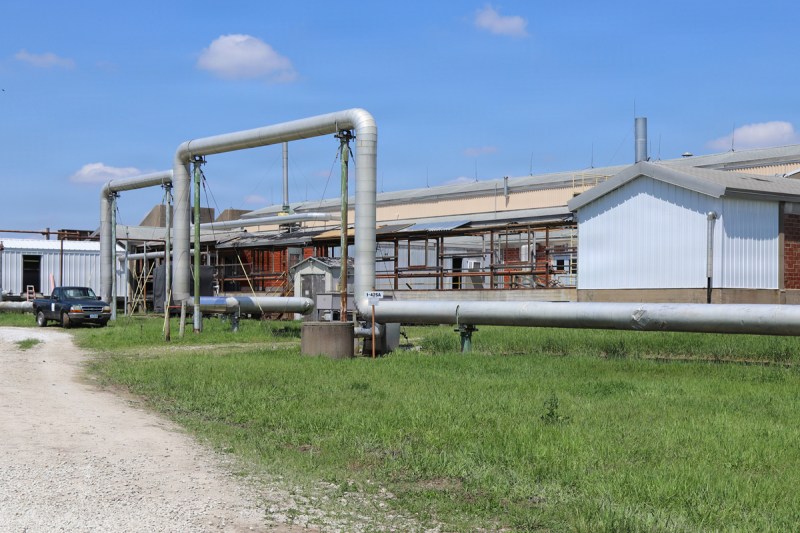
The ammunition plant in Middletown, Iowa, where the dangerous lead azide was found. Photo: AAP
The army said in a post on X on Sunday the detonation would be on Wednesday “to allow for optimal weather conditions and all mitigation measures to be emplaced”.
It has advised people to avoid the area during the detonation and urged anyone who cannot leave beforehand to stay indoors.
Iowa Environmental Council senior director of policy and programs Kerri Johannsen said there had been a lack of detail and prior notice from the army.
“Many folks, including state officials, did not have any heads-up about this … There was not enough information being shared,” she said.
“The early recommendations from the army had a lot of people sort of with their jaws hanging open … There remain so many questions about mitigation and protection.”
-with AAP

Trump made $15m with push to reinstate Huang
Impersonator mocks Trump at Canada dinner
Congress reps baulk at Trump's Nvidia call