‘Immediate removal’: Trump’s order after peace deal with Iran

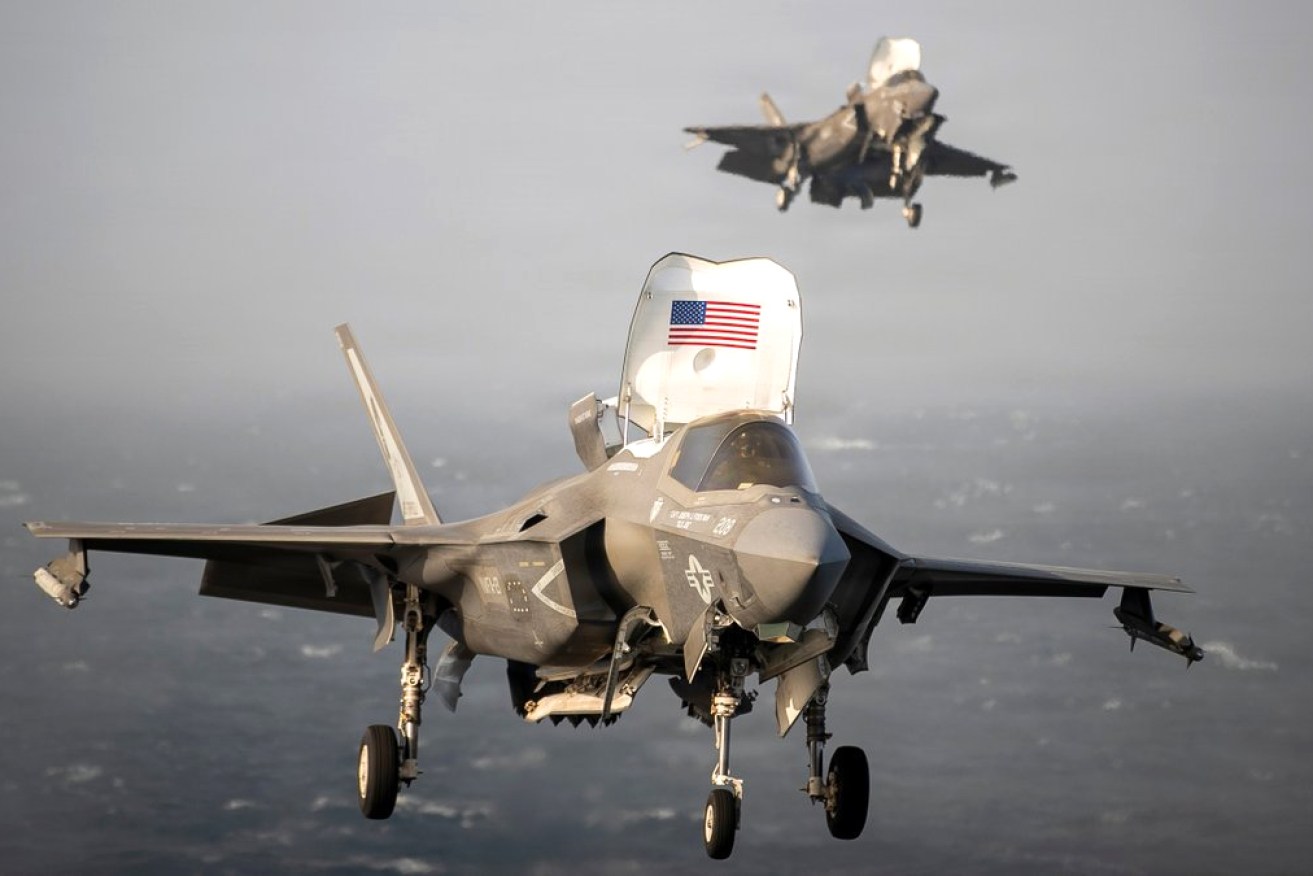
The US has launched attacks on Iran for the first time since July. Photo: US Central Command
US President Donald Trump has ordered an immediate end to the American blockade of the Strait of Hormuz if an agreement to end the months-old war in the region is finalised on Friday.
It follows the announcement on Monday morning (Australian time) by Pakistani Prime Minister Shehbaz Sharif that the US and Iran had reached an agreement intended to pave the way for an end to their war after weeks of negotiations.
“Following intensive talks, we are pleased to announce that the Peace Deal between the United States of America and Islamic Republic of Iran has been REACHED,” Sharif wrote on X.
He said the official signing ceremony would take place in Switzerland on Friday.
The precise terms were not immediately known. Sharif said in a post on X that the pact called for “the immediate and permanent termination of military operations on all fronts, including in Lebanon”.
Shortly afterwards, Trump confirmed the agreement.
“I hereby fully authorise the toll-free opening of the Strait of Hormuz, and, simultaneously herewith, authorise the immediate removal of the United States Naval blockade,” Trump wrote on his Truth Social platform.
“Ships of the World, start your engines. Let the oil flow!”
Trump soon hedged, however, saying the strait wouldn’t open until Friday’s signing.
“Many presidents have tried to make Peace with Iran, and all have failed before me. The Leaders of the Region have, for the first time, found a President who can help them achieve real Peace,” he wrote in a follow-up post.
Oil prices fell on the news. Brent crude futures fell 4 per cent in early trading on Monday, while US West Texas Intermediate slid more than 4.6 per cent.
In Australia, Prime Minister Anthony Albanese and Foreign Minister Penny Wong issued a joint statement welcoming Monday’s developments.
“We are pleased the agreement between the US and Iran includes steps towards reopening the Strait of Hormuz and the restoration of freedom of navigation,” they said.
“While full recovery will take time, restoring this vital trade corridor is essential to easing pressure on energy prices and economises, including in our region.”
Iranian Deputy Foreign Minister Kazem Gharibabadi also said on X a more expansive agreement would be negotiated during a 60-day ceasefire period, including sanctions relief.
“We have several issues to address. The first is the termination of all sanctions against the Islamic Republic of Iran,” he also told the official Islamic Republic of Iran News Network.
Gharibabadi said the sanctions relief would also include the “termination of United Nations Security Council resolutions and IAEA Board of Governors resolutions”.
Sources have previously told Reuters that the fate of Iran’s nuclear program would be addressed in later talks.
No further details on the content of the agreement were initially announced.
A senior Iranian official earlier told Reuters that, under the terms of the draft deal, the US would agree to release $US25 billion ($A35 billion) of frozen Iranian assets, while Iran would agree not to produce or acquire nuclear weapons.
Iran agreed to maintain the nuclear status quo, including no uranium enrichment or expanding nuclear facilities, until a final deal is reached.
There was no immediate reaction to the announcement from Israel, which has said it was not party to the planned US-Iran deal.
Israeli PM Benjamin Netanyahu has differed with Trump over American demands that Israel curb its military action in Lebanon to allow the United States to reach a deal with Iran.
Israel has said it will retain freedom of operations in Lebanon, while Iran has made a full ceasefire there an important component of its demands.
The deal had once again appeared to be hanging by a thread after renewed exchanges of fire between Israel and the Lebanese Hezbollah militia at the weekend.
A strike near Beirut should not have happened, “particularly on a special day when we are so close to a Peace Deal with Iran,” Trump wrote.
He had originally held out the prospect that a framework agreement to end the war between the US and Iran could be signed on Sunday, his 80th birthday.
Following the Israeli strikes, Iran had called into question a possible agreement on a framework deal with the US. Iran’s Islamic Revolutionary Guard Corps (IRGC) also threatened Israel with counter-attacks.
A key condition for Iran in any agreement with the US was an end to military operations on all fronts, including in Lebanon. Tehran had repeatedly stressed that it would not continue the diplomatic process unless that demand was met.
The US and Israel had repeatedly justified their war against Iran by saying that the arch-enemy of the Jewish state must not be allowed to obtain nuclear weapons.
It remains unclear whether the planned follow-up talks after the framework agreement will lead to an agreement on Iran’s disputed nuclear program.
-with AAP
Want to see more stories from The New Daily in your Google search results?
- Click here to set The New Daily as a preferred source.
- Tick the box next to "The New Daily". That's it.

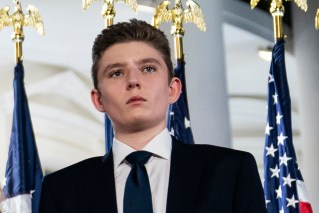
Iran's chilling ‘bounty’ on Barron Trump