Police fight to stay silent at NT inquest
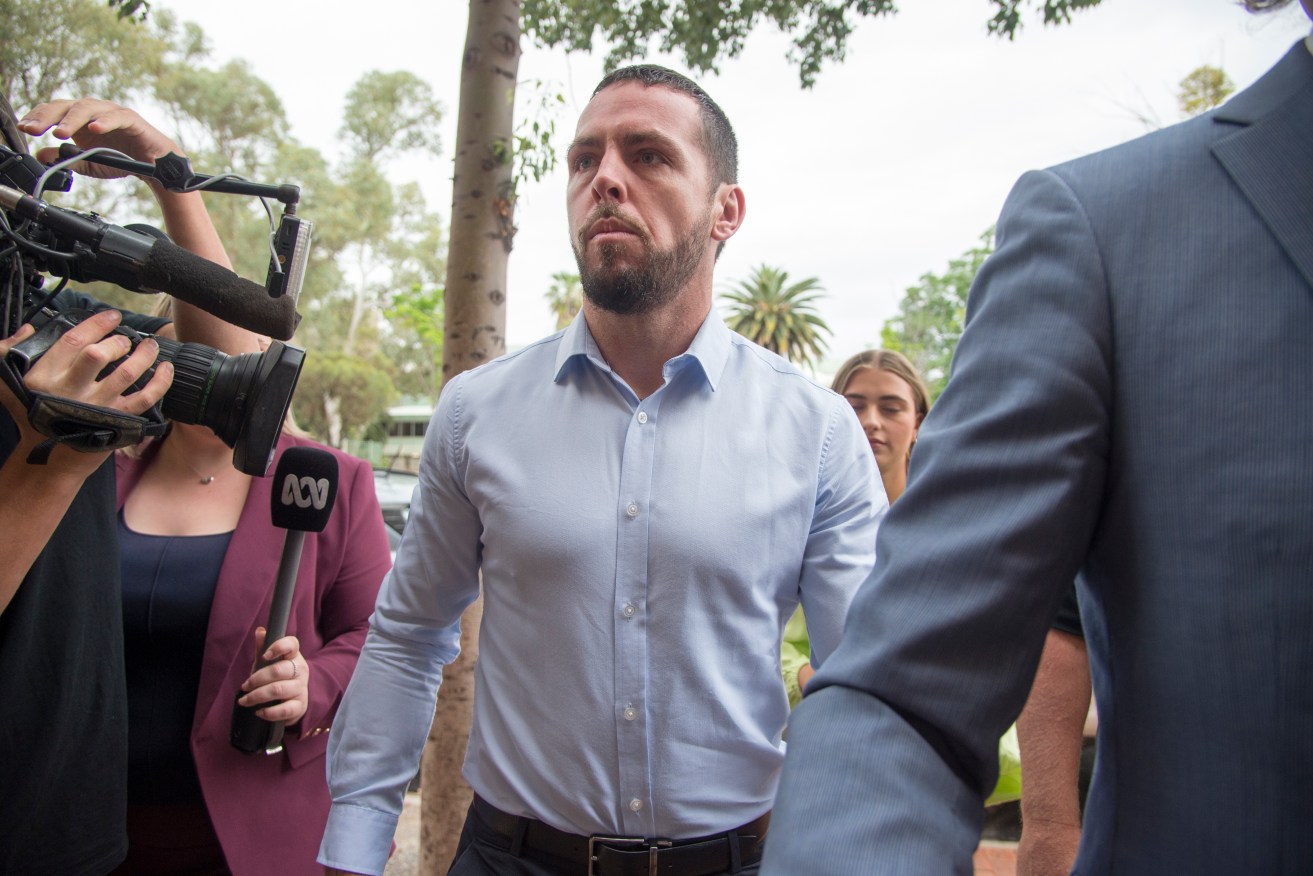
Lawyers say Zachary Rolfe could be penalised if he gives evidence at a coronial inquest. Photo: AAP
A Northern Territory policeman acquitted of an Indigenous teenager’s shooting murder should be allowed to refuse to give evidence at his inquest, a court has been told.
Constable Zachary Rolfe shot Kumanjayi Walker, 19, three times during a botched arrest in Yuendumu, northwest of Alice Springs, on November 9, 2019.
A long-running coronial inquiry into the Warlpiri man’s death was suspended on Wednesday so lawyers could appear at a Supreme Court judicial review.
They are making submissions for and against Coroner Elisabeth Armitage’s earlier decision that witnesses cannot refuse to answer questions by invoking the penalty privilege.
She previously said penalty privilege was extinguished by the Section 38 of the NT Coroner’s Act or was never available to witnesses.
The section creates a mechanism for the coroner to compel a witness to give evidence that could incriminate them and for the provision of an immunity certificate from prosecution after doing so.
Two policemen, Const Rolfe and Sergeant Lee Bauwens, launched the legal review, saying the coroner’s interpretation of the NT Coroner’s Act is wrong.
Their lawyers believe the certificate won’t protect the officers from internal disciplinary proceedings stemming from their evidence and Section 38 does not abolish penalty privilege and it remains available to their clients.
“The issue to be resolved is whether penalty privilege is a basis, quite apart from Section 38, upon which a witness, who is being examined under oath in an inquest under the Coroner’s Act, 1993 NT is entitled to refuse to answer questions,” Const Rolfe’s lawyer, Ben Doyle, said.
The officers’ legal teams fear the men could be subject to police disciplinary action if they answer questions about some of the issues the coroner is investigating and as such can’t be forced to give evidence.
If the Supreme Court finds Judge Armitage’s ruling was correct, she will be able to compel the men to answer uncomfortable questions about racist text messages the inquest has heard the pair allegedly sent.
Const Rolfe is also likely to be asked about the night he killed Mr Walker and his alleged misuse of police body-worn cameras and excessive use of force.
All told, there are 14 categories of evidence Const Rolfe could be forced to answer questions about, including nine incidents related to investigations over his use of force on the job.
The 31-year-old may also be asked about his allegedly homophobic and sexist text messages, along with his prescription drug use and his falsified NT police recruitment application.
The officer, who says he’s been banned from all NT police stations and is on indefinite sick leave, refused to answer the questions when he appeared as a witness at the inquest last week and claimed penalty privilege.
“I wish to exercise my right and claim the penalty privilege on the basis my answers might tend to expose me to penalty,” he told the coroner.
The inquest into Mr Walker’s death will continue on Friday when the two-day Supreme Court hearing has finished.
– AAP