Another state rejects beleaguered gun buyback
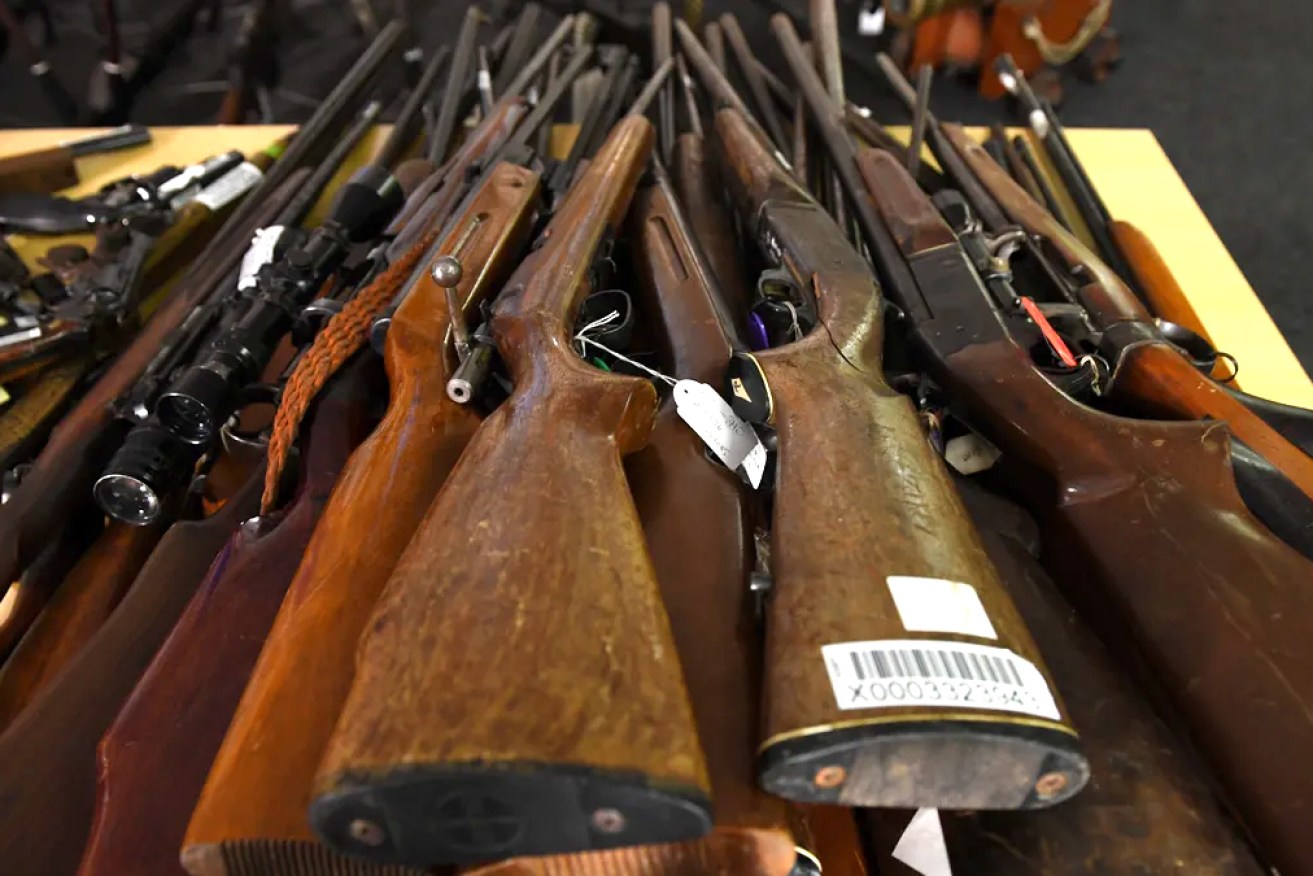
Action was promised and gun ownership laws were tightened in the days after the Bondi shootings. Photo: AAP
South Australia has refused to join a planned national gun buyback, warning it will not spend state funds on a scheme it says should be paid for entirely by Canberra.
Treasurer Tom Koutsantonis says SA is not interested in signing up to a model that relies on state co‑funding rather than being fully funded by the Commonwealth.
South Australia cannot divert money from essential services and cost‑of‑living priorities into a program driven by federal politics, he said.
“We think we’ve got the balance right here in South Australia, but if the Commonwealth government want to embark on a buyback scheme under the same process that John Howard did, they’re more than welcome to,” Koutsantonis told ABC Radio.
“The John Howard buyback was fully funded by the Commonwealth government, so they funded it in its entirety.”
Koutsantonis said all states faced broader funding pressures to keep up with demand for health, disability and other frontline services.
On Sunday, Prime Minister Anthony Albanese and NSW Premier Chris Minns announced details of the state’s buyback, due to begin in November.
NSW is currently the only jurisdiction participating in the national scheme, which was promised after last December’s Bondi terror attack in which 15 people were killed.
Conservative governments in Queensland, Tasmania and the Northern Territory have also declined to sign up to the buyback.
Western Australia has already run its own gun buyback and has no plans for a second scheme linked to the Bondi attack.
In Victoria, regionally based former premier Jacinta Allan had previously baulked at joining the national buyback, denting Canberra’s hopes of broad state participation.
Her resignation and replacement by Ben Carroll has created uncertainty ahead of the November 28 election as the new premier weighs how far to go on firearms.
The stand-off has revived comparisons with former Liberal prime minister John Howard’s 1996 post‑Port Arthur buyback, funded entirely by the Commonwealth through a temporary Medicare levy.
Gun‑rights advocates say Albanese’s approach falls short of that standard and unfairly targets law‑abiding shooters while failing to address extremism and radicalisation.
Sporting shooters are among a broad range of pro‑gun groups attacking the post‑Bondi reforms at federal and state level, alongside the coalition and One Nation.
In regional NSW, independent Barwon MP Roy Butler said the Minns government’s approach unfairly targeted farmers and sporting shooters in his vast western electorate.
“The idea that taking firearms away from law‑abiding people, farmers, sporting shooters, target shooters – that somehow that’s going to stop terrorism or impact terrorism and extremism and radicalisation is just nuts,” Butler told ABC Radio.
The Nationals have tabled a bill in the Senate to repeal Labor’s federal firearms crackdown and abolish the proposed national buyback.
Leader Matt Canavan called the reforms a “knee-jerk and unnecessary piece of legislation that was never properly consulted on” as the rural party accused the government of unfairly targeting law-abiding gun owners.
One Nation leader Pauline Hanson echoed the comments, saying the Bondi attack was the result of individual bad actors.
“It wasn’t the guns, it was the people behind the guns that are responsible for the Bondi massacre,” she told News24 on Sunday.
Anti‑violence organisations, including the Alannah and Madeline Foundation, have welcomed the NSW buyback and continue to lobby other states to tighten their firearms laws.
Announcing the NSW-federal agreement alongside Albanese on Sunday, Minns said he was prepared to fight next March’s NSW election on the issue.
“We’re not changing our position and voters ought to know that when they cast their ballot,” he said.
The total cost of the buyback was not known as the scheme was demand-driven, but the bill for taxpayers would likely be in the hundreds of millions of dollars, Minns said.
“It’s expensive, but it’s a price worth paying,” he said.
Albanese said failing to act to rein in growing numbers of firearms in the community would come at a greater cost.
“We know what the cost of inaction is,” he said.
“We’ve seen it, tragically.”
-AAP