
Victorians have delivered a savage indictment of a government they grew to hate, only four years after giving it an increased majority.
This is a blunt message – including to the Albanese government – about how quickly opinion can change and, when it does, how harsh voters’ judgement can be.
Jess Wilson, 36 years old and with only one parliamentary term under her belt, becomes Victoria’s new premier.
The fact voters have given her a massive majority will make the huge task ahead of her at least somewhat easier.
Labor’s vote has plunged from about 37 per cent last election to just over 18 per cent late on Sunday night.
Far from helping revive Labor, Ben Carroll, installed at five minutes to midnight, lost his own seat. The seat vacated by former premier Jacinta Allan has also gone among the swathe of others.
One Nation has had strong support – about one in five of the primary votes – but preferences mean it’s unclear what this means for seats.
Pauline Hanson told her party faithful: “One Nation is snapping at the heels of the political establishment. [ …] One Nation won’t be slowing down.”
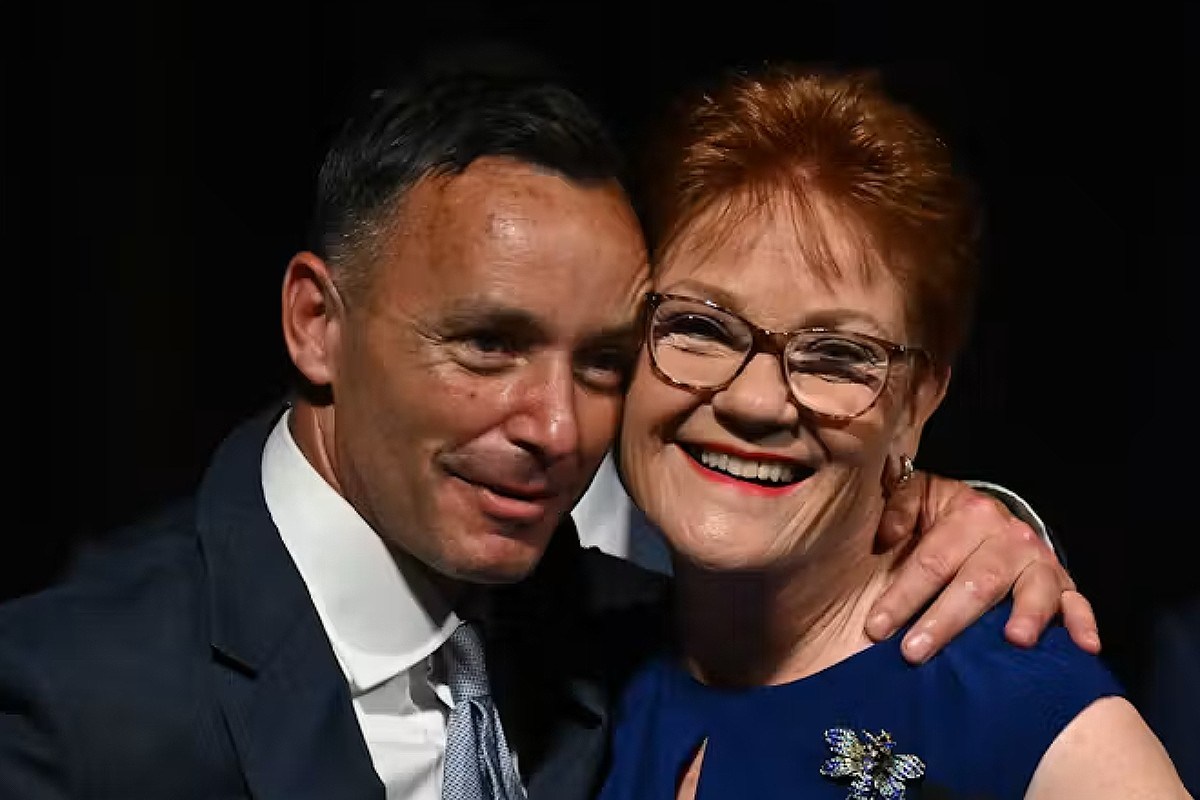
Hanson said One Nation’s strong Victorian performance was just the beginning. Photo: AAP
The Greens have increased their numbers from four lower house seats in the last parliament, as many progressive voters, protesting against Labor, moved to them.
It wasn’t clear on Sunday night whether Labor or the Greens would be the official opposition.
The result was largely centred on state factors – including crime, financial mismanagement, corruption particularly driven by the CFMEU, potholes, and political arrogance.
And, of course, cost of living – which is a crossover issue with federal politics. Also feeding into the picture were the broader national climate of economic malaise (rising inflation, interest rates, unemployment), an unpopular federal government and a fragmenting party system.
Despite being mainly about state issues, the Victorian outcome will be closely scrutinised for its likely federal fallout and how this will affect the psychology of Labor, the Coalition, One Nation and the Greens nationally.
Deputy Prime Minister Richard Marles, who is from Victoria, spoke to Anthony Albanese during the evening about the devastating picture.
“A bad night for Labor and we both shared that sentiment when we spoke to each other about it,” he told the ABC. “In terms of our concern and what we do, we are focused in terms of administering the federal government in the best way we can to support working Australians.”
Marles admitted that, “it is obviously the case that a backdrop to this is a pretty challenging economy right now. We’ve had two interest rate rises in recent times and that forms the backdrop of what’s occurred here.”
The rout tells the Albanese government that however well protected a party may feel by having a big majority, even the largest buffer is no guarantee when a volatile electorate has become hyper-angry.
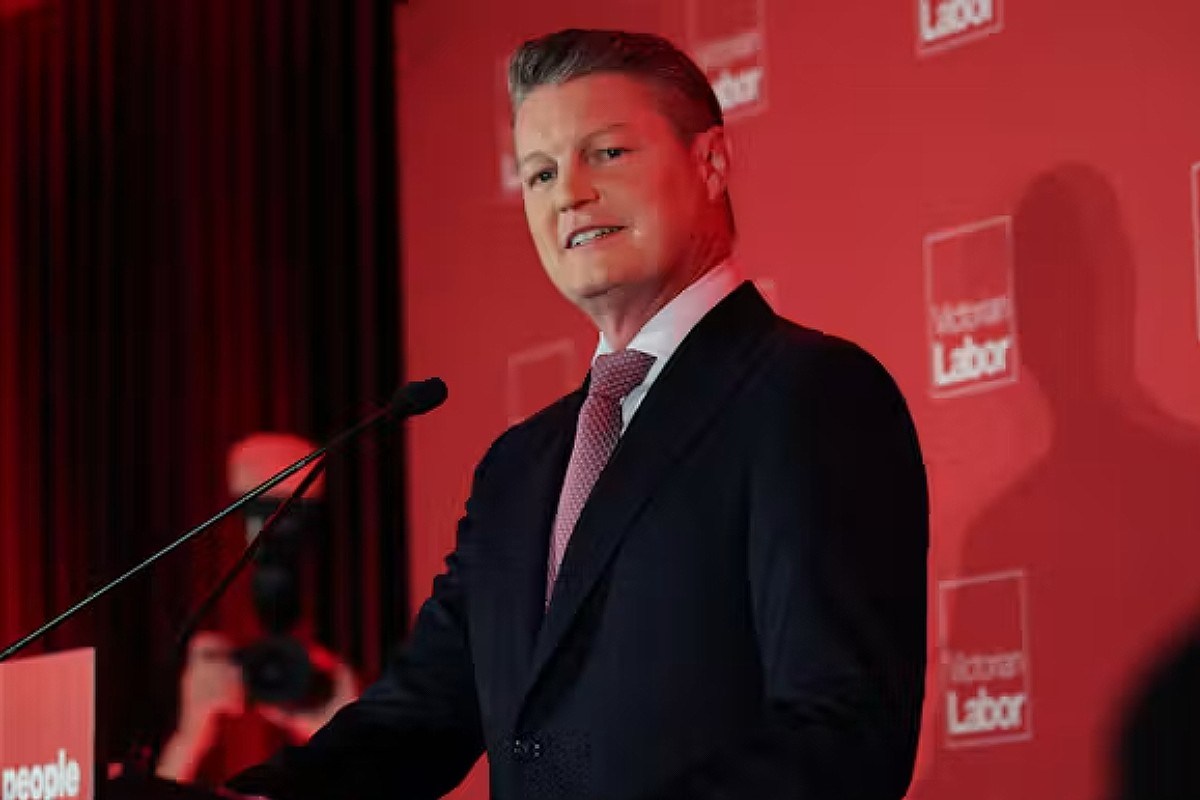
Premier Ben Carroll lost the election and his own seat. Photo: AAP
For the Liberals, the state result is a hefty shot of adrenaline. It comes when a few encouraging signs have been appearing for the federal Coalition and Angus Taylor.
In Melbourne at the Liberal celebration on Saturday night, Taylor declared, “The Liberal Party is back in town”. Taylor, incidentally, could take a few lessons from Wilson in the art of campaigning.
Deputy Liberal leader Jane Hume was quick to claim federal factors played into the result, pointing to small businesses collapsing.
But the adrenaline doesn’t last indefinitely. Both the Liberals and the Nationals have to brace themselves for a bad result in New South Wales at the March state election.
The Albanese government may hope the defeat in Victoria could mean now voters have taken out their vengeance against state Labor, the slate may be cleaner by the time of the federal election. Labor super-optimists might hope the new state government will have stuffed up, to a greater or lesser extent, by 2028.
But if Wilson performs well that could potentially help the prospects for federal Liberals. Importantly, there will be a great deal more Coalition electoral infrastructure with all those new members, and that should assist the Coalition federally in a state where it has been almost wiped out federally and must recapture ground to have any chance of national office.
Wilson has run a sustained and strong campaign as opposition leader; impressively, she has brought and kept together what had been a dysfunctional Liberal Party.
But governing brings different challenges, requiring its own skill set. Not only has Wilson never been a minister – she is taking over a state fractured on various fronts.
Identifying problems is one thing, fixing them is something else entirely.
And then she has to maintain discipline in her own ranks, making sure her government is not undermined by hubris, or the sheer bloody-mindedness for which the Victorian Liberals have been notorious.
She has travelled an amazing journey to this point. Now she starts the mountain climb.
Michelle Grattan is a Canberra correspondent and Professorial Fellow at the University of Canberra.