Church election probe compared to Spanish inquisition
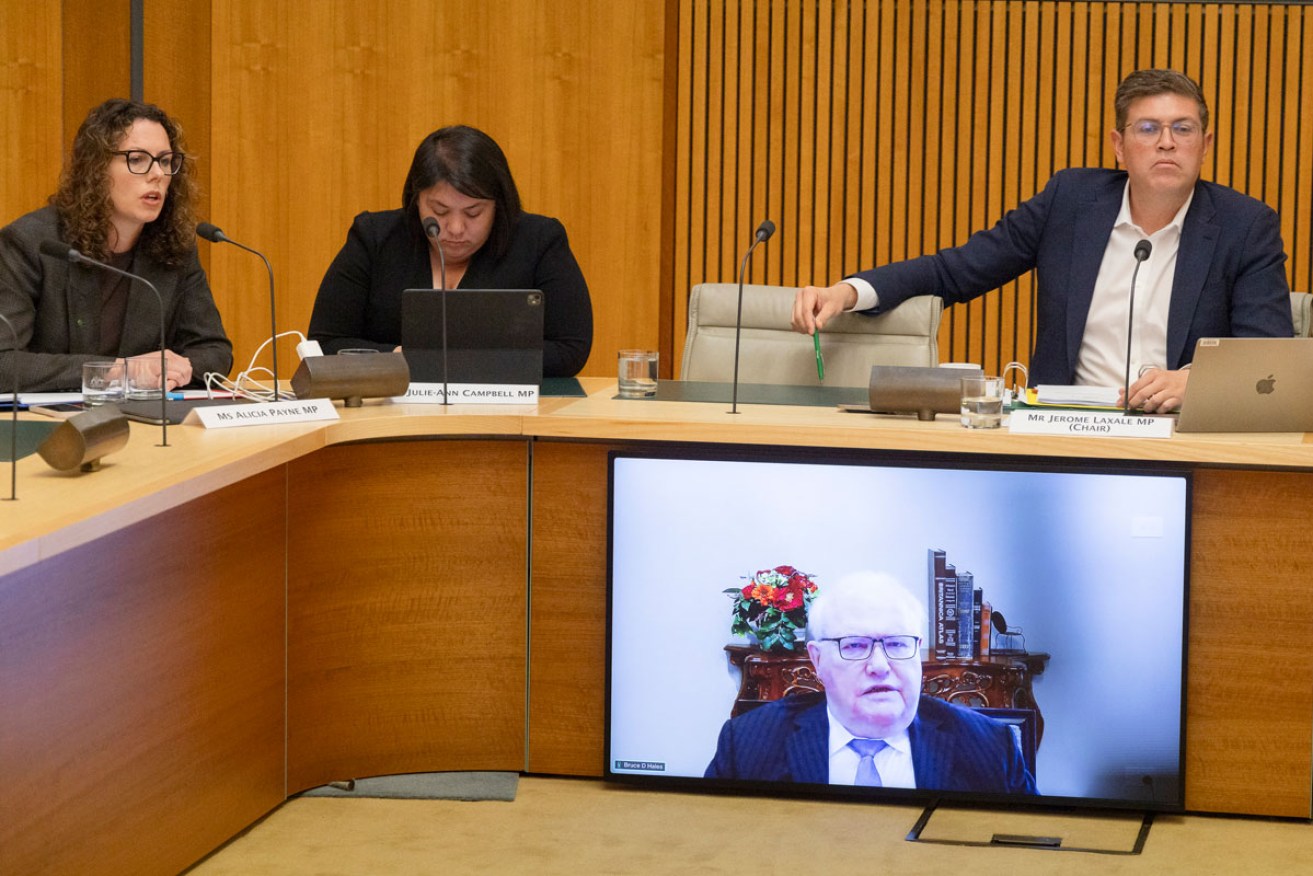
Bruce Hales said the Plymouth Brethren did not enforce political beliefs. Photo: AAP
Shouting matches between MPs and senators have erupted during hearings into whether a powerful and secretive Christian sect interfered in the last federal election.
Bruce Hales on Friday became the most senior figure in the Plymouth Brethren Christian Church to appear before a committee examining whether the organisation mobilised members to campaign, including by allegedly paying neo-Nazis to harass MPs.
Multiple candidates during the 2025 election reported unusually large numbers of Liberal volunteers manning pre-poll booths, with the party’s own post-election review labelling the Brethren a “support group”.
Hales is recognised as the church’s global head but said he has no authority to direct members and claims he only heard about Brethren members’ campaigning through the media.
“We very, very rarely discuss politics, it’s not a big theme,” Hales said regarding conversations in which he allegedly gave orders to his sons, who are known to have campaigned for the Liberal Party.
“I know you think it is, but I think most of your precious committee has got it wrong.”
Coalition members repeatedly interrupted questioning, including when independent MP Monique Ryan inquired whether Hales guided church members on where they live, their clothes and hairstyle, who they marry and when and where they travel.
“This is patently ridiculous,” Liberal MP Ben Small said before Hales could answer.
“This is not the Spanish inquisition, chair,” Liberal senator Richard Colbeck interjected, when Hales was asked again about alleged collusion with his sons on generating campaign material.
“It’s a lot like religious persecution to me,” Nationals Senate leader Bridget McKenzie added.
Independent Andrew Gee relayed his experience of being filmed, crowded and followed between voting booths by Brethren members, adding booth members had reported being afraid to man their posts.
Hales said that while he was sympathetic to people who felt intimidated, individual congregants’ actions were their responsibility and he did “not necessarily” need to apologise as head of the church.
“Anyone that’s guilty of it individually should be prepared to apologise,” he said.
“I have no part in that whatsoever, do not support it, and quite frankly, are (sic) against it.”
Hales was also asked by the committee to explain years-old comments he reportedly made describing Jews as “depraved, wicked infidels”.
The church leader responded by saying having a Jewish background himself led him to refer to the religion “in a lighter vein”.
He maintained the Brethren as an organisation did not enforce political beliefs or action, but agreed one’s religion was likely to affect how they voted.
“We pray the government might do what’s right and honour God because we’re a Christian country, and I think that’s what the government should be going by, is Christianity,” Hales said.
“Someone’s faith and how highly they regard it and how deeply they’re involved would be influential in how they choose to participate in any election, but I do think that the faith and participation is unrelated.”
The inquiry was branded “hyper-partisan” by Liberal senator Sarah Henderson ahead of Friday’s hearings.
“It’s completely inappropriate and very unprofessional conduct from the chair,” she told reporters in Canberra.
American conservative action group Turning Point USA had earlier issued a statement slamming the parliamentary inquiry over allegedly persecuting the Plymouth Brethren.
Hales said he was not aware of the Turning Point statement before it was published.
–AAP
Chalmers' grim warning in fight against far right
Greens senator on leave after women claims
Minister backs tweaks to social media protections
Labor tries again with health insurance bill
Double standards from groceries to a 'shrug emoji'
Treasurer denies being rolled on ATO card issue
Taylor eyes Frydenberg return, despite critique