Gagging and blacklisting – what’s going on in the NT while we’re all looking elsewhere

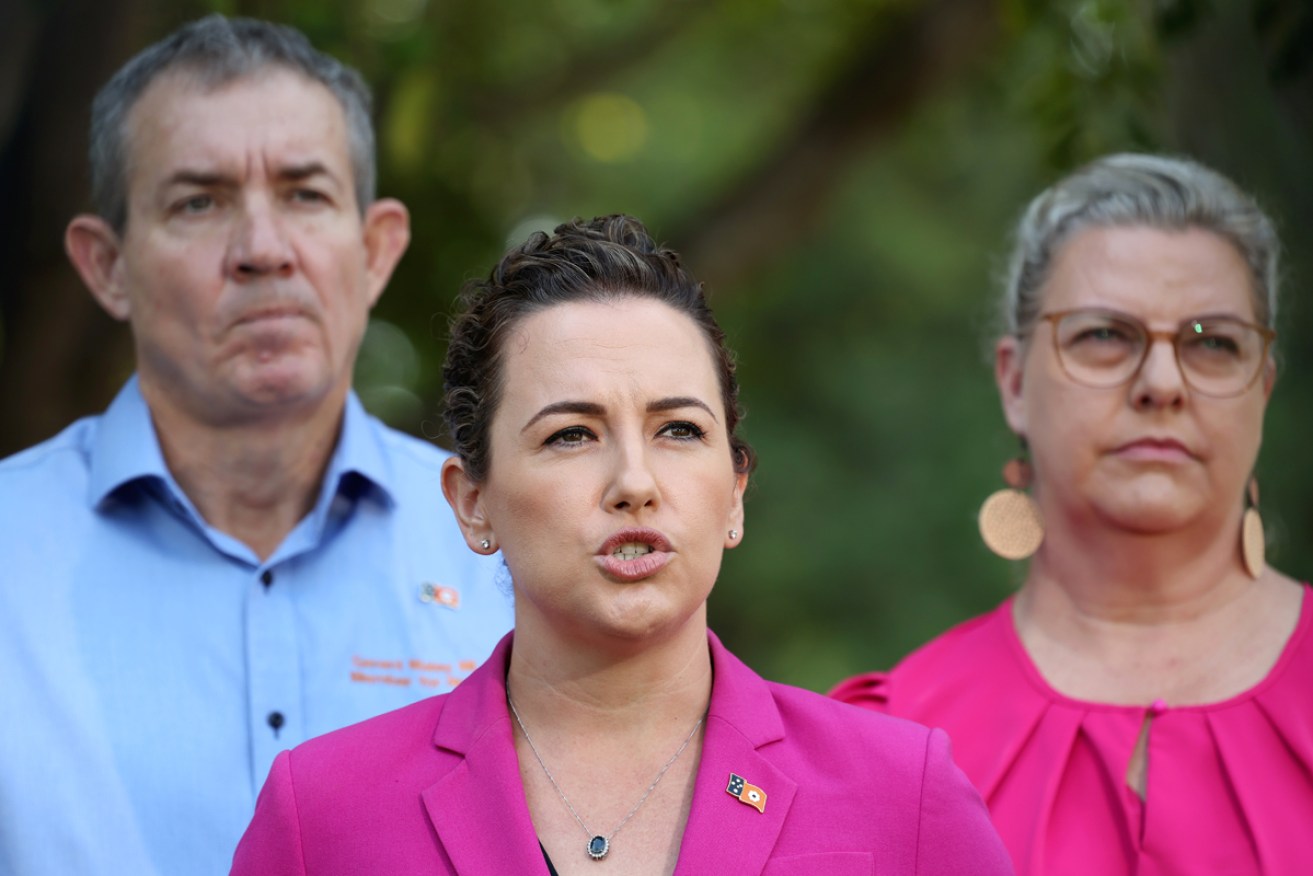
Lia Finocchiaro's government is becoming more controlling and secretive, while Australian eyes are elsewhere. Photo: AAP
Amid Pauline Hanson’s latest racism controversy, Australia’s most right-wing government announced yet another life-changing and devastating decision for Indigenous people.
The Northern Territory Country Liberal Party, led by Lia Finocchiaro, has made no secret that it intends on doing what it wants in the NT.
It lowered the age of criminal responsibility to 10 and lifted the ban on spithoods. Senior leaders gleefully announce they want to “drill baby, drill” while giving a hand-picked public servant the power to override statutes if the government considers a project to have economic significance.
It’s rammed through laws that will see Indigenous children removed from their families in what experts fear will have generational impacts. Children can be targeted before they are even born. Discretion has been removed from courts and experts. There has been no consultation with remote communities which will be targeted.
One independent MP, Yinjya Guyula resigned from parliament, saying he could not work with the government, which he said was “dehumanising, oppressing and destroying” Indigenous communities. Under the CLP, he said, a “slow genocide” was occurring. (Meanwhile, in the federal Senate, Penny Wong couldn’t say Indigenous people had been subjected to a genocide, after research was released showing the Indigenous population pre-colonisation was significantly larger than previously estimated. Despite prodding by Lidia Thorpe, Wong danced around a truth school history teachers were freely teaching in the 1990s).
And this week, the NT government, after refusing assistance from the federal government, announced it would move families living in a critical accommodation facility, which houses people seeking medical treatment, escaping violence or experiencing homelessness, out of Darwin.
Snap Media, an independent Northern Territory news site, reported the government proposes to spend almost $10 million to move people 100 kilometres out of town to Batchelor, including taking $7 million from the NT’s flood recovery fund. Keeping the centre open would have cost $3 million, with the federal government already offering funds.
This will overwhelmingly impact Indigenous people. The NT government knows that. It already has, as veteran NT photo journalist (A)manda Parkinson reported in April, when flood evacuees were housed behind temporary fences and denied visitors in what Nauiyu traditional owner, James Parry, told Parkinson was like living “in a prison camp”.
As Parkinson has reported, the move is seen as the latest attempt to whitewash the NT’s major centres, returning to the “fringe dwelling model seen in the early 1900s”.
The government is moving one of its most vulnerable populations away from community and services, away from life-saving treatments, to an area where they do not have the same infrastructure to meet their needs.
There is an inherent cruelty to all these decisions. And now, the NT government is deciding which media it replies to, and gagging and blacklisting organisations and journalists it doesn’t agree with.
It’s the independents who are being targeted, as they have delved into areas the mainstream isn’t getting into or is moving on from. Parkinson, who founded Snap Media, has been been deemed a non-journalist by the NT government, despite their long and award-winning career, and has now been excluded from press conferences, and denied responses to inquiries.
Christopher Walsh, who founded the NT Independent, often finds roadblocks in his way as well, with ministers walking away from questions at press conferences.
Both have the contacts to keep doing their jobs, but both have also observed the government acting with more and more impunity. That’s not only impacting the NT’s democracy, but also having a detrimental impact on the environment, human rights, Indigenous rights and people themselves.
There is a lot of talk in the political and media classes more broadly of what One Nation holding power would look like, and criticism of Hanson’s picking and choosing which journalists she allows at press events. Ignored in that conversation is that it’s already happening in Australia, but because it’s the NT – and because it primarily impacts Indigenous people – the nation’s media at large overlooks it.
As Walsh, who experienced government blacklisting during 2020 under the Labor Gunner government (something the current CLP leader spoke out against) said, “a ban on the free press is a desperate government’s last resort to avoid scrutiny. It’s supreme arrogance that shows the public it doesn’t think it needs to explain its actions anymore”.
Snap has reported government control over who can get what information will go even further – the government is working on bringing its communications and media department under one umbrella, which will centralise, through the leaders’ office, what is and isn’t released to media.
It was the NT Independent that revealed the former chief minister Natasha Fyles’ share scandal. Snap has been ahead of the game on social justice and moves within the government to stomp over rights.
The NT government is notorious for not facing the media at the best of times – press conferences are rare, departments don’t answer questions and, federally, there is an acknowledgement that the CLP government does not feel it has to be accountable.
As Hanson was giving a non-apology for her racist comments, the NT government sent out a media alert for a ministerial press conference with no location. Journalists were told they had to call directly for information. Instead of an address, geographic coordinates were sent out.
The moment the questions went to areas the minister didn’t want to answer, the press conference was ended.
And it’s getting away with it, because, much like the federal media response, there is no solidarity among the media class to stop it. Access, however controlled, is prioritised over accountability.
It’s aided by a nation that largely ignores the NT, unless it’s politically convenient to make its community a scapegoat, or there is a momentary focus on Indigenous people.
Democracy might die in darkness, but before the light goes out, a hell of a lot of flares have to be ignored – and there is a giant one flashing over the NT at the moment.
Amy Remeikis is a contributing editor for The New Daily and chief political analyst for The Australia Institute
Want to see more stories from The New Daily in your Google search results?
- Click here to set The New Daily as a preferred source.
- Tick the box next to "The New Daily". That's it.
Gagging and blacklisting: What's going on in the NT
How Pauline Hanson might have finally gone too far

Labor’s migration plan: Politics or a real solution

Pork barrel rolls out again – it's time for a change
Long-awaited migrant plan reflects needs and fears
Labor to stop ‘visa hopping’ in migration crackdown

Foreign students' families blocked in migration plan