Labor to stop ‘visa hopping’ in migration crackdown

Source: News 24
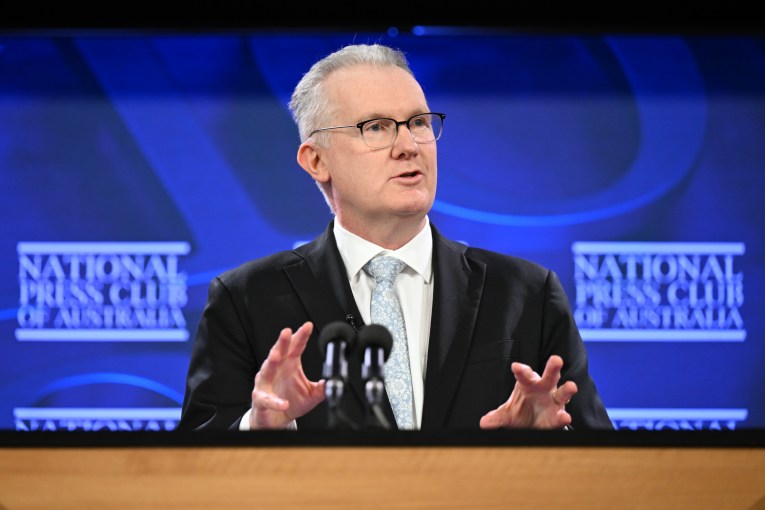
Immigration Minister Tony Burke has warned that slashing migration too far will “trash the economy” as he finally unveiled a plan to “soften” the number of new arrivals, including a crackdown on “visa hoppers”.
Burke revealed the long-awaited changes to the migration system on Thursday, following weeks of delay and speculation.
Labor’s proposal targets foreign students and backpackers while prioritising migrants with skills needed to plug serious gaps such as construction and nursing.
Burke said international students would be restricted from “hopping” between visas and bringing family members to Australia.
Students undertaking a course would not be able to switch to the next and next, unless it was going “up the qualification scale”.
“To hop around, up and down, to different institutions…actually just seeking a migration outcome as part of Australia’s export of international education will come to an end as a model,” he said.
Burke also outlined a “ballot” system for foreign backpackers wanting to stay longer than one year in Australia.
Only 45,000 working holiday-makers would be approved for a second year, and only 5000 for a third year — down from 57,000 and 31,000 respectively.
Burke said migrants coming to work in construction, farming, fisheries, mining and teaching would be prioritised.
People who overstayed their visa, of which there are about 77,000, would be sent to detention centres, with the government now on the hunt for more facilities, 100 new compliance officers and more beds.
The government is trying to bring Australia’s population growth due to migration down from 292,100 to 245,000 in the year to July 2027 and 225,000 each year thereafter.
The Coalition believes migration should fall to 170,000 in line with housing construction, and One Nation wants a 130,000-person a year cap.
But Burke said going too low would trash the economy and cause a loss of skills in vital sectors like construction, medicine and nursing.
He said migration was not causing the housing shortage, but immigration needed to “soften enough” to give housing a chance to catch up.
“We have a shortage of homes and people want to make sure that we guide the immigration system so that we soften our numbers to be able to allow housing to catch up,” he said.
“But it would be a complete own-goal to say the way we’re going to do that is to trash our medical system, trash our aged care system, and not get the construction workers to build the homes that would actually help with the problem.
“That’s what those lower numbers do.”
Burke revealed the long-awaited changes to the migration system on Thursday, following weeks of delay and speculation.
The suite of policy changes, which does not include new legislation after negotiations with the Coalition broke down, will also strengthen compliance measures forcing people without a valid visa to leave the country.
”Australia welcomes people who make a genuine contribution to our country,” an offical statement said.
”Australia does not support people who seek to rort or defraud the system. We’re making changes to give us more control over who arrives, who stays and who leaves.”
The skilled migration program will be tweaked to prioritise applicants in healthcare, construction, education, law enforcement, defence, resources, agriculture, aquaculture, and fishing.
Tourists will no longer be able to extend their stays in Australia with the introduction of a ”no further stay” condition on visitor visas.
Working holiday-maker visas, on which the agriculture and tourism industries rely heavily for staff, will also be changed. A ballot system will be introduced for years two and three and an additional regional work requirement introduced.
The current freeze on processing of working holiday visas will come to an end, with processing times for applications to be stabilised at three months.
The department will also be handed greater powers to cancel visas for migrants involved in crimes targeting children, domestic violence and hate crimes.
”The government supports immigration but is opposed to anyone rorting the immigration system,” Burke said.
”Almost everyone who comes to Australia is a good guest in our country. These reforms are to ensure that our migration system can be better targeted to the current needs of Australia.”
It was Burke’s second attempt at announcing migration changes, six weeks after canning his first due to cabinet disagreements over the extent of the shake-up.
One Nation released its migration plan on Monday. It would cut three-quarters of a million migrants over three years and impose even stricter restrictions on international students, family visas, along with promises of widespread deportations.
Meanwhile, the Coalition wants to slash net overseas migration in line with new housing construction, but negotiations between the parties on a broader legislative package broke down.
Opposition Leader Angus Taylor said the Coalition’s policy would be revealed in due course, accusing the government of losing control of migration numbers.
The Australian Bureau of Statistics revealed net overseas migration fell from about 299,000 in 2025 to 292,100 in the year to March in a population update released an hour before Burke’s scheduled address.
Australia’s total population grew by 1.4 per cent in cent in the 12 months to March to 27.9 million.
-with AAP
Want to see more stories from The New Daily in your Google search results?
- Click here to set The New Daily as a preferred source.
- Tick the box next to "The New Daily". That's it.
Labor to stop ‘visa hopping’ in migration crackdown
Foreign students' families blocked in migration plan

Migrant debate is just hot air looking for a problem
Hanson rides Indigenous row, but risks loom
Labor set to announce sweeping migration changes
Hanson says 'sorry' to PM, Indigenous Australians