Controversial US firebrand loses bid to enter Australia
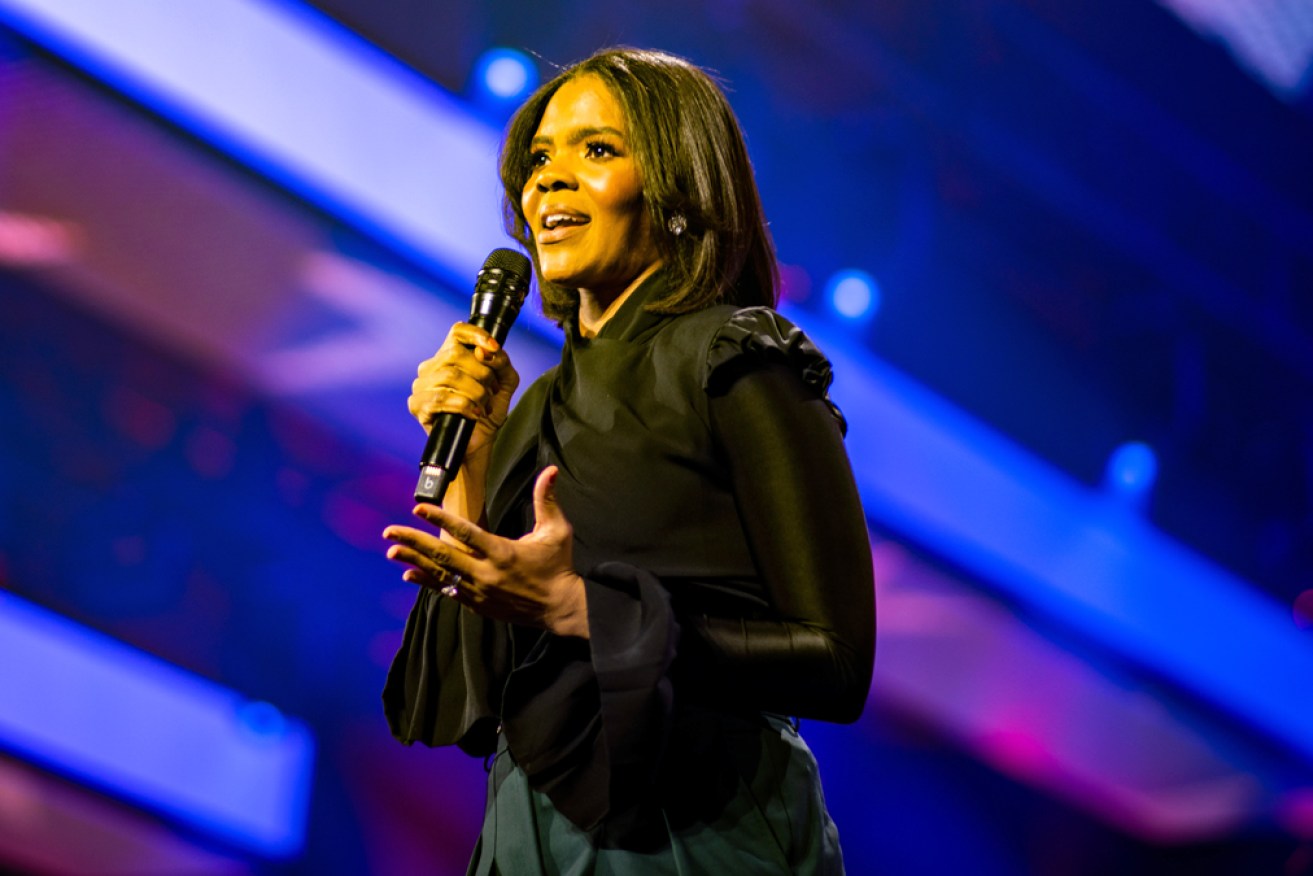
Candace Owens appealed to the High Court to overturn the denial of her Australian visa. Photo: AAP
Australia’s highest court has backed a decision by the federal government to refuse a visa to controversial US right-wing commentator Candace Owens.
Home Affairs Minister Tony Burke refused the far-right firebrand’s visa in October 2024 on the basis her visit was not in the national interest and that she would “incite discord” in the community during a planned national speaking tour.
Owens argued her visa rejection went against implied freedom of political communication and that the minister incorrectly interpreted the law.
But the High Court unanimously ruled on Wednesday the visa refusal valid.
In a lengthy published judgment, the court said the law applied where the visa applicant would “stir up strife or dissension in the Australian community” that would lead to harm or danger.
“In the absence of evidence, or agreed facts, it is not obvious that the opportunity to hear Ms Farmer speak in Australia (the so-called ‘lightning bolt’ effect) could add anything to political communication in Australia,” it said, using her married name.
The judgment stated the minister found the evidence was clear that using online platforms for this type of rhetoric can lead to “increased hate crimes, radicalisation of individuals and heightened tensions in communities”.
Burke blocked Owens’ visa application on the ground he “reasonably suspected” she did not pass the character test.
He decided there was a risk she would “incite discord in the Australian community” and that allowing her into the country would be against the national interest due to her “controversial and conspiratorial views”.
Owens’ lawyers argued the character test on which visa decisions are made was more likely to exclude non-mainstream political views by saying they sparked division.
Perry Herzfeld SC contended the threshold of “inciting discord” to reject a visa on character grounds was so broad it could capture disagreements and robust debates and was “very much in the eye of the beholder”.
This meant visas could be withheld from people who “will stimulate debate … the minister doesn’t like”, he argued in the High Court in May.
Legal provisions saying a person couldn’t attack Australian values were equally broad, he argued, saying the spectrum of what was an acceptable mainstream view changed over time. He pointed to the decriminalisation of homosexuality and the legalisation of same-sex marriage.
However, the High Court held the visa refusal was justified and did not infringe on the implied freedom of political communication.
The decision was valid, with Owens ordered to pay the Commonwealth’s legal costs.
When refusing the visa, Burke took into account the commentator’s views on Muslim, Black, Jewish and LGBTQI communities, and her use of online platforms to promote her views and ideology to foster division and fear.
Owens downplaying the impact of the Holocaust and claiming Muslims started slavery meant “Australia’s national interest is best served when Candace Owens is somewhere else”, the minister said at the time.
The Commonwealth contended she could encourage extremist behaviour, risk vilifying parts of the community or incite civil unrest if she were allowed into Australia and this constituted an unacceptable risk.
Court documents pointed to her being named in the manifesto of the man who claimed responsibility for a massacre at two New Zealand mosques.
The “incite discord” threshold to reject a visa on character grounds was intended to cover the more serious end of the spectrum, Solicitor-General Stephen Donaghue KC told the High Court during the May hearing.
Owens has more than 4.2 million subscribers on YouTube and 5.7 million on Instagram.
Earlier this year French President Emmanuel Macron and his wife Brigitte filed a defamation action against the podcaster over what has been described as her “relentless campaign” claiming the first lady was born a man.
-AAP