Counterfeit cash at an eight‑year high in Australia. Here’s how to spot it

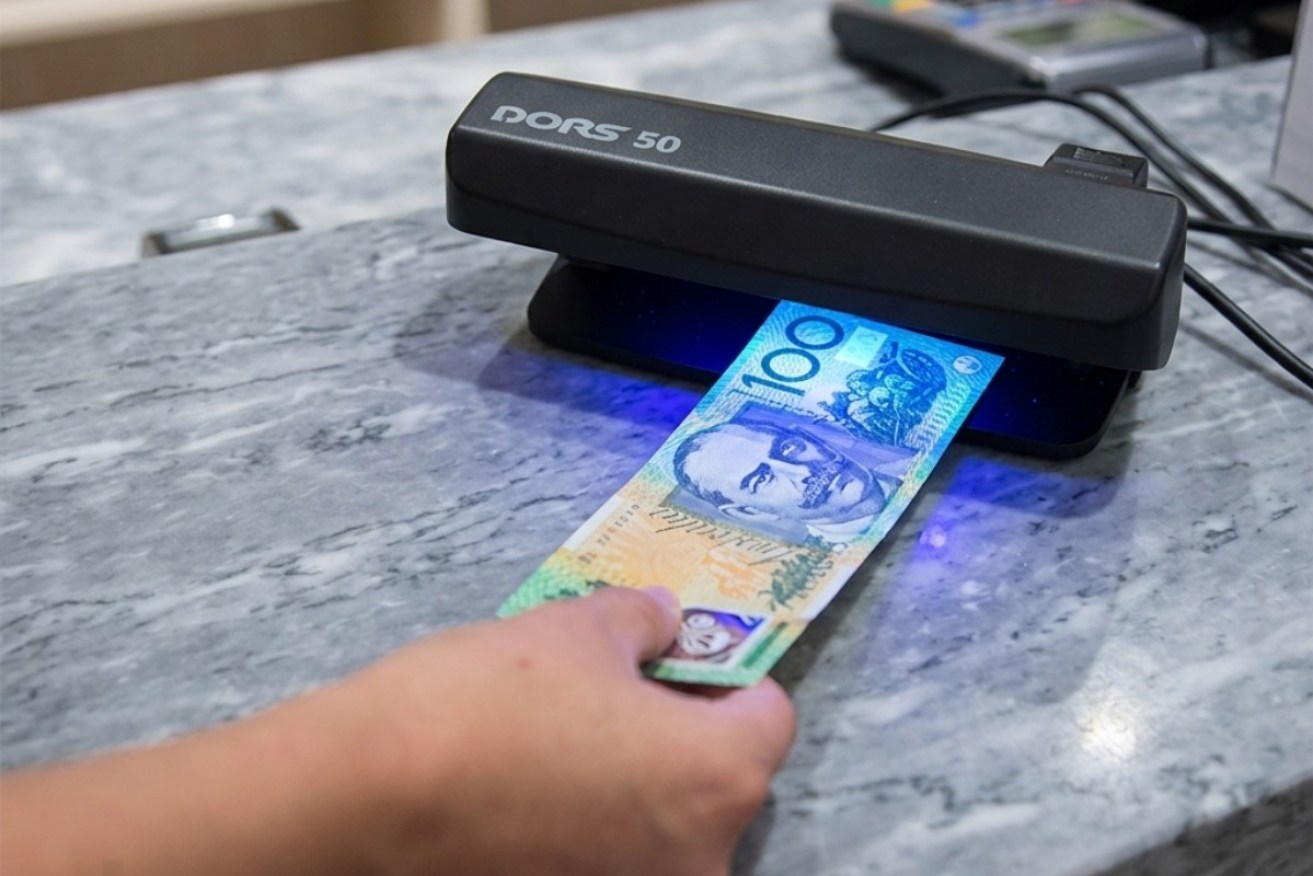
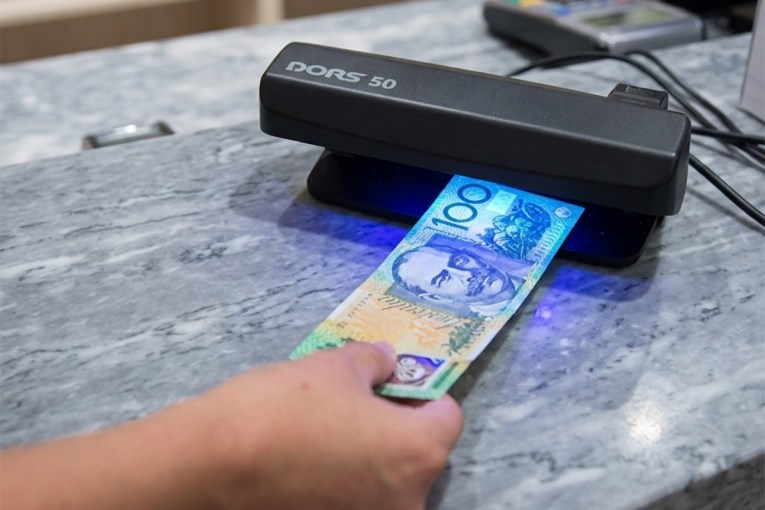
Counterfeit notes in Australia has surged 277 per cent in just 15 months. Photo: TND
Counterfeit banknotes are being detected in Australia this year at a rate not seen since June 2018, according to newly released data from the Reserve Bank of Australia.
The latest six-monthly update on counterfeit detection from the Reserver Ban shows that 40,613 fake notes – 95 per cent of which were $50 and $100 notes – were caught in the 12 months to March 31 this year.
That rate of fake note detection in Australia hit 20 notes per million, the highest level of detection since June 2018.
It’s also a 277 per cent surge in just 15 months, from a detected low of 5.3 counterfeit notes per million in December 2024.
In August, the Australian Border Force said it has seen a substantial increase in counterfeit currency worth millions coming into the country via air cargo and international mail since early 2025.
It also warned there has been “a concerning improvement in the quality of counterfeit notes”.
Little wonder police across Australia have been stepping up their warnings about how to spot fakes – and what to do if you suspect you’re being paid with them.
The quality of fakes is improving
Counterfeit notes are not worth anything. So if you get paid with one, and don’t realise until it’s too late, it can be a costly loss.
This year, local businesses and people selling on online marketplaces across Australia have reported a number of incidents of being paid in dodgy $50 or $100 notes.
In August, South Australian police charged a 32-year-old man for allegedly using counterfeit $50 notes at licensed premises, a service station and other shops across Mount Gambier.
The month before, a man was arrested in Roma, Queensland, for allegedly presenting counterfeit $50 banknotes at two discount variety stores to buy goods, before attempting to use one at a hotel.
Some businesses, including selected McDonald’s restaurants and other drive-throughs across Australia, have had counterfeit note detection in place for more than a decade. These can be used by their staff to check the authenticity of suspicious cash.
Last week, News.com.au shared an image of a warning about counterfeit cash it said was taken at a McDonald’s on the NSW Central Coast.
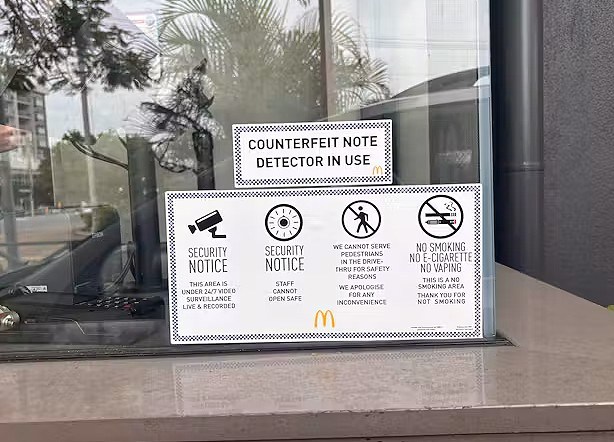
McDonald’s has had counterfeit detection for more than a decade. Photo: Liz Minchin
Two months ago, Australian Border Force warned criminals were using more sophisticated concealment techniques to import counterfeit currency into the country.
“The quality of counterfeit banknotes is improving, which increases the risk of people unknowingly accepting them as genuine currency,” it said.
Fighting the fakes?
Between 2007 and 2020, the Reserve Bank oversaw an upgrade to “next generation banknotes”.
The goal was to add stronger anti-counterfeiting features to Australian notes, while keeping the same colour, size and portraits. The plan was for the notes to be easy to recognise and for machines to still be able to handle them.
Those most recent “next generation” notes are more secure than earlier polymer notes because they added dynamic security features, such as a holographic flying bird and a reversing number in a clear window.
Existing features were also strengthened – microtext now appears in the window as well as the background, windows have more intricate designs, and more elements are fluorescent under UV light.
But both the first polymer notes from the 1990s and newer notes remain legal tender, so you sometimes see both when paying with cash.
Australia’s polymer banknotes were a world-first innovation over paper notes, with the technology developed in Australia with the CSIRO.
-Security features to look for on a genuine $50 note.
How to spot and report a fake
It’s against the law to knowingly possess or use counterfeit banknotes. So what do you do if you’re suspicious?
The Reserve Bank provides advice on how to check your banknotes to make sure they are not counterfeit.
Their recommended quick checks are to feel it, hold it to the light, and then tilt it.
Older 1990s polymer notes show a star and coat of arms through the window.
The newer next generation notes go further – a bird’s wings lift and change colour, a number reverses, and colour rolls across a patch.
If a note feels wrong, the official advice is to bag it, note how you got it, and report and hand it to police.
You can refuse to accept a suspect note (if you feel it is safe to do so).
Your state and territory police are the appropriate law enforcement agencies to contact.
You can also complete an online suspect counterfeit banknote form and submit it to the Australian Federal Police.
Terry Goldsworthy is associate professor in Criminal Justice and Criminology at Bond University