AstraZeneca vaccine concerns downplayed, after South African study shows lower power

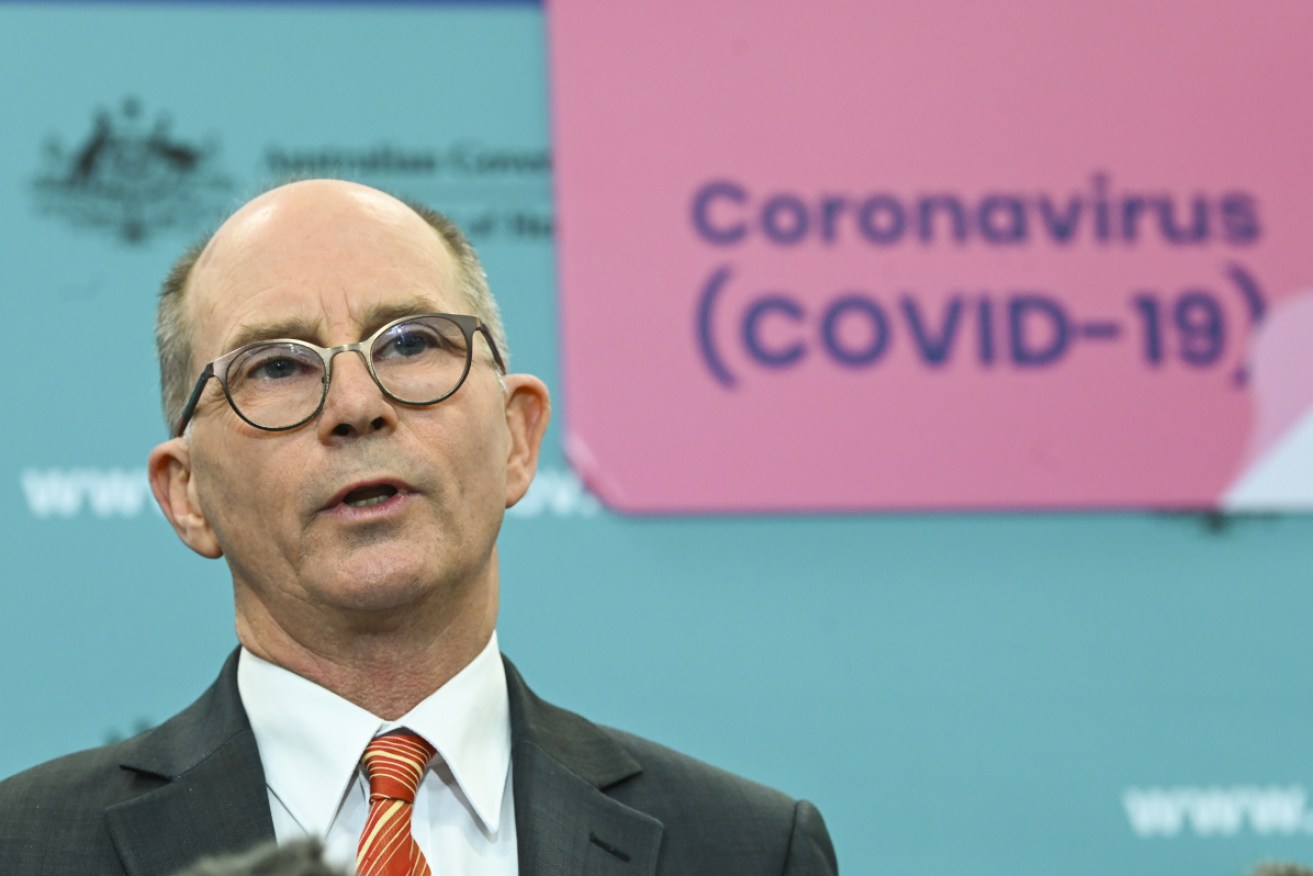
Chief medical officer Professor Paul Kelly has warned against Ivermectin. Photo: AAP
Australian health officials have downplayed the legitimacy of a study that showed the AstraZeneca COVID vaccine had low efficacy against the new South African strain of the virus, warning people against making judgements “without looking at it carefully”.
“What we have at the moment is a small group of people in a study not yet peer-reviewed or published,” said chief medical officer, Professor Paul Kelly, as he sought to allay fears about the vaccine which most Australians will get.
In more positive news, the European Union has guaranteed Australia’s doses of the Pfizer vaccine will not be affected by export bans meant at keeping doses from going offshore.
South Africa has paused its rollout of AstraZeneca and University of Oxford jab, after a small study found it only gave minimal protection against mild to moderate infection caused by the new B.1.351 strain. However, the World Health Organisation has backed the jab, saying that while the study was “concerning”, it was only a small trial.

Concerns were raised over an AstraZeneca study. Photo: Getty
Only around 2000 people, with a median age of 31, participated in the study. It has not been peer-reviewed or widely published. Its headline findings, claiming the AstraZeneca vaccine had only a 22 per cent efficacy against mild or moderate COVID, was based on just 42 cases. It did not make any findings about the vaccine’s effectiveness on severe sickness.
“We mustn’t start concluding that this vaccine doesn’t work at all,” said WHO chief scientist Soumya Swaminathan.
Professor Kelly, speaking in Canberra, urged caution in how people considered the findings of the South African study.
“I just want to make a very clear statement about people taking small amounts of information quickly, without looking at it carefully, and making conclusions,” he said.
“I can absolutely say, and this may change in future… there’s no evidence anywhere in the world AstraZeneca effectiveness against severe infection is affected by any of these variants of concern.”
Professor Kelly noted the study did not make findings on how the AstraZeneca vaccine worked on severe infection, which he said was a key point.
“There were no severe infections in any of the people that received the vaccine in regards to any of those types of the virus. We don’t have any information on that,” he said.
“We will obviously be looking at that carefully as time goes by and every day we get more information about that.”

Professor Paul Kelly. Photo: AAP
Australia has contracts to import around four million doses of AstraZeneca’s COVID vaccine from Europe, as well as produce another 50 million doses onshore at Melbourne’s CSL plant. Another 20 million doses of Pfizer will be imported from overseas, through the course of 2021, and there’s also a contract for 51 million doses of Novavax, expected to begin rolling out in late 2021.
Under a two-dose regime for all doses, most Australians will receive AstraZeneca as their primary jab. High-risk groups like critical workers and the elderly will be prioritised for Pfizer. Novavax is seen as a long-term option, potentially for booster shots.
With fears that vaccine nationalism in Europe may see doses manufactured on that continent blocked from leaving for overseas export, there had been concerns that Australia’s first doses of Pfizer and AstraZeneca – produced in Belgium – could be in danger.
However, Australia’s ambassador to the EU, Michael Pulch, has promised that there will be no delays.
“Australia can indeed rely on deliveries from Europe,” Michael Pulch told ABC radio on Tuesday.
“The shipments to Australia will arrive on time. My colleagues in Brussels have assured the Australian side that they will work with them on the smooth authorisation process.”

Jabs will begin in late February, Professor Kelly said. Photo: ABC News
Health minister Greg Hunt and Professor Kelly have provided near-daily public updates on vaccine deliveries, continually committing to late February for the first Pfizer doses and early March for the first AstraZeneca. On Tuesday, Professor Kelly again stuck to that timetable, celebrating the news from Mr Pulch.
“We heard this morning from the EU representative in Australia that they definitely are looking to allow that to happen, which was a very good news,” he said.
“Pfizer, in our constant discussions with them, also guaranteed they are on target to bring that to Australia in coming weeks… we will have doses ready to be injected before the end of February.”
Australia expects around 80,000 doses of Pfizer to arrive in the first batch, and Professor Kelly said it was projected that deliveries would arrive weekly.
Once onshore, further batch testing from the Therapeutic Goods Administration would take “a few days” before jabs could be given.
Labor’s shadow health minister, Mark Butler, called for the vaccines to be administered as soon as possible, once delivered.
“It’s time to get going on this. I think we’ll all be very happy when they start arriving on Australian shores,” he told Sky News on Tuesday.
On the South African study, Mr Butler said it was “important we keep perspective” and consider the advice of the TGA, but again repeated a constant Labor criticism that the federal government had not secured a larger set of different vaccines.
“What are we doing to diversify our vaccine portfolio? Experts around the world are concerned that these variants, these mutations… have the potential to outpace the vaccine, to escape the vaccine,” he said.
“Now that means I think we want to have as many options available to us as possible.”
Mr Butler said he would like to see the government engage more strongly with Moderna, which is producing a highly-effective mRNA type vaccine, the same technology behind the Pfizer jab.
The Australian government is currently in talks with around a dozen vaccine manufacturers, with the Johnson & Johnson vaccine having been given a ‘rolling review’ by the TGA.
“We need some further advice about this from Government,” Mr Butler said.
AI giant warns Australian laws don't have teeth

Taylor unveils ‘biggest cut to immigration’ in history