Gunnedah, Tamworth hit by heavy rain, swelling rivers and waterfalls, bringing farmers joy
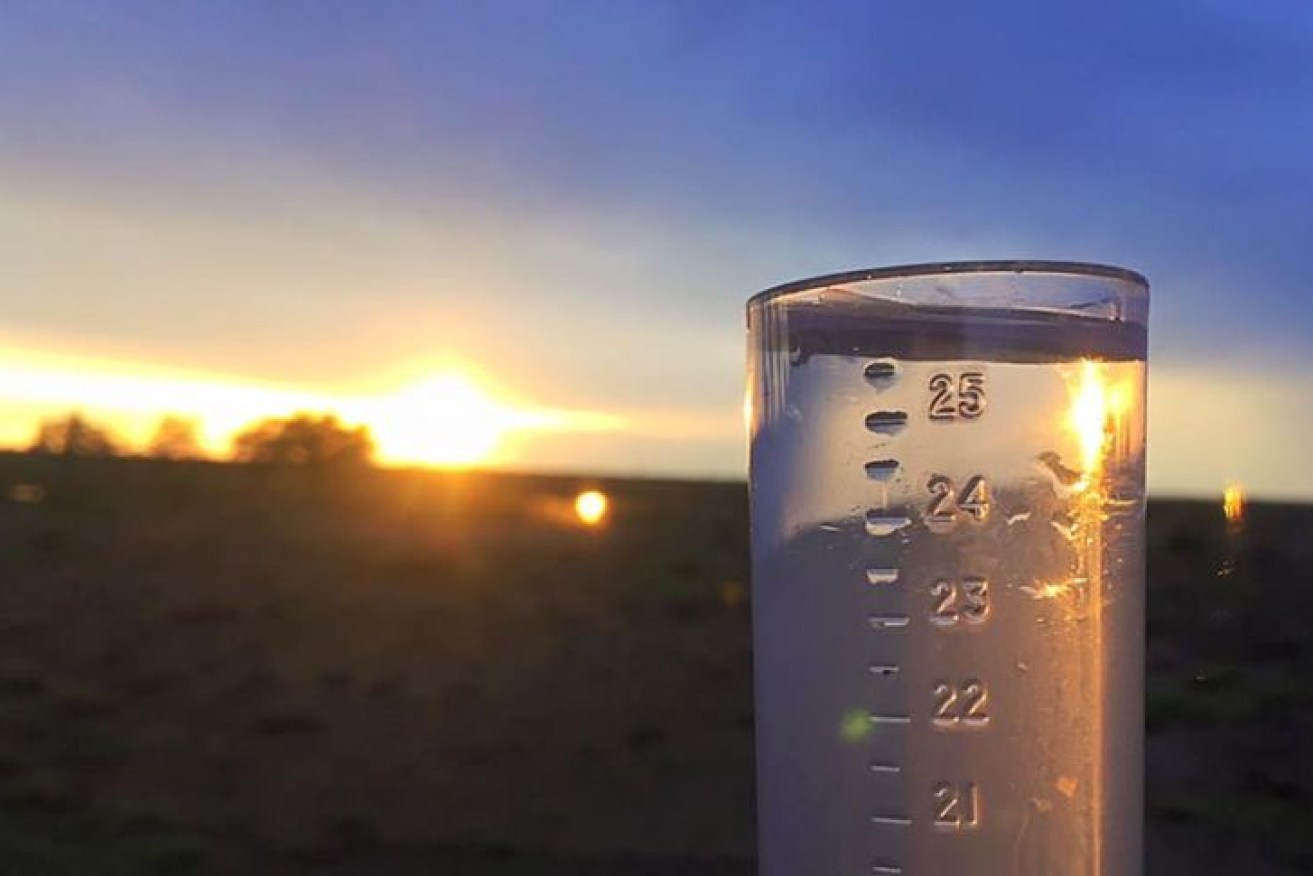
Cobwebs have been washed out of rain gauges across the drought-affected eastern states. Photo: Latrobe Station
Heavy rainfall around the towns of Gunnedah and Tamworth is swelling rivers and waterfalls and delighting farmers celebrating an “unbelievable” end to a drought many of them thought would never be over.
Tamworth has recorded its second-wettest December since 1947, with the 2020 total of 223.6 millimetres just 1.3mm shy of the 73-year-old record.
Gunnedah has seen a decade-long rainfall record tumble for the month of December with 228.8mm recorded at the town’s airport, well surpassing the 2010 total of 195mm. That’s after recording just 1mm last December.
“For towns like Gunnedah and Tamworth that … is over two and a half times their typical December rainfall,” Bureau of Meteorology senior climatologist Simon Grainger said.

This time last year you could walk across Tamworth’s Peel River. Now it’s flowing again after a wet month. Photo: ABC New England
The bulk of the December totals came from heavy falls on December 22 when Gunnedah and Tamworth recorded 71.8mm and 92.2mm, respectively.
“For Tamworth that was the wettest day since February 2012.”
Across the New England North West, 2020 had been wetter than average, Mr Grainger said, predicting similar conditions for the first quarter of 2021 across eastern Australia.

Drenching rain has filled rivers and streams near Bellata in north-west NSW. Photo: Mike MacCue
Farmers who fed stock through the dry bouncing back
After record-breaking cattle prices and grain crops, the late rain is another reason why many NSW farmers are ending the year on a high.
The rolling green hills of the New England North West show a vast contrast to how the region looked last December.
“It was horrendous,” Loomberah cattle farmer Jason Impey said.
“It was very tiring, very stressful and it was a very hard time.
“Twelve months ago today was a dust bowl: Very little grass cover, dry as a bone and hot, very hot.”
Since then, the Impeys’ rain gauges have certainly had a workout.
“This month alone, we’ve had 204mm here at the house and about 232mm at the back paddock.”
Mr Impey, who breeds Simmentals on the outskirts of Tamworth, chose to keep as many cattle as he could and committed to hefty fodder bills to feed through the drought.
“We did offload all the commercial cattle we had, and [on] the stud side of it, we kept the absolute best of the best,” he said.
“Now that’s paying dividends … having something of decent quality for us to continue on with.”

Jason Impey says his land has transformed from a “dust bowl” to lush hills in a matter of months. Photo: ABC Rural
Mr Impey said the drought forced tough decisions to be made, but they would ultimately benefit his family farming operation going forward.
“It made us look at our genetics from a stud point of view.
“That was one of the first things we did, making sure we kept cattle that suited the slightly drier periods.
“But it also made us look at the whole farm and running it … more suited to the conditions than anything else.”
Mr Impey said the turnaround was “unbelievable”, launching him back in the paddocks to rebuild a bank of silage this year.
He has put away 800 bales since March.
Farmers who sold stock now buying back in
Maria Jackson said the drought was something she “really wanted to block out” of her memory.
“It was absolutely horrific, buying the property in February 2017 and walking straight into a drought; it’s been a struggle.”
She sold off down to just 30 head of cattle and now, like many, is trying to buy back in to a strong market.
“I know a lot of people who simply can’t afford to restock. We’ve been lucky,” she said.

Maria Jackson says the novelty of hearing rain on a tin roof will never wear off. Photo: ABC Rural
“I’ve had steers here that I’ve been able to sell off at a good price so I’ve turned around and replaced them with heifers … and [I am] trying to rebuild our numbers from them.”
This year’s rainfall has surpassed that of 2018 and 2019 at her Currabubula farm, but with no rain in the gauge for the month of November, Ms Jackson was worried things were drying off again.
A wet December soon allayed her fears.
“I’m up to 897.5mm, so I’m hoping that I’m going to nudge 900mm for the year, which would be absolutely amazing. That’s more rain than what I’ve had in the last two-and-a-half years.”
She has crept her stock numbers back up to 120 head and with good feed in the paddocks, Ms Jackson said she was in a good position heading into 2021.
–ABC



Sharks may lurk for weeks off Perth coast



China and housing: Two things we may have missed