A Chinese foreign ministry spokesman has shed new light on his country’s rapidly deteriorating relations with Australia, pointing to two decisions that hastened the hostility.
Australia’s relationship with China hit a new low on Wednesday as Canberra took its case against Beijing’s trade sanctions to the World Trade Organisation.
Trade Minister Simon Birmingham confirmed the government would escalate a dispute over Chinese tariffs on Australian barley to the WTO.
Beijing had slapped 80 per cent duties on Australian barley imports earlier this year, accusing producers of dumping undervalued product into the Chinese market – a claim Canberra vehemently denies.
“This is the logical and appropriate next step for Australia to take,” Senator Birmingham said, adding that the government felt “highly confident” there was “an incredibly strong case” to fight the dumping allegations.
China, in return, has pointed an accusatory finger at the Morrison government’s actions in blocking billions in Chinese business deals, claiming Australia has breached a free trade agreement between the two nations by rejecting foreign investment.
“It has gone so far down the wrong path,” Chinese foreign ministry spokesman Wang Wenbin said on Wednesday.
Two major deals
Mr Wang said that the hostility can be traced back to the federal government blocking “dozens” of Chinese companies from investing in Australia.
But he singled out two major business deals in particular – a proposed takeover of gas pipeline company APA Group by Hong Kong’s CK Infrastructure in 2018, and Mengniu Dairy’s proposed takeover of Lion Dairy earlier this year.
Neither deal was opposed by Australia’s Foreign Investment Review Board, which oversees proposed foreign takeover bids, but both were eventually blocked by Treasurer Josh Frydenberg citing national security and national interest concerns in both cases.
“Recently we’ve seen many reports in which Australia dresses up as a victim, pointing an accusing finger at China,” Mr Wang said, according to a government transcript.
“In fact, it is the Australian side that has been politicising economic, investment and technological issues, and discriminating against Chinese companies.”

Simon Birmingham says Australia is taking China to the WTO over barley. Photo: AAP
The government is considering escalating other disputes with China over Australian wine and coal exports to the WTO, but Senator Birmingham expressed hope for a peaceful resolution to the stand-off instead.
“We again instead extend the important offer of dialogue and discussion as an off-road, and offramp to this dispute,” he said.
Is China picking on Australia?
China has slapped trade bans and tariffs on multiple Australian products in recent months, including beef, timber, seafood, as well wine, coal and barley.
The simmering trade tensions are seen as diplomatic pressure or punishment over Australia’s calls for an independent inquiry into the origins of coronavirus, crackdowns on foreign interference, criticisms of China’s human rights record on Hong Kong and Uighur Muslims, and blocking Chinese company Huawei from our 5G market.

China’s Foreign Ministry spokesman Wang Wenbin tied the trade dispute to Australia blocking Chinese investments. Photo: AAP
That the trade war comes just as China applies other political pressure to Australia, including releasing a list of 14 ‘grievances’ with the federal government, is not considered a coincidence by Canberra.
Senator Birmingham said the decisions appeared to be sanctions against Australia. The government claims China is unfairly “singling out” Australia for punishment.
But Beijing has hit back, claiming Australia fired the first salvo in the trade stoush by blocking a total of $14 billion in Chinese investment.
‘Huge losses for Chinese companies’

The World Trade Organization will be asked to rule on the barley issue with China. Photo: Get
Mr Wang claimed “a dozen Chinese investment projects were turned down by the Australian side” in recent years, which had “caused huge losses for the Chinese companies”.
He also complained of Australia launching anti-dumping investigations against China, and claimed Canberra needed to act with “mutual respect and in compliance with rules”.
“What is worrying for us is such moves as politicising and obstructing normal trade activities, interfering in others’ internal affairs in defiance of basic norms governing international relations and even provoking confrontation,” Mr Wang said.
“We hope that the Australian side will reflect upon its own conduct, match its words with deeds, and provide favourable conditions for bilateral practical cooperation in various fields, instead of the opposite.”
Mr Wang said he wasn’t aware of the ban on Australian thermal coal, which had been reported by Chinese state media this week, but maintained China’s actions were legal.
“Recent measures taken by the Chinese authorities on some imported products from Australia are in line with China’s laws and regulations and international practices,” he said.
“They are also responsible steps to safeguard the interests of domestic industries and consumers.”
What next for WTO dispute?
Senator Birmingham admitted the WTO investigation could take years – not helped by the crucial appellant process being bogged down in massive delays due to US President Donald Trump blocking new appointees to its appeals court.

Simon Birmingham said Australia has an “incredibly strong case” against China. Photo: AAP
The WTO also has the power only to allow aggrieved nations to install retaliatory tariffs of their own, a process TND understands the federal government does not want to pursue against China.
Senator Birmingham admitted the WTO process was “not perfect” and took “longer than would be ideal”.
“There is … an appellate body of the WTO, which is currently in a state of dysfunction,” he said.
However, he said China, Australia and about 20 other countries had agreed on an “alternative approach” while the WTO’s appellant court was not operating.
He hoped this would help speed up the process.
AI giant warns Australian laws don't have teeth

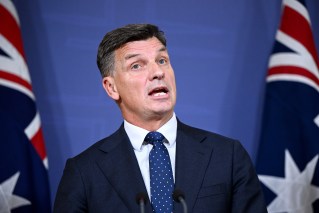
Taylor unveils ‘biggest cut to immigration’ in history