Australian sprawl: Medium-density homes key to growing cities

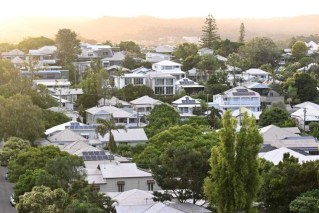
Australia’s cities and suburbs continue to sprawl outwards, prompting warnings from planning scholars that our major cities are heading toward a future of “low liveability”.
Experts say the focus should instead be on medium-density housing in middle-ring suburbs to cater for the country’s growing population.
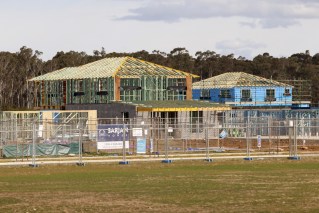
Debate about housing affordability and density reignited in February, following the Victorian government’s announcement that land on the fringes of Melbourne, the nation’s fastest-growing city, will be rezoned to create 12 new suburbs.
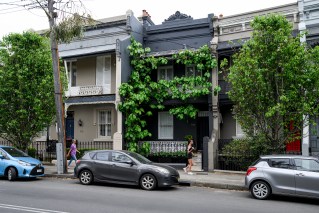
Further, in NSW, Labor planning spokeswoman Tania Mihailuk said her party would scrap Sydney’s Medium Density Housing Code – a policy designed to allow more terrace-style housing – if it wins the March 23 election.
A ‘low-amenity, low-liveability’ future
In May, the Property Council released a report titled Creating Great Cities which warned that a lack of planning and policy meant Australia was “heading towards a low-amenity, low-liveability future”.
The report found Australia’s major cities are ill-equipped for the challenges of the “metropolitan century”, and risk losing out to global cities prepared to invest in amenities and infrastructure that enhances urban life.
Rather than spreading outwards, Australia should instead focus on a “high-amenity, medium-density, multipolar metropolitan living supported by great public transport”, report co-author and world-renowned urbanist Professor Greg Clark said.
The latest Australian Bureau of Statistics forecasts project the country’s population to hit 30 million within 15 years.
In September, the standing committee on infrastructure, transport and cities tabled the findings of a Senate inquiry into the federal government’s role in city development.
Australia’s political leaders had failed to adequately plan for the level of demand in the cities, the report found. It called for a “national vision” for managing growth.
The Melbourne dozen
Victoria’s Andrews government plans to release 50,000 housing lots in the new suburbs, 25-56 kilometres from the Melbourne CBD, within the next four years, Treasurer Tim Pallas revealed in February.
The new suburbs – most of which aren’t in reach of Melbourne’s train network – will include a “mixture of employment, residential and mixed-use neighbourhoods” to “allow residents to work locally, minimising commutes and allowing families to go to school and work close to home”.
However, planning experts called instead for a greater focus on developing medium-density housing and upgrading infrastructure in Melbourne’s middle-ring suburbs, where demand and housing affordability pressures are greatest.
“A lot of the middle-ring suburbs still have 70-80 per cent of land zoned for neighbourhood residential that limits the density on a site to two storeys,” Planning Institute of Australia Victorian president Laura Murray said.
“Restricting development like that, sometimes even to a single storey, is remarkable for a city such as Melbourne that’s growing at the rate that it is.”
The new suburbs will do little to ease affordability in areas of the city where housing is most in demand, Grattan Institute research fellow Brendan Coates said.
“On the whole, more housing is welcome, even on the urban fringe, as it should put more downward pressure on prices and rents in the long term,” he said.
“But the main problems with housing affordability in Melbourne aren’t in the outer suburbs, but rather in the inner and middle ring, where demand for housing is highest and supply is most constrained.”
After accounting for trade-offs in price, location and size, many people would prefer a townhouse, semi-detached dwelling or apartment in a middle or outer suburb, rather than a house on the city fringe, Grattan Institute research found.
With only 25,000 new apartments built in its middle-ring suburbs in the past four years, Melbourne is “getting the mix wrong”, Mr Coates said.