Qantas, Virgin optimistic about pandemic recovery, aim to fuel demand with cheap flights

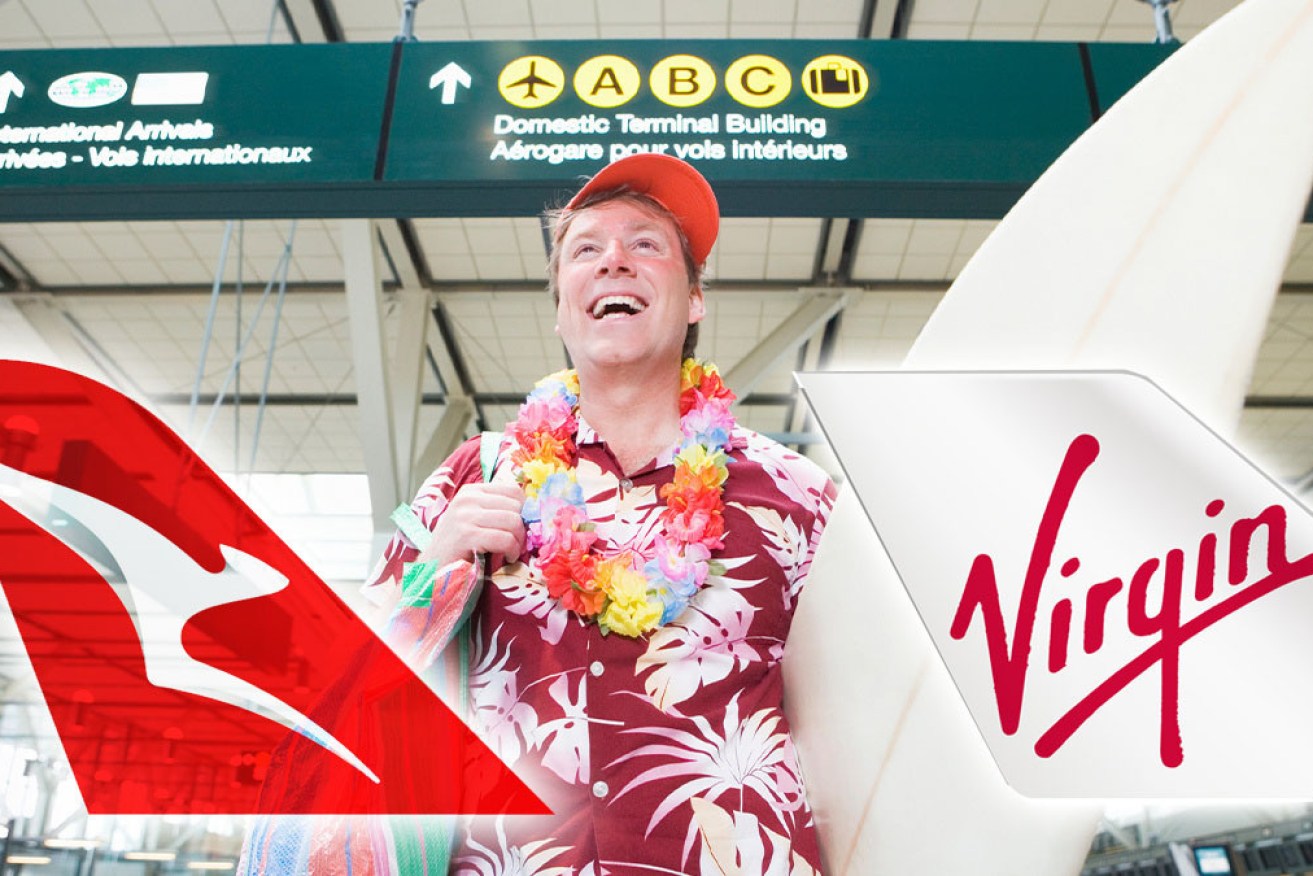
Thousands of Australian travellers have lost money from bookings cancelled due to COVID.
Australia’s airlines are bouncing back from the coronavirus pandemic despite delays to the nation’s vaccine rollout, with travellers set to benefit from cheap domestic air fares designed to fuel demand.
On Thursday, Qantas Group announced that its pandemic recovery was gaining speed, with all Qantas and Jetstar domestic crew now back at work.
“We’re now seeing really positive signs of sustained recovery,” chief executive Alan Joyce said.
“This is the longest run of relative stability we’ve had with domestic borders for over a year and it’s reflected in the strong travel demand we saw over Easter and the forward bookings that are flowing in each week from all parts of the market.”
In the short term, the airlines will be hoping to entice customers to return to the skies with low fares, the firm revealed.
Qantas Group now expects its domestic capacity to reach beyond 90 per cent of pre-COVID levels by mid-2022, with Jetstar set to “exceed 100 per cent due to strong leisure demand”.
The government’s half-price flights offer has helped, with the group selling 250,000 fares sold in the first two weeks of the program, as has the return of “the majority of corporate and small to medium business travel”.
Mr Joyce also described the upcoming launch of the two-way trans-Tasman bubble between Australia and New Zealand on April 19 as “great news for the tourism sector as a whole”.
However, rather than putting on new flights to cater to trans-Tasman travellers, Qantas’s chief competitor Virgin Australia has taken a wait-and-see approach.
“The upcoming trans-Tasman bubble launch is providing a boost to the Qantas Group and Air New Zealand, but Virgin is keeping its powder dry for a few months to focus on Australia’s domestic aviation,” Monash University aviation expert and co-author of Up In the Air Greg Bamber explained.
Australia’s domestic aviation industry is “bouncing back in spite of the coronavirus pandemic in two segments: Leisure-based travel and fly in/fly out workers”, Professor Bamber told The New Daily.
Virgin revealed its plans to fast-track growth and support the tourism sector’s recovery on Thursday, announcing an agreement to lease an additional 10 Boeing 737-800 aircraft.
“More aircraft means more flying, and with easing travel restrictions, there are more opportunities to further support domestic tourism and the nation’s economic recovery from COVID-19,” Virgin Australia Group chief executive Jayne Hrdlicka said.
The airline plans to have more than 80 per cent of its pre-pandemic domestic capacity operating by mid-June, with a focus on expanding key business and leisure routes including new routes from Melbourne to Hamilton Island, Melbourne to Darwin and extended Brisbane to Launceston, and Melbourne to Ballina Byron seasonal services.
“Today, we are operating around 850 weekly return flights, and as we approach the June school holidays, we will add another 220 return flights per week to our schedule,” Ms Hrdlicka said.
“We’re hopeful that domestic border closures will soon be a thing of the past and are continuing to see positive signs of consumer recovery.
“As an example of this, we’ve had multiple record-breaking sales days of half-priced fares, with more than 75 per cent of the tickets being booked for travel from May onwards.”
International flights to return despite vaccine delays
Qantas is sticking by its international travel relaunch date of October 31, which originally coincided with the Morrison government’s initial deadline to have all adults vaccinated against COVID-19.
Although the Prime Minister has refused to nominate a new date when Australians can expect to be vaccinated by (“maybe Christmas”), Qantas is pushing ahead with its plans to resume long-haul overseas travel.

Scott Morrison originally promised to have Australians vaccinated by October 31.
Mr Joyce said the airline remained in “regular dialogue” with the federal government.
“The vaccination program is absolutely key to restarting international flights in and out of Australia,” he said.
“While there have clearly been some speedbumps with the vaccine rollout, we are still planning for international flights to resume in late October.”
But Professor Bamber said Qantas’ international flights relaunch will hinge on Australia’s international borders reopening.
“Given the issues with Australia’s vaccine rollout, Qantas’ October 31 target for international flights to resume is optimistic,” he said.
In 2020, COVID-19 saw global airline passenger traffic plummet by two-thirds, with the International Air Transport Association predicting that traffic in 2021 will reach just half of pre-pandemic levels.
A report released by Deloitte Access Economics this week estimated international travel could take until 2024 to return to pre-pandemic levels.

Scenic WA town home to 100km of forest tracks