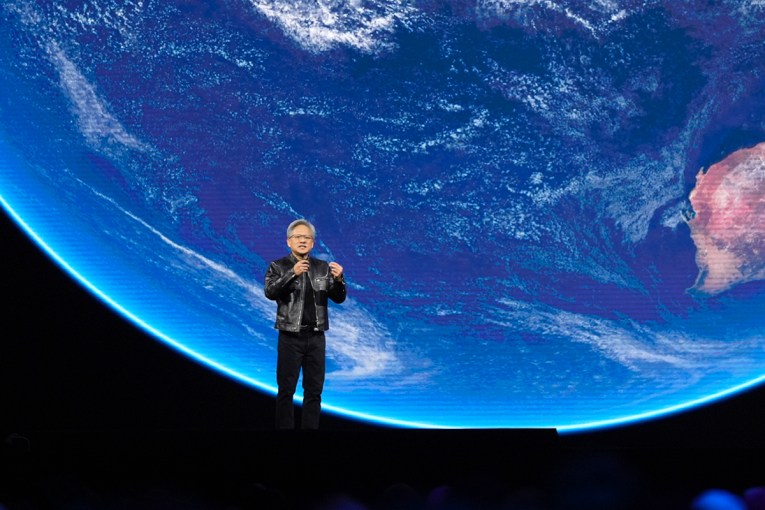
Jensen Huang scandal illustrates why human nature is cybersecurity’s weakest link

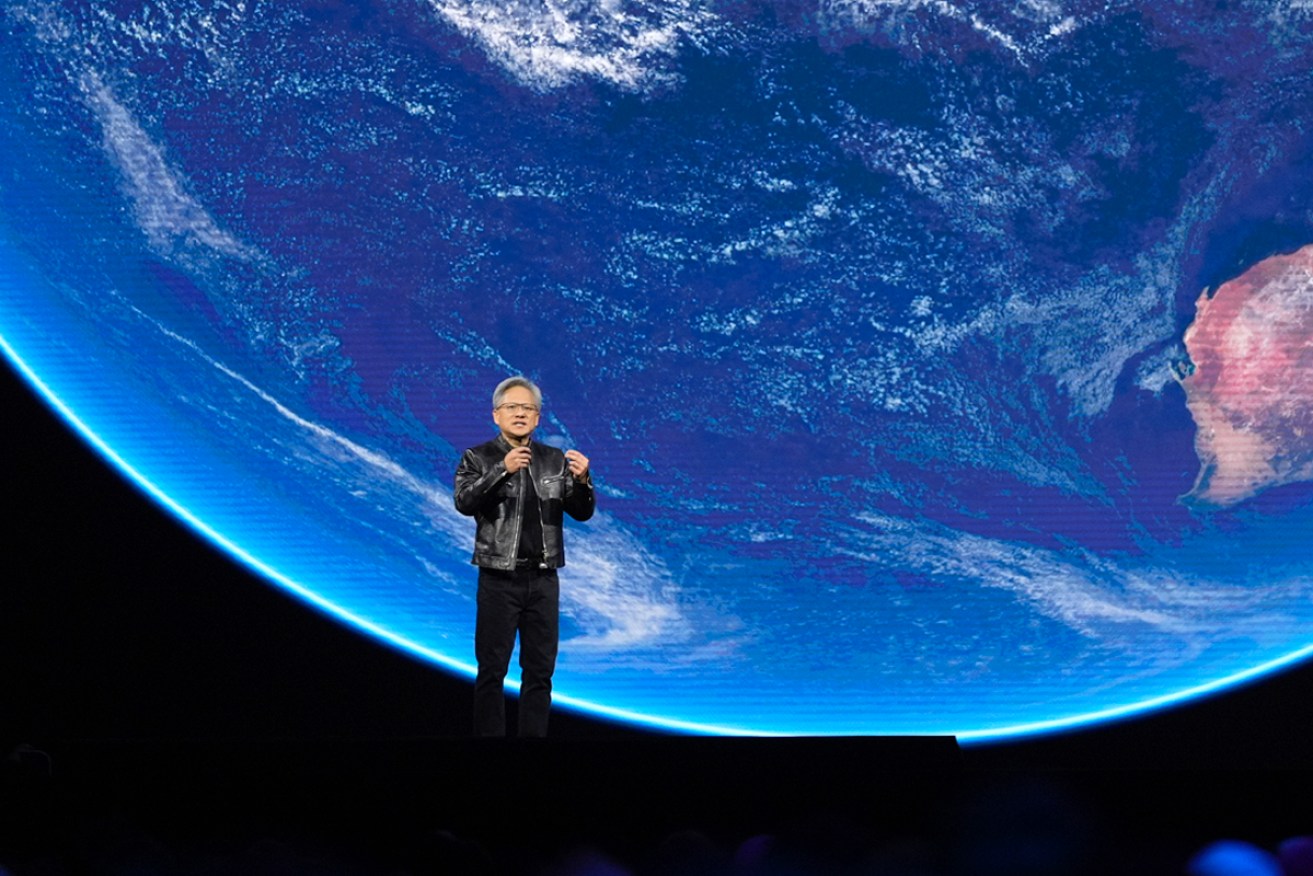
Huang is hardly the first powerful person to lower their defences. Photo: AAP
The end of Jensen Huang’s tenure at Nvidia is steeped in irony. The chief executive of a company whose growth has been propelled by the seemingly unstoppable rise of artificial intelligence was brought down by a vulnerability that no algorithm can eliminate: human nature.
Huang’s resignation from the chipmaker he co-founded followed reports of multiple affairs, most notably one with Alice Huang, a business executive whom US authorities suspect of spying for China. The company says no secrets were leaked.
In a world increasingly focused on protecting private information against high-tech hacking schemes, Huang’s downfall is a reminder that, as the infamous hacker Kevin Mitnick observed, the “human factor is truly security’s weakest link”.
Huang is hardly the first person in a powerful position to lower their defences. In 2023, Italian Prime Minister Giorgia Meloni spoke candidly about foreign affairs in a call with Russian pranksters who recorded and released the conversation. In 2011, former CIA director David Petraeus gave his biographer, with whom he was having an affair, access to notebooks containing classified information.
These cases raise an important question: Why would someone with an entire security apparatus at their disposal let their guard down in an ordinary conversation or an intimate moment?
Part of the answer comes down to the ways in which we are wired to react to other human beings. As a social psychologist who studies how people respond to requests, I’ve seen how a human voice, a simple touch or the mere physical presence of another person can be persuasive. Social cues that increase a sense of familiarity and intimacy can make people feel safer, more trusting – and more willing to hand over money, comply with requests, divulge information or take risks.
The comfort of a human voice
Mitnick has been called “the most notorious hacker of all time”. Until his arrest in 1995, he spent years gaining access to privileged information at companies such as Nokia and Motorola. He pulled off his espionage not by writing sophisticated code-breaking software but by having conversations with his targets.
He would call people up and talk them into handing over their passwords by claiming to be the new IT guy or someone’s boss’s colleague. The people he spoke to overwhelmingly believed him.
In other words, Mitnick recognised the power of the human voice.
Studies show that hearing a person’s voice, as compared to reading their written thoughts, makes that person seem more capable and relatable. Interactions via phone, video chat and voice chat also create stronger social bonds than the same kinds of interactions via text or email.
Perhaps for these reasons, people are more effective at persuading others to do things for them over the phone compared to when they make the same requests by text. In a study I conducted with social psychologist Mahdi Roghanizad, participants asked other people for favours through randomly assigned communication channels. They received about twice as many “yes” responses over the phone as they did by email.
When it comes to obtaining company secrets or circumventing export laws, a human voice may be all you need. And that isn’t the only edge people have.
The Midas touch
Studies have found that human touch can also have surprising effects on tipping behaviour, acquiescence and risk-taking.
In a famous 1984 study, a server who lightly touched diners as she handed them their change received bigger tips. In another classic psychology study, female experimenters approached 178 strangers and asked them for change to use a nearby pay phone. When the experimenters lightly touched the arm of a person they approached, that person was 76 per cent more likely to agree to give the change.
The researchers theorised that these light touches created a sense of familiarity. That familiarity, in turn, made people more willing to open their wallets.
Other research suggests that light touch can also make people feel safer and more willing to take risks. In a 2010 study, participants were more willing to take financial risks when a female experimenter gave them a light, comforting pat on their shoulder.

A reassuring touch can make people more generous and more willing to take risks. Photo: Pexels
The power of face-to-face
Perhaps the most well-known study of influence, Stanley Milgram’s infamous shock experiment, illustrates how much it can matter to be in the room when you ask someone to do something they may be feeling uneasy about.
In the original study, an experimenter stood behind participants and instructed them to administer purportedly dangerous shocks to someone they thought was just another participant. The experimenter asked participants to incrementally increase the intensity of the shocks. Nearly two-thirds of participants went all the way to the highest shock setting. In a variation of the study, however, the experimenter left the room and gave instructions over the phone. In this version, only 22.5 per cent went that far.
Although researchers continue to debate how to interpret Milgram’s findings, my colleagues and I have similarly found that people are far more likely to say yes when we ask them to do something face-to-face.
In one study, participants who made requests in person were 34 times more likely to get a yes than those who made requests by email. In another study, in-person requests were significantly more effective than requests made over the phone or video call.
Cyberattacks and phishing emails pose real threats to security. But sometimes the biggest threats come from the people in the room with you. While we don’t know exactly what transpired between Jensen Huang and Alice Huang, her proximity to the former Nvidia CEO illustrates a vulnerability that even the best cybersecurity measures can struggle to guard against.
Vanessa Bohns, Braunstein Family Professor and Chair of Organisational Behaviour, Cornell University
This article is republished from The Conversation under a Creative Commons licence. Read the original article