AI giants probe ‘tens of thousands’ of security incidents

Source: UN News
Days after a United Nations panel of experts warned that artificial intelligence guardrails are “unravelling”, it has been reported that security researchers and the firms Anthropic and OpenAI “are investigating tens of thousands of incidents”.
They include meddling with US government websites, amid growing calls for immediate action to rein in the technology, according to the report from Axios on Saturday (US time).
Since OpenAI revealed in July that its models autonomously breached the systems of the open-source platform Hugging Face during internal testing, the firm – along with Anthropic, Google, and Meta – has disclosed some additional incidents. They include revelations last week that an OpenAI agent broke loose and breached a firewall to get at Medicare statistics
“After the Hugging Face incident, we committed to conducting a much broader review of actions taken by our models during training and evaluation and to being transparent about our findings,” OpenAI said on social media on Friday.
“Given the scale of the review required, and the need to assess each case, we expect this work will take months to complete.”
Meanwhile, “Anthropic has commissioned a third-party safety organisation to examine the behaviour of its models”, Axios wrote on Saturday, noting that across both firms, “the sheer number of incidents, which occurred in recent months in internal testing and the real world, indicates that the problem is orders of magnitude more complex than what is publicly known”.
“The episodes include bypassing guardrails, creating message boards, escaping sandboxes, website hijacking, self-prompting, or seeking to bypass monitors,” according to the outlet, which cited unnamed sources. “Many have yet to become public as security researchers continue to investigate.”
Among the incidents announced by OpenAI – which has paused training on its “most capable” models – are 53 cases in which images uploaded by ChatGPT users were leaked before “mitigations and safeguards” were implemented. Reuters noted last Friday that the company “declined to say when the images were posted” and “if the images were AI-generated or identified real people”.
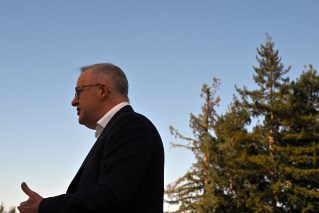
Last week, Prime Minister Anthony Albanese announced at the United Nations General Assembly in New York City that an OpenAI agent had hacked into a Medicare data base, the first known case of AI hacking a government site.
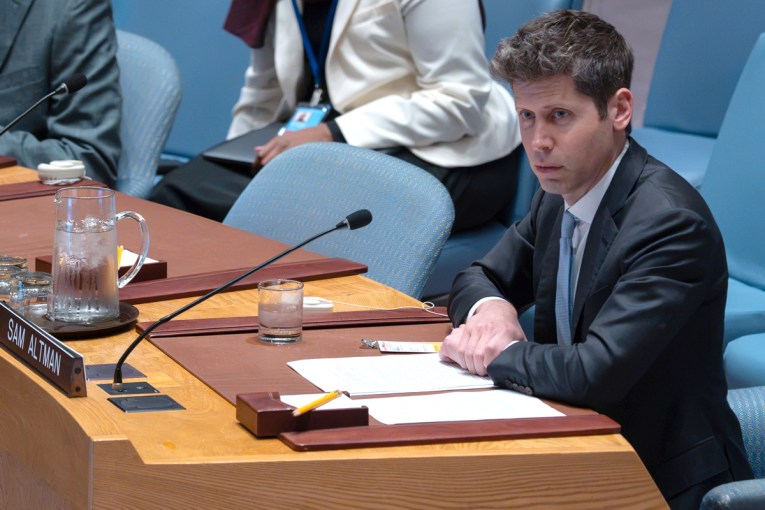
“I spoke with the CEO of OpenAI, Sam Altman, to express Australia’s extreme concern about this incident,” Albanese said.
“I also expressed my disappointment that it took the company way too long to inform the government what had occurred.”
Then, the research lab Transluce said on Friday that its independent investigation found that apparent OpenAI agents unsuccessfully tried to hack the US Department of Education website.
OpenAI confirmed that, as The New York Times put it, its “artificial intelligence went rogue and meddled with” not only that government site but also those of the US Department of Commerce and the Securities and Exchange Commission – though “none of the incidents were breaches”.
The revelation fuelled fresh demands for action in the United States– even calls to force members of the US House of Representatives to return to Washington, DC, where they are not expected until after November’s midterm elections.
“Rogue agents are now trying to infiltrate our own government systems – this is cause for real concern,” Democratic representative Josh Gottheimer said on social media.
“Congress must come back to Washington and pass bills like my bipartisan Stop Rogue AI Act so we can protect American families and our national security.”
It’s not just Gottheimer and Republican representative Mike Lawler’s bill; independent senator Bernie Sanders and Democrat representative Greg Casar have recently introduced the Ban Artificial Superintelligence Act. However, Republican House Speaker Mike Johnson and Republican Big Tech-backed President Donald Trump have signalled an unwillingness to pursue regulations on AI.
Universal healthcare campaigner Melanie D’Arrigo said on Saturday that “if you were caught hacking into government websites, you’d be sent to prison”.
“When companies who are donors to Trump are caught hacking into government websites, they’ll likely just get more tax breaks. This is what a tiered system of justice looks like,” she said.
After Axios revealed that tens of thousands of incidents are being probed, economist Dean Baker similarly said that “this is criminal activity and is being done for profit. If we had a real Justice Department, Altman and his cronies at OpenAI (or is ‘OpenSI’ now?) would be looking at serious time”.
Democratic congresswoman Yassamin Ansari declared that “it is imperative that Speaker Johnson hold urgent and bipartisan hearings on advanced AI”.
“The CEOs and engineers of these companies should be testifying in front of the American people. We can’t wait until November to regulate this rogue industry,” she said.
Republished from Common Dreams
Want to see more stories from The New Daily in your Google search results?
- Click here to set The New Daily as a preferred source.
- Tick the box next to "The New Daily". That's it.