Australia among world leaders on coronavirus testing, health experts say

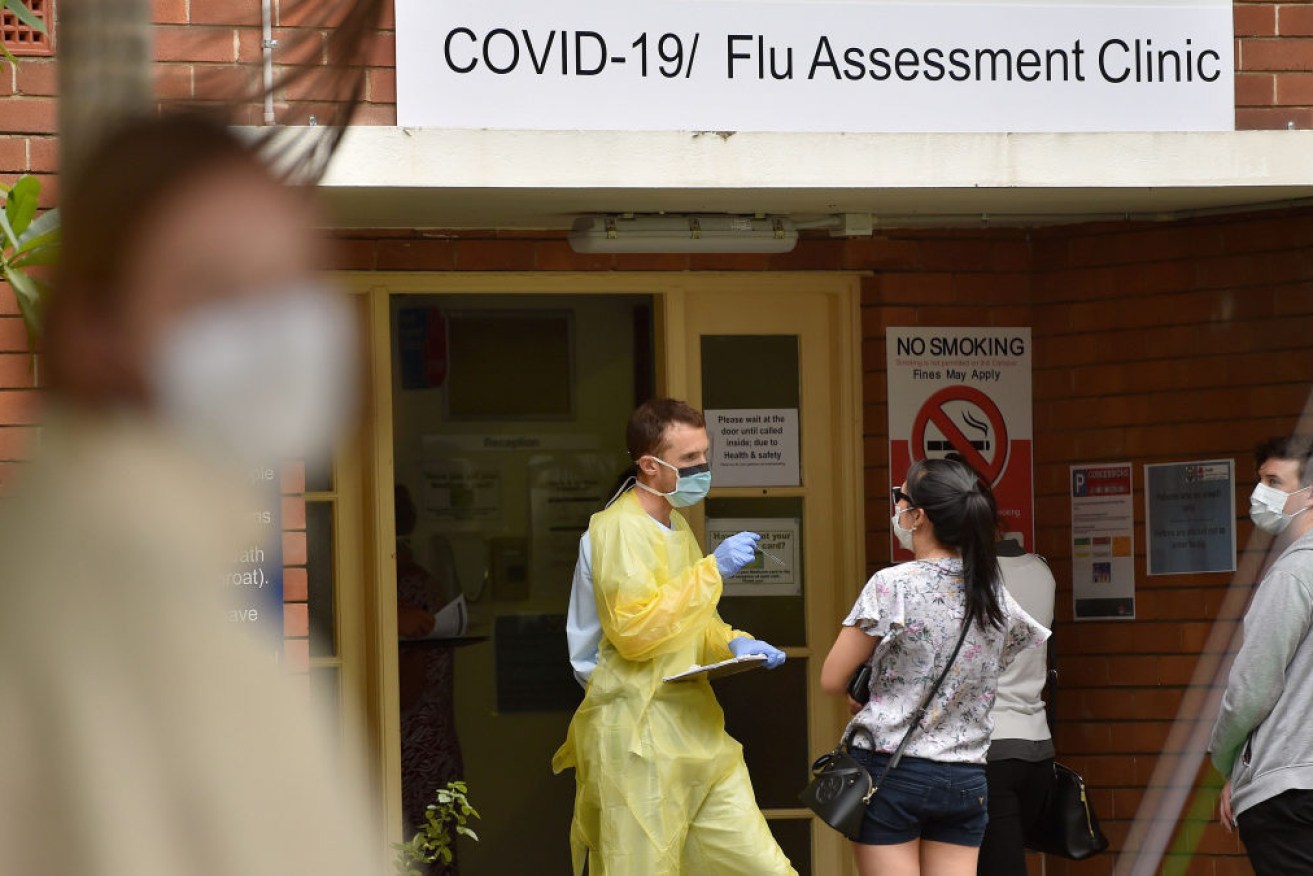
Australia has done 135,000 COVID-19 tests, but more test kits are urgently needed. Photo: Getty
Australia’s COVID-19 testing regime is among the world’s best, health experts have said, despite test kits for the coronavirus running low.
On Monday, Health Minister Greg Hunt told Parliament that 135,000 COVID-19 tests had been carried out in Australia.
This testing has identified 1353 confirmed cases, including 91 recovered cases and seven deaths.
The testing number is “one of the highest actual numbers in the world, it is also one of the highest per capita numbers, now at over half a per cent of the population,” Mr Hunt said.
It means we are testing broadly and more widely than almost everybody else, and therefore picking up cases.’’
Australia also has “one of the lowest COVID-19 test positivity rates in the world” at approximately 1 per cent, compared to 13 per cent in the US, 5 per cent in the UK, and 3 per cent in South Korea.
Australia is also in good shape when it comes to intensive care beds in hospitals, Mr Hunt said.
“The last advice that I have, and it may have changed, is that less than 20 [COVID-19] cases have been to ICU,” he said.
“That’s a very important sign.
“What that says is that our actual recognition of cases is much more accurate than many other comparable countries.
“That’s shown by the level of lives lost relative to the first 1000, and the level of ICU cases. Both of which are far lower than the rest of the world.”
Australia second only to South Korea on testing
Epidemiologist and Curtin University pro vice-chancellor of health sciences Professor Archie Clements told The New Daily that Australia’s COVID-19 testing regime is second only to world leader South Korea.
South Korea has done the best job. You can see that has had a direct impact on the epidemic curve,’’ Professor Clements said.

South Korea’s world-leading testing regime has helped it “flatten the curve”.
Source: covid19data.com.au
Professor Clements said it remains crucial for the public to “follow the directives of the public health authorities and the government” with regards to measures such as social distancing.
“It’s in everyone’s interest to get on top of this as soon as possible,” he said.
Australian National University infectious diseases specialist Sanjaya Senanayake told The New Daily Australia has done a “reasonable amount” of testing and that it has been “cost-effective and targeted”.
“The vast majority” of COVID-19 cases in Australia have been imported,” Associate Professor Senanayake said.
Even though there is some local transmission in Australia, the majority of cases we’ve seen have been linked to overseas travel.”
With stringent eligibility criteria for COVID-19 testing in place, members of the public who are concerned they may have been exposed to the coronavirus should be guided by their doctor as to whether they need to get tested, Associate Professor Senanayake said.
1.5 million test kits ordered
The government has moved to bolster the nation’s dwindling stocks of test kits, which are considered crucial to curbing the spread of the coronavirus.
Earlier this month, Australia’s chief medical officer Brendan Murphy said that some parts of the country had run out of test kits.
“The situation regarding pathology test kits, reagents and swabs is deteriorating rapidly, with kits no longer being available in some regions of the country,’’ Professor Murphy said in a letter to GPs.
“Pathology collection centres have also experienced large backlogs in testing appointments in some parts of Australia, and emergency testing facilities have had to be established in some areas to ensure that urgent patients can get access to testing.”
On Monday, Mr Hunt confirmed that a further 1.5 million coronavirus test kits had been ordered.
“A government source said medical supplies were becoming increasingly difficult to secure from overseas and prices were rising as a result,” AFR political editor Phillip Coorey reported.
Australia’s Therapeutic Goods Administration has also fast-tracked the approval of new ‘rapid tests’ that take just 15 minutes to work, with 500,000 due to arrive this week.