Justin’s Timberlake’s debilitating disease explained, and are Australians at risk?

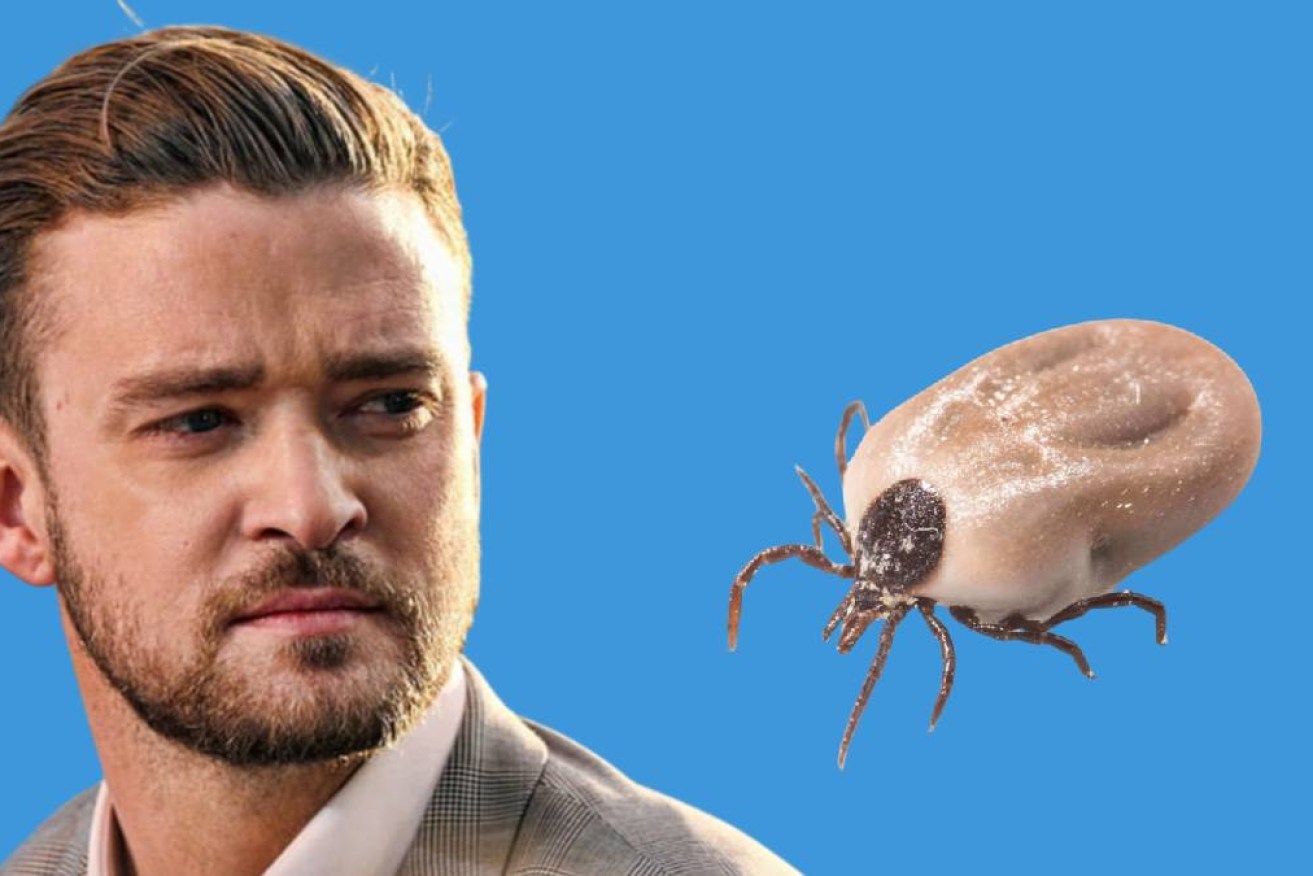
Timberlake revealed he has contracted the tick-borne disease. Photo: TND/Getty
Justin Timberlake is the latest high-profile celebrity to reveal they have been diagnosed with Lyme disease, raising awareness of this debilitating illness.
The singer shared the news on Friday in an Instagram post commemorating his Forget Tomorrow tour, which wrapped in Turkey on Wednesday, adding that the disease “can be relentlessly debilitating, both mentally and physically”.
Describing himself as a private person, Timberlake said he considered ending the tour when diagnosed, but “decided the joy that performing brings me far outweighs the fleeting stress my body was feeling. I’m so glad I kept going”.
“I honestly don’t know what my future is onstage, but I’ll always cherish this run! And all of them before! It’s been the stuff of legend for me,” Timberlake wrote.
Timberlake’s diagnosis follows a string of high-profile Lyme Disease cases including supermodel Bella Hadid, Yolanda, Riley Keough (the daughter of Lisa Marie Presley), TV personality and footballer Ryan Sutter, and Ben Stiller.
What is Lyme disease?
Lyme disease is transmitted by Ixodes ticks, also known as deer ticks. It can cause flu-like conditions, neurological problems, joint paint and other symptoms. In the vast majority of cases, Lyme disease is successfully treated with antibiotics.
People contract the disease if they are bitten by a tick carrying Borrelia burgdorferi bacteria.
According to the Centres for Disease Control and Prevention in the US, a recently released estimate based on insurance records suggests that each year about 476,000 Americans are diagnosed and treated for Lyme disease.
CDC says it’s “likely an overestimate of actual infections” because patients are treated in medical practices with symptoms of the disease, but not actually confirmed.
The first symptom of Lyme disease is usually a characteristic pink or red rash that starts as a small red spot that gradually spreads in a much larger circle with a characteristic bulls-eye appearance called erythema migrans.
The rash normally occurs between three and 32 days after being bitten by an infected tick.
Not everyone with Lyme disease gets the rash. There may also be fever, headaches, tiredness. Joint pains are particularly prominent with infections acquired in North America.
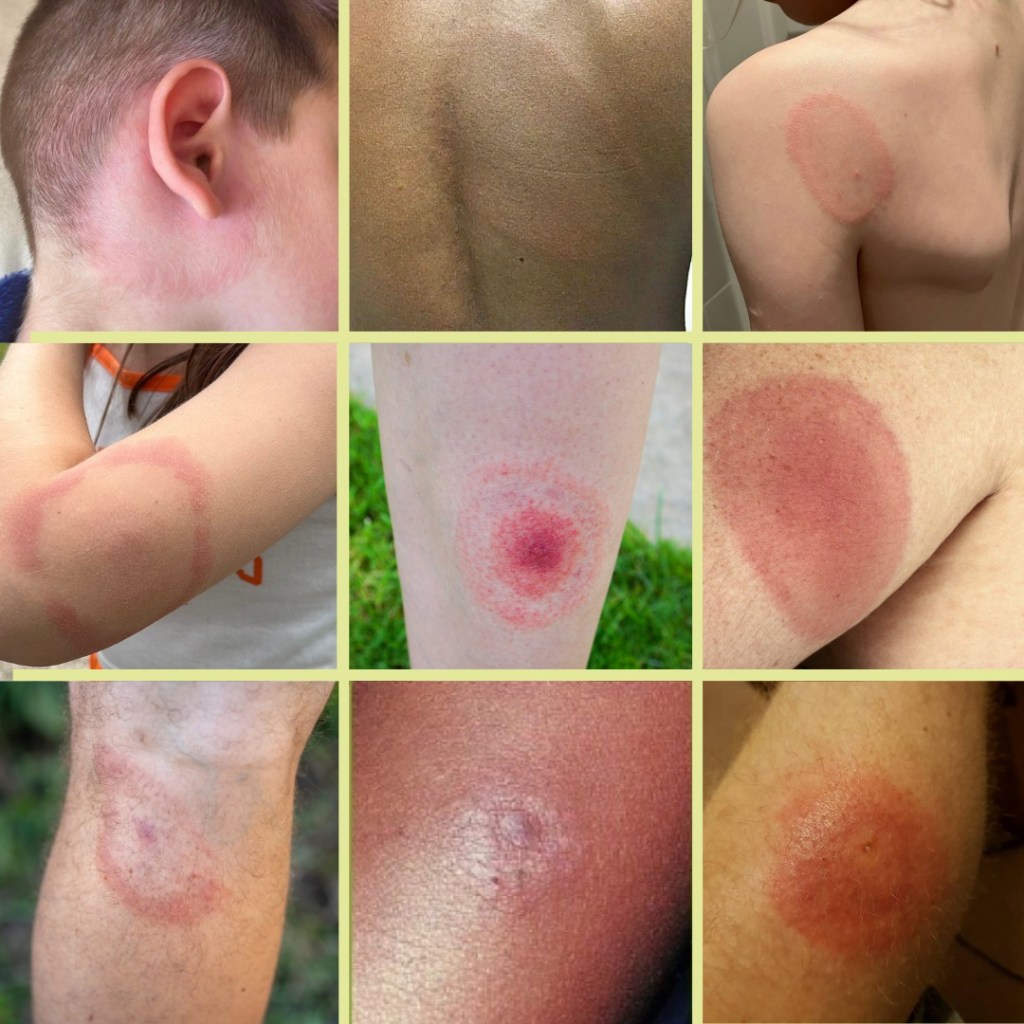
The first symptom of Lyme disease is usually a pink or red rash. Photo: Lyme Disease UK
If left untreated, the Lyme disease infection can spread through the bloodstream and can cause infection in the brain and membranes surrounding the brain (meningo-encephalitis) and infection in or around the heart (endocarditis, myocarditis or pericarditis).
The disease can also cause inflammation of joints and cause joint pain and long-term neurological symptoms.
Is Lyme disease in Australia?
In Australia, scientists “have not found Borrelia burgdorferi in Australian ticks, or any other Australian insect that could pass the disease to humans (called a vector)”.
According to the Australian Department of Health website, while locally acquired Lyme disease is “not supported” in Australia, traveller’s should be aware of the risk of infection.
“Lyme disease is commonly found in parts of the United Kingdom, the United States of America and Asia,” it wrote.
“Visitors to these areas can become infected and return to Australia with Lyme disease. Australian healthcare providers can readily diagnose and treat Lyme disease. You cannot give Lyme disease to someone else.
Government-funded service Health Direct has clear directives for travellers returning from overseas with symptoms that include fatigue, fever, chills, muscle and joint aches, swollen lymph nodes and headaches.
It lists symptoms patients may suffer, says blood tests can be taken, there’s numerous health guidelines clinicians can follow to treat patients with “overseas tick-borne diseases: Lyme disease”.
Are Australian ticks dangerous?
While Lyme disease is not something that can be acquired in Australia, the Department of Health says some local patients suffer from “the symptoms of a chronic debilitating illness, which many associate with a tick bite”.
“We describe this group as having Debilitating Symptom Complexes Attributed to Ticks (DSCATT),” it says.
And Australian ticks are known to cause other illnesses, including Rickettsial infections, Q fever, allergic reactions, paralysis and mammalian meat allergy.
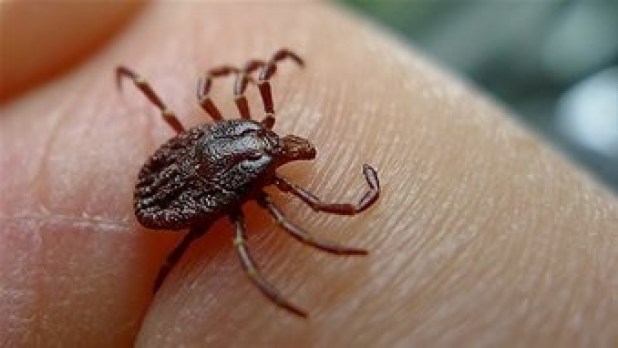
Australian ticks don’t carry Lyme disease, but can spread illnesses. Photo: Flickr/John Tann
“Ticks are insect-sized, eight-legged animals that can cling onto the skin. They can pierce the skin and inject their saliva, which may contain the bacteria, into the wound to draw blood for food,” Health Direct explains.
“A tick has to be attached for at least 36 hours before the bacteria can be transmitted.”
Want to see more stories from The New Daily in your Google search results?
- Click here to set The New Daily as a preferred source.
- Tick the box next to "The New Daily". That's it.