Five decades later it still rides the airwaves, being belted out on the West End stage, squealed at karaoke parties, paraded at Mardi Gras, and danced to at wedding receptions.
How did this sweet yet corny song wheedle its way into our lives, and manage to stay there for half a century?
Birth of a hit
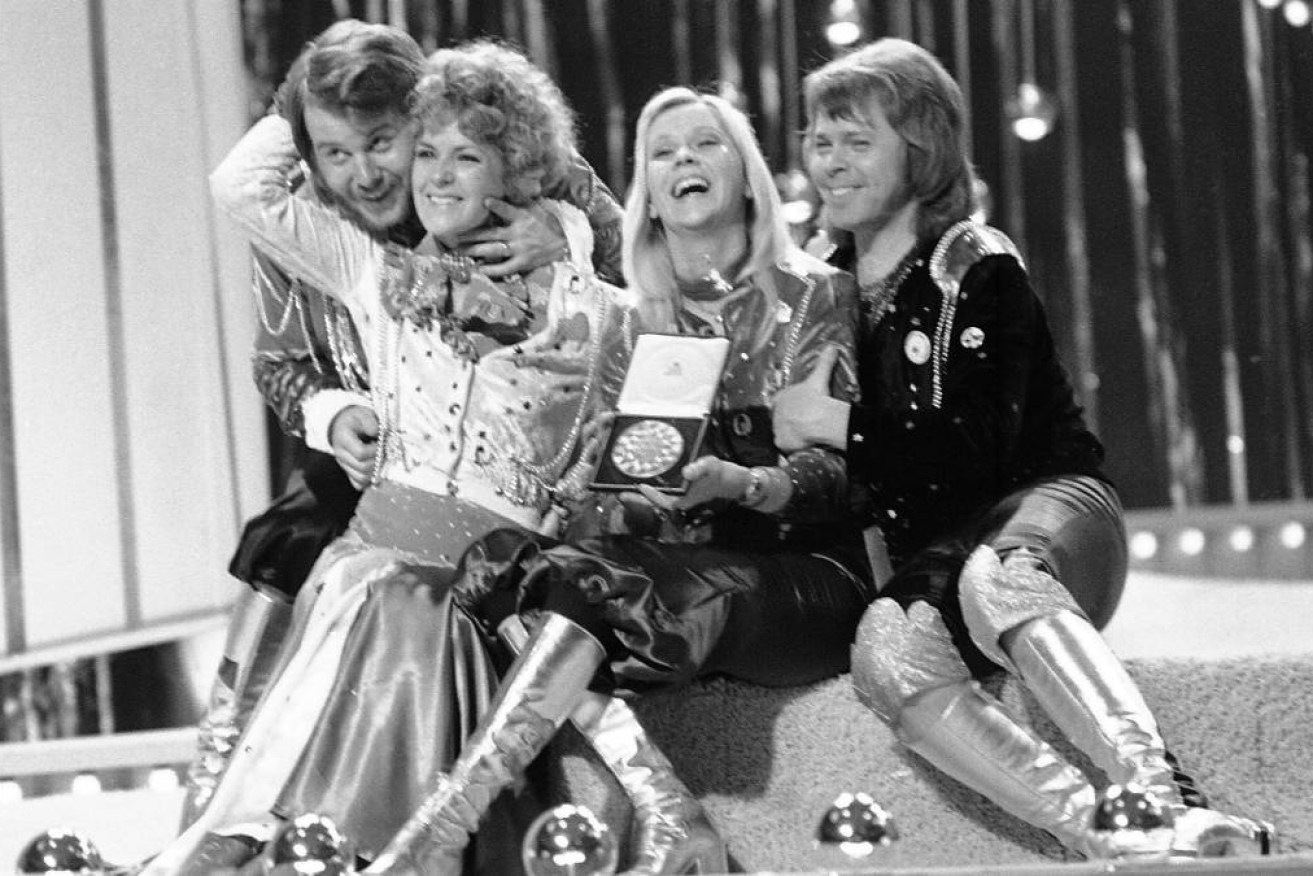
Dancing Queen was born in 1975, a year after ABBA’s famous Eurovision Song Contest win with Waterloo.
ABBA’s popularity had expanded but they hadn’t yet cracked the prized American market. The rising disco trend offered the next best shot.
In his book ABBA All The Songs: The Story Behind Every Track, author Benoit Clerc tells the story of band members Benny and Bjorn workshopping their new song at a cabin on Viggso island near Stockholm. They recorded a rough piano and guitar demo on cassette, then played it to their manager, Stig Anderson, and his teenage daughter Marie. Marie later described it as an “awful” recording of “the most incredible song”.
In the studio in Stockholm, the duo worked with musicians to craft a rhythmic dance groove, inspired by George McCrae’s 1974 disco hit Rock Your Baby. Two days later they had a draft backing track titled Boogaloo. ABBA historian Carl Magnus Palm reports that when Benny played the song to one of the group’s vocalists, Anni-Frid, she was “moved to tears”.
Manager Stig renamed the song Dancing Queen in a serendipitous move. ABBA was invited to perform at the gala for Swedish King Carl and his soon-to-be queen in June, 1976. They had the perfect song. Two months later, Dancing Queen officially launched and rocketed around the world.
Musical magic
Dancing Queen showcases the famous Swedish flair for thoughtful design and assembly. Rather than the lightning pace of Gloria Gaynor’s Never Can Say Goodbye (128 beats per minute), Dancing Queen’s bedrock rhythm grooves at a sustainable 100.
Unlike many pop songs, the vocals don’t begin predictably with the verse; nor the first line of the chorus (“you are the dancing queen”). Instead, they launch on the highest note halfway through the chorus (“you can dance”). Given the verse’s low-pitch, it’s a clever way to grab the listener’s attention. Sven-Olof Walldoff’s string arrangement adds ascending swells that rise to the chorus and tug on the heart.
Benny’s piano playing also adds drama and grandeur. He begins the song with a theatrical glissando, where he runs his fingers down the piano’s white keys. He then stretches his fingers to play octaves so the piano’s high melody is reinforced with a lower note.
Crafting the lyrics
Renaming the song to “Dancing Queen” offered a chance for a more mature dance story than Benny and Bjorn’s 1972 composition Nina, Pretty Ballerina.
Unlike sneaking out of the home like Cinderella, the Queen takes herself to the dance. She hunts for what she enjoys. Finding a king might be nice, but partners are optional to “having the time of your life”.
With its double meaning, the song’s queen protagonist connected organically with the LGBTQIA+ community. Dancing Queen eventually became a popular gay anthem at the Sydney Gay and Lesbian Mardi Gras, and was championed by singers such as Kylie Minogue. The bold message resonated: “You can dance, you can jive” – regardless of who you are, or who you love.
There is, however, a dubious lyric. Stig’s title created a songwriting challenge: Find three syllable rhymes for Dancing Queen. “Tambourine” is cheesy but harmless, but “17” is loaded.
Is ABBA casting teenage girls as “teasers” who seek to “turn them on”? The ethics of the lyrics have been largely overlooked by listeners and composers.
ABBA revival
In the 1980s, the world replaced its appetite for sweet Swedes with musical roughage such as grunge. ABBA broke up in 1982.
A decade passed before a greatest hits album, ABBA Gold, and a quirky Australian film, Muriel’s Wedding (1994) revived a nostalgic yearning for ABBA’s pretty songs.
Live performances of Dancing Queen by U2’s Bono, and much later by Metallica’s Kirk Hammett and Robert Trujillo, gave it rock legend endorsements.
The year 1999 brought a second popularity resurgence with the jukebox musical Mamma Mia premiering in London’s West End. This fictional story wove together ABBA hits including the indomitable Dancing Queen. The subsequent 2008 movie starring Meryl Streep sold Dancing Queen to the next generation. And in 2015, the track was inducted into the Grammy Hall of Fame.
Perhaps this reporter from 1977 best explains Dancing Queen’s enduring appeal:
There are two reasons for ABBA’s grip on the popular market. One is that they make near technically perfect records. The other is that many people want to be happy in this depressing world and ABBA make them feel good.

Wendy Hargreaves, Academic in the School of Education and Creative Arts, University of Southern Queensland
This article is republished from The Conversation under a Creative Commons licence. Read the original article.