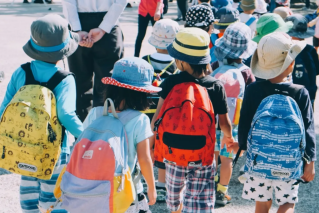
Primary school kids are taught to detect fake news. Can you?
Primary school aged kids are being taught how to spot online deception.
South Australian primary school students will soon learn how to spot deepfakes, scams and online misinformation. Now you can take our quiz and see whether you have the skills of a primary-school student when it spotting fake news online.
In March, AI photos of Zendaya and Tom Holland’s wedding fooled the internet – the fake Instagram post racked up 12 million likes, and even Zendaya’s own friends thought she’d got married.
While that example of AI deception was relatively harmless, the same technology is draining bank accounts, putting words in politicians’ mouths and faking advice from doctors.
Most adults have never been taught how to spot it, but primary school children are increasingly learning how to be more discerning about the information they see on the internet.
What is Newshounds?
Newshounds is the media literacy program being rolled out to 434 primary schools across South Australia, in a national first backed by $2.6 million in state government funding.
The free program covers far more than spotting fake photos. Across nine weeks, kids aged eight to 12 learn to read and question the online world: Who’s behind the posts in their feed and why, how facts get bent to mislead, how ads and influencers push them to buy, and how games and apps are built to keep them tapping and paying.
“In a digital age, learning to think critically about what they see online is just as important a life skill for primary school kids as reading, writing and arithmetic,”says Newshounds founder Bryce Corbett.
He’s a former journalist who started the program after watching his own kids get their news from an algorithm.

Newshounds founder Bryce Corbett has been a journalist for over 25 years. Photo: Squiz Kids
In every session, children are encouraged to “stop, think and check” what they see online – then debate not just whether it’s true, but who posted it, and their motivation for posting it.
In one lesson, students see examples of how it is possible to be misled by something completely true. A wellness influencer cites the one study that backs their supplement powder and ignores the 10 that don’t, while another post quotes a real statistic with the context cut away.
Is the news you’re reading accurate?
Ten years ago, most people received news that had been edited, fact-checked and contextualised before publication.
Now it is more likely to come from an algorithm – 48 per cent of 18- to 24-year-olds get their news from TikTok, and 43 per cent of Australians across all ages get it from influencers and creators that are under no obligation to verify the information they amplify before it reaches audiences.
When adult Australians were tested on spotting misinformation online, 45 per cent couldn’t tell at all, and only 3 per cent passed.
In a separate study, MIT researchers found humans (not bots) are responsible for false news spreading online six times faster than the truth.
Why online misinformation is a genuine threat
It’s costly. Australians reported losing $2.18 billion to scams last year. At the same time, advances in AI are making fraud increasingly convincing. In 2024, scammers used a cloned cloned the voice of Ferrari’s CEO to try to authorise a payment. The attempt failed only when a suspicious employee asked the caller to name a book the real CEO had once recommended. Cloning a voice takes three seconds of audio.
It’s designed to influence how people feel. Much of what appears on social media isn’t intended to deceive outright. Instead, it’s designed to create a sense of inadequacy before presenting a product, service or lifestyle as the solution. Nearly six in 10 Australians say diet and fitness content on social media affects how they feel about their own body.
It targets health. Trusted medical professionals, including Norman Swan, have been deepfaked into online ads promoting ineffective supplements. Covid vaccine misinformation alone was linked to 45,000 preventable deaths in the US in a single year.
It can influence elections. The same trick that married off Zendaya can put words in a leader’s mouth or invent an event that never happened. Around the world, deepfakes are being used to sway voters and swing elections – fake clips built to spread before anyone can fact-check them.
It’s got world leaders and experts worried. Since generative AI went mainstream in 2024, the World Economic Forum has consistently ranked misinformation as one the world’s top two global risks in the short-term – ahead of armed conflict and extreme weather.
South Australia is taking major steps to combat online misinformation, with bans on AI deepfakes and materially misleading political ads.
How governments are responding
On a Churchill Fellowship studying media literacy abroad, Corbett found countries like Estonia treated misinformation as a matter of national security.
Since 2010, Estonia has built media literacy into the school curriculum. Germany, Finland, South Korea and Wales are just some of the countries that have since followed.
Australia has been slower to adopt media literacy education, although governments have begun responding in other ways. South Australia was an early advocate for the under-16 social media ban that has since been adopted nationally.
The state has also had truth-in-political-advertising laws since 1985 and, last year, became the first Australian jurisdiction to ban AI deepfakes in election material.
Funding Newshounds in primary schools is the next step – while the laws guard the system, the lessons train the people inside it.
“A [social media] ban will only ever be as effective as the education that precedes it,“ Corbett said.
For those who left school before media literacy entered the curriculum, Newshounds is freely available online and designed for independent learning as well as classroom use.
Bryce has also expanded on many of the themes from his Churchill Fellowship in The Big Threat, a podcast examining the global spread of misinformation and the forces driving today’s information ecosystem.
Tips to tell what’s real online
- Reverse image search: Drag the picture, or a screen grab from a video, into Google Images or TinEye. If there’s no original source, be suspicious.
- Check who posted it first: A fan account with 200 followers isn’t a news source. Where something started matters more than how real it looks.
- Cross-check it: See if trusted news outlets are reporting the same thing. Even mainstream media get caught out by a good fake, so one source is never enough.
- Run it past a fact-checker: Before sharing or acting on a piece of information, check whether it has already been assessed by an independent fact-checking organisation such as International Fact-Checking Network, like AAP FactCheck or RMIT ABC Fact Check.
- Look for inconsistencies: While AI-generated content is improving rapidly, subtle flaws can still provide clues, including unnatural hand movements, lip-sync errors or lighting that doesn’t match the scene. None of these signs is definitive, however, and increasingly convincing fakes mean visual evidence alone should never be treated as proof.
- Authenticate urgent requests: A familiar face or voice is no longer sufficient to establish authenticity. If someone contacts you unexpectedly requesting money, sensitive information or immediate action, end the conversation and verify the request through a trusted phone number or another independent channel. If speaking by video, changing the camera angle can sometimes expose face-swap technology, although these tools are becoming more sophisticated.