Too smart? ‘Pervert glasses’ named word of the year

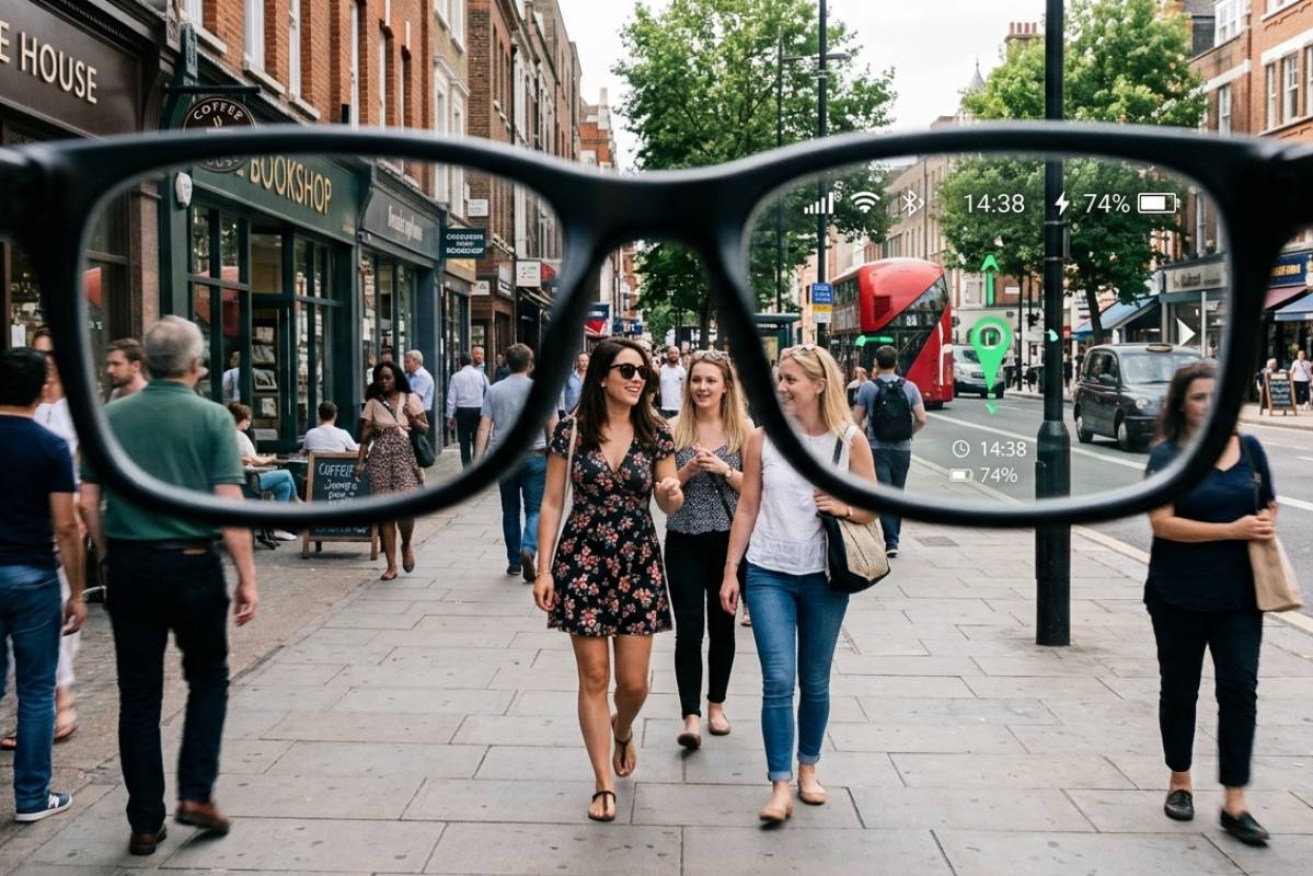
The backlash over smartglasses has prompted a ban on their use in some places. Photo: TND/Gemini
“Pervert glasses” – the term coined to describe controversial smartglasses with built-in cameras – has been named Macquarie Dictionary’s word of the year.
The dictionary’s judging committee described pervert glasses as a “succinct reflection of the state of the world in 2026”.
“On the one hand, we’ve seen a massive acceleration in the capabilities of AI and products that integrate it,” they said.
“At the same time, the undeniably critical nickname pervert glasses mirrors the widespread calls to hit the brakes on this seemingly unchecked development.”
The backlash surrounding AI smartglasses has grown since Meta promoted the launch of its second-generation devices mid-year, with many voicing concerns that they can be misused to film or take photos of people without their knowledge.
Some academics have suggested the specs are “straight out of a George Orwell novel”, with councils across Australia banning them from public swimming pools while pubs and other venues move to restrict their use. Kmart last month removed $89 Anko-branded smartglasses from sale after the Australian privacy regulator began investigating the Chinese software company behind them.
The Macquarie Dictionary said the name pervert glasses represented “the year we’ve all endured, with AI, the manosphere, increasing surveillance in supermarkets, and more”.
“Sure these new gadgets might be marketed as smartglasses or camera glasses, but it seems to us that pervert glasses paints a more apt reflection of the year.”
The word-of-the-year committee – made up of the Macquarie Dictionary’s editorial team, along with ABC language expert Tiger Webb and crossword maker and radio host David Astle – compiled a longlist of words across 13 categories before whittling them down to create a shortlist.
Pervert glasses beat “agenic”, another word from the fast-changing digital world which usually refers to the ability of AI to act or make decisions independently. The committee noted that the technical term had been brought into mainstream use through the release of agentic AI tools like OpenClaw.
“While it might not be the most flashy, funny, or socially impactful word on the surface, agentic has seen an exponential increase in usage over the last 12 months,” they said.
Other “honourable mentions” included PMOS (polyendocrine metabolic ovarian syndrome), the condition previously known as PCOS or polycystic ovarian syndrome which was renamed amid growing awareness of medical misogyny, and “Marrickville Pause”, a localised term for a temporary halt in conversation caused by noisy low-flying aircraft in Sydney’s inner-west suburbs.
Pervert glasses also took out top spot in the people’s choice 2026 word of the year, chosen my members of the public from the shortlisted words.
It was followed by “digital dementia” (a colloquial phrase for short-term memory loss supposedly caused by excessive use of digital devices and AI tech) and “AI;DR” (a fitting follow-up to Macquarie’s 2025 word of the year “AI slop”).
“A nice play on TL;DR (a code for too long; didn’t read), AI;DR gives fellow readers an instant heads-up that the text to follow is what they consider to be AI slop,” the committee said.
“As the sheer volume of AI generated text is ever-increasing, this succinct code will become a much-welcomed time saver.”
The Collins Dictionary recently announced that its word of the year for 2026 was “mogging” – a term that originally proliferated in toxic manosphere communities but has now become widely used to describe outshining or outperforming someone else.