Anne Frank betrayer named in cold case investigation

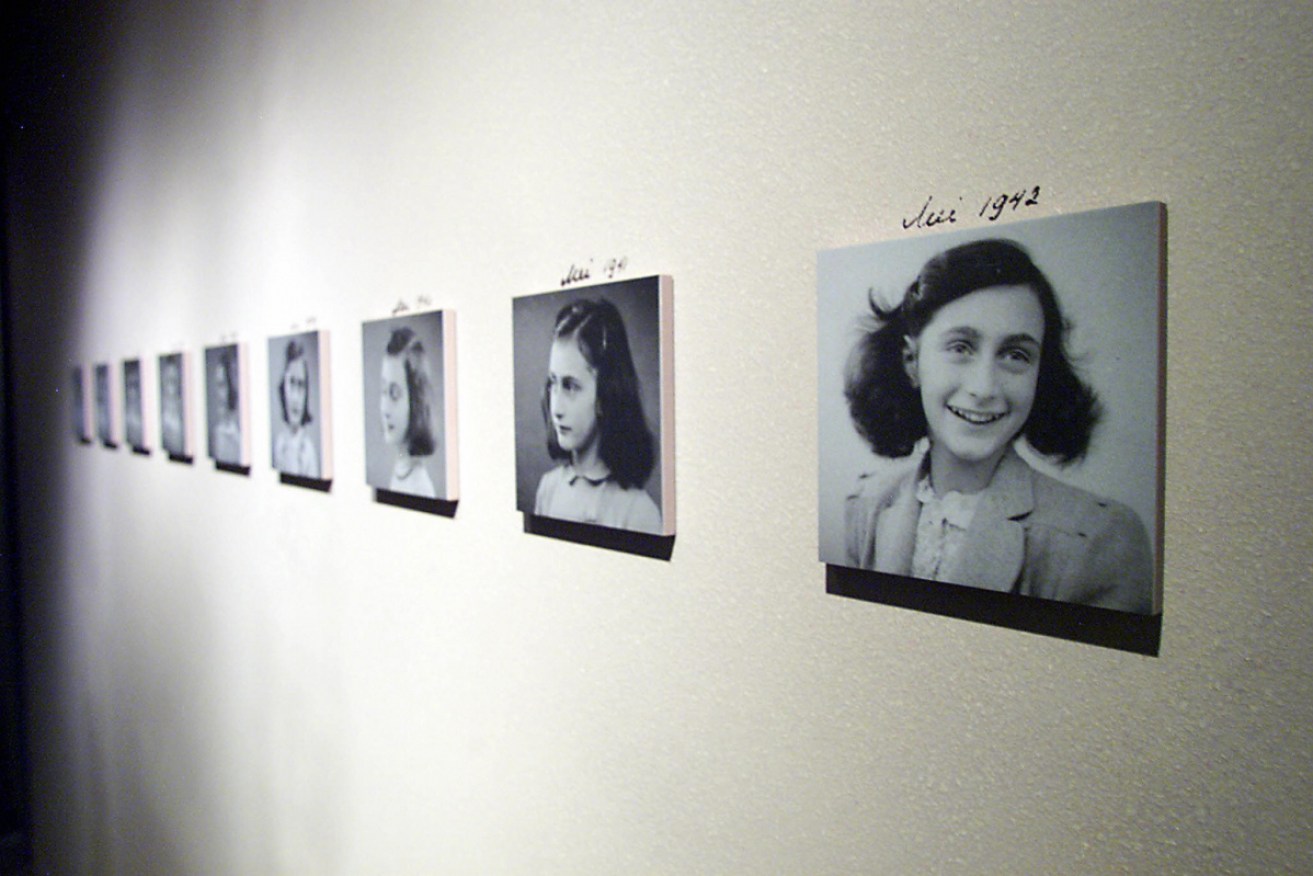
Holocaust deniers claim that Anne Frank's famed diary is a forgery. Photo: Getty
A cold case investigation into the betrayal of Anne Frank and her family has identified a suspect.
The teenage Jewish diarist died in a Nazi concentration camp Bergen-Belsen in 1945, after two years of hiding during World War II.
Now a cold case team that has spent years trawling evidence has named the person who they believe reported the 15-year-old and her family to the Nazi occupiers in Amsterdam. They say prominent Jewish notary, Arnold van den Bergh “gave up” the hiding place of the Franks to save his own family.
Anne and seven other Jewish people were found by the Germans in a secret annex above a canal-side warehouse in Amsterdam in August 1944.
The investigators, who included historians, filmmakers and former FBI agents, spent six years cracking the cold case, using modern investigative techniques and computer algorithms to search for connections to the teenager’s betrayal.
According to their research, Mr Van den Bergh was a member of Amsterdam’s Jewish Council, a wartime body formed to implement Nazi policy.
It was disbanded in 1943, and its members sent to concentration camps. But Mr van den Bergh, who was living in Amsterdam as normal at the time, remained behind, the team said.
Tweet from @annefrankhouse
The group’s research suggested that a member of the Jewish Council had been providing information to the Nazis.
“When van den Bergh lost all his series of protections exempting him from having to go to the camps, he had to provide something valuable to the Nazis that he’s had contact with, to let him and his wife at that time stay safe,” former FBI agent Vince Pankoke told US media.
But despite the years of research, the team said they couldn’t be completely sure that Mr van den Bergh was behind the betrayal. Filmmaker Thijs Bayens, whose idea the investigation was, said “we don’t have 100 per cent certainty”.
“We have investigated over 30 suspects in 20 different scenarios, leaving one scenario we like to refer to as the most likely scenario,” he told The Association Press on Monday.
“There is no smoking gun because betrayal is circumstantial.”
The team’s findings also suggest Anne’s father, Otto Frank — the only family member to survive the war — learned of Mr van den Bergh’s possible involvement from an anonymous note.
The typed note, which had sat overlooked in decades-old Amsterdam police files, names Mr van den Bergh, who died in 1950, as the one who informed German authorities.
Mr Pankoke told the US 60 Minutes that anti-Semitism might have been the reason the name was never revealed, something that was difficult for investigators to accept.
“Perhaps he just felt that if I bring this up again… it’ll only stoke the fires further,” Mr Pankoke said.
“But we have to keep in mind that the fact that [Mr van den Bergh] was Jewish just meant that he was placed into an untenable position by the Nazis to do something to save his life.”
In a statement on Tuesday, the Anne Frank House museum in Amsterdam said it was “impressed” by the team’s investigation, but that other questions remained unanswered.
“I don’t think we can say that a mystery has been solved now. I think it’s an interesting theory that the team came up with,” museum director Ronald Leopold said.
The museum – which occupies the house where the Franks spent more than two years hiding – provided researchers access to its archives to help with the cold case.
Anne Frank’s diary was published in 1947 and is renowned as a symbol of hope and a poignant glimpse into the Holocaust.