Department of Veterans Affairs failing veterans, secretary admits
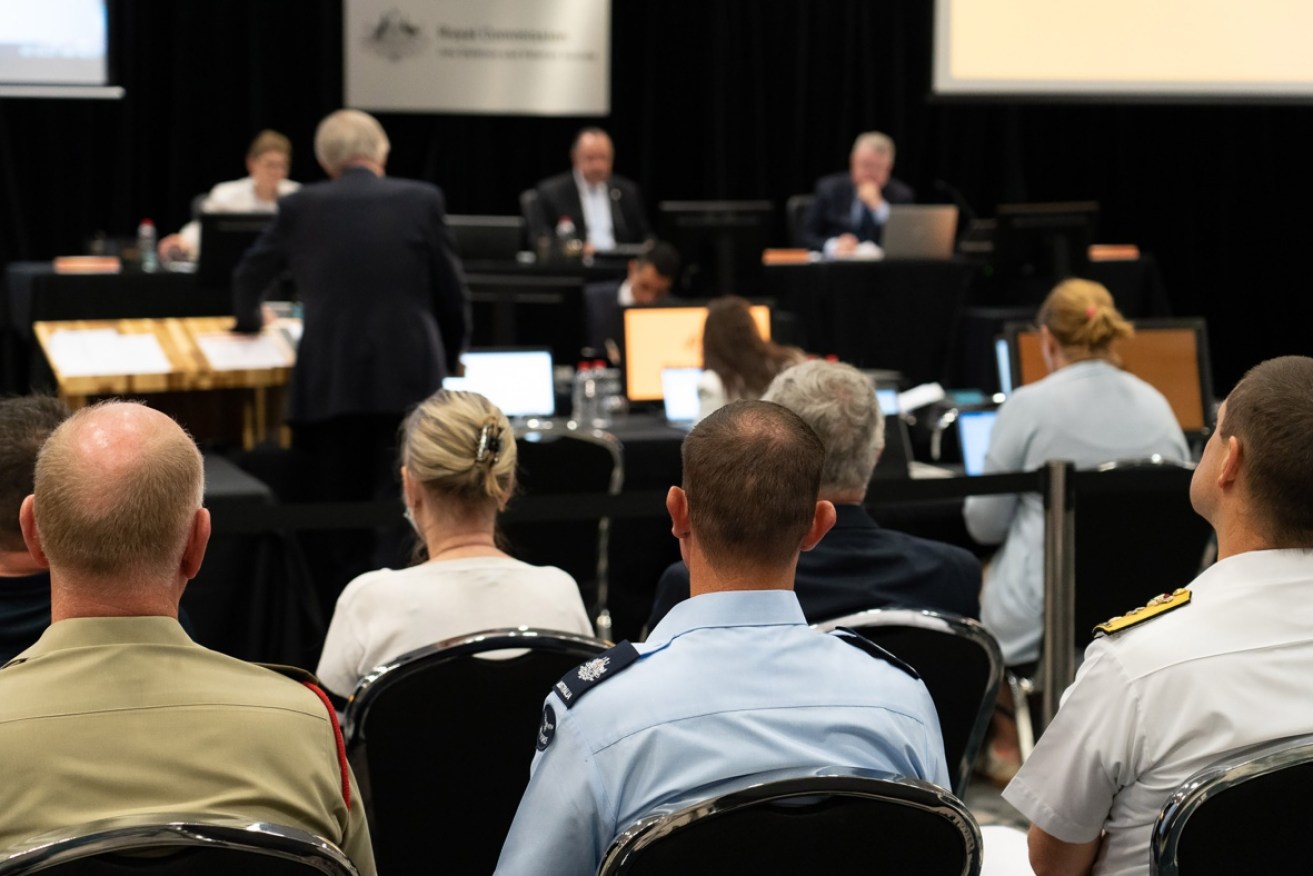
The royal commission heard there was an "alarming" growth in claims in recent years. Photo: AAP
The Department of Veterans Affairs is not fit to meet the needs of past and present defence members, the agency’s boss says.
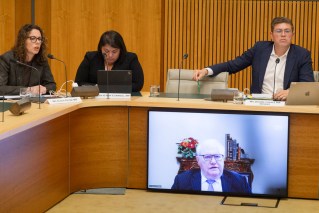
Elizabeth Cosson on Thursday gave evidence to the Royal Commission into Defence and Veteran Suicide, making frank admissions about the department’s recent failings.
Problems include a backlog of more than 60,000 claims by veterans and serving defence members.
In a written statement to the commission, Ms Cosson – whose army service spanned more than three decades – said the DVA was not delivering what former and serving defence members needed.
“You’ve said the system has evolved in such a way that it is considered not fit for contemporary needs of veterans,” counsel assisting the commission Peter Gray asked.
“I do consider it is not fit, correct,” Ms Cosson replied.
Mr Gray added: “You refer to there having been continual incremental changes that have not produced intended outcomes. Are you saying … there hasn’t been a systematic approach to the design of the veteran support system; rather, it’s the product of a number of incremental developments over time?”
“That is what I’m saying,” Ms Cosson said.
The DVA has repeatedly come under fire during the inquiry, for its backlog of claims, complaints about “stupid mistakes” made by inexperienced junior staff, and the extreme stress caused by delays sometimes spanning years.
Ms Cosson said one of the biggest challenges for the DVA was that it had to rely heavily on casual staff to process the notoriously complex disability and injury claims.
She said she wanted “less labour hire and more public servants”. But federal government caps on the department’s average staffing level limited the number of public servants the DVA could employ.
That meant the DVA had to use “more costly” casual staff who generally took at least six months to train.
Commissioner Peggy Brown asked Ms Cosson of the federal government ‘s rationale for imposing an “arbitrary ceiling” on staffing when the DVA had the funding for more skilled public servants.
“It is very hard to answer, commissioner,” Ms Cosson said.
“It is intended to ensure we don’t employ too many people into the public service.”
Dr Brown: “… so it is an ideology?”
Ms Cosson: “Yes”.
“But in the case of DVA claims processing, it is an ideology that has led to significant inefficiency, distress, mental health consequences and potentially suicides,” Dr Brown said.
Ms Cosson said the blowout in waiting times for claims at the DVA in the past two to three years was directly linked to a series of “veteran-centric” reforms in 2018 that had made it easier for veterans to make claims for compensation and injuries.
This included the introduction of My Service, which allowed veterans claims directly online.
She said the DVA was “not good at forecasting” and had failed to anticipate the full impact of the reforms.
“In your opinion, are delays in claims processing at DVA capable of raising the risks that veterans making those claims could take their own lives?” Mr Gray asked.
“I believe that the claims backlog could be a contributing factor, absolutely,” Ms Cosson replied.
Her evidence concluded the inquiry’s two-week public hearing in Canberra.
The inquiry continues on June 20 in Townsville.
Lifeline 13 11 14
Open Arms 1800 011 046
-AAP