Unemployment dives below pre-pandemic levels as jobs surge resumes

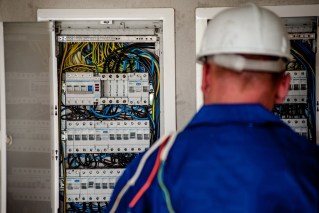
Employers across many industries are struggling to find suitably skilled staff. Photo: ABC News/Lexy Hamilton-Smith
From fears of mass unemployment to worries about labour shortages, Australia’s jobs market has staged a dramatic turnaround since the COVID-19 pandemic hit our shores.
For the first time since Australia’s borders slammed shut and mass lockdowns were announced across the nation, unemployment has dropped below pre-pandemic levels, with an estimated 115,200 jobs created in May.
Bjorn Jarvis, the head of labour statistics at the ABS, said the unemployment rate – which has dropped sharply from 5.5 to 5.1 per cent – was now lower than in March 2020 and the same as in February of that year.
“The declining unemployment rate continues to align with the strong increases in job vacancies,” he said.
‘More work than we can viably do’
And this is the new problem facing the economy, especially employers.
Things have never been busier for Jared Fitzclarence’s company KAW Engineering, as Western Australia’s Pilbara mining region booms again.
It has loads of new projects coming in, but the bottleneck is finding staff to do the work.
During the mining construction boom about a decade ago, KAW Engineering had a peak staff of 47, before it dropped off to about 12 workers during the downturn.
Its workforce is back up to 47 and Mr Fitzclarence is trying to hire more staff.
“We’ve got about 14 vacancies,” he told ABC’s The Business.
“We’ve got a lot more work than we can viably do, and we’re in a situation now where we’re actually bringing in staff to help meet some of those commitments that we’ve made, where we’re not actually making any money.”
Closed borders take migrant workers out of the equation
It is not just a phenomenon in mining boom towns, either.
Nicole Gorton, a director at recruitment firm Robert Half, said professional sectors such as finance, legal and technology were also experiencing some of the strongest demand for workers she had seen.
“In early 2021 we saw companies start to go through a recovery phase,” she said.
“That recovery phase was fairly short, and so now what businesses are doing, they’re in this growth trajectory, beyond recovery.
“Companies are hiring and they’re looking to add to headcount, not just replace.
“Beyond that, the borders are shut and so we’re seeing a real talent deficit. There’s definitely a war for talent, a skills shortage.”
With the international border closed now for almost a year and a half, and government forecasts hinting Australia will remain closed for another year, there simply is not the expanding talent pool employers are used to.
Research from the Commonwealth Bank, based on quarterly ABS data, suggests Australia had already lost close to 300,000 short-term migrant workers in the year to March.
That means the balance of power was shifting towards workers in terms of wage demands, Ms Gorton said.
“What we’re now seeing is within the areas that we recruit finance and accounting, business support and technology, we’re starting to see huge amount of pressure on salaries on remuneration and also benefits packages,” she told The Business.
“Within niche areas of specialisation, where the skills are in huge demand … what we are seeing is a wage increase where people can negotiate 10 per cent and beyond.”

A KAW Engineering worker welds parts in Karratha for Rio Tinto’s berths at Dampier Port. Photo: ABC
Mr Fitzclarence said it was a major problem for his business as he is being forced to try to keep up with the rising salaries big mining and gas companies could offer.
“There are huge salaries flying through here,” he said.
“We’re probably sitting at the moment somewhere around 15 to 20 per cent higher wages than what we’re seeing in Perth for most trades.”
A couple of Mr Fitzclarence’s workers have already been poached by big oil and gas and iron ore companies in the Pilbara region, offering wages much higher than he can pay.
“We’re constrained that we can’t really push wages any higher, because we can’t afford to pay them. But we need staff and so it’s becoming a catch-22.”
Wage pressures very low, but starting to grow
Those wage increases are yet to filter across the whole economy, with the most recent wage price index, also from the ABS, showing pay packets up just 1.5 per cent in the year to March.
The quarterly figures hint at a modest acceleration of pay in the private sector, at 0.6 per cent, but that only equates to annual wage growth of 2.4 per cent.
Wednesday’s 2.5 per cent minimum wage increase was also below the 3 per cent-plus that the Reserve Bank is ultimately targeting to revive inflation in the economy.
However, a growing number of economists are predicting that, with closed borders cutting off a large source of migrant workers, wage growth will soon accelerate.
“The labour market remains well ahead of the RBA’s expectations, and with the unemployment rate at 5.1 per cent, wage pressures are likely to emerge sooner than they expect,” said Sean Langcake from BIS Oxford Economics.
While that will be good for workers’ pay packets, it was likely to come at the cost of higher repayments for those with mortgages, he said.
“Notwithstanding [Reserve Bank] governor Lowe’s relatively dovish comments today, we expect the RBA will need to bring forward their plans for a rate hike into 2023.”
No devil in the detail
Thursday’s jobs data certainly supports an upbeat assessment.
The figures were unambiguously good, with the proportion of people either in work or looking for it rising, hours worked also up and the underemployment rate falling to 7.4 per cent, its lowest level since January 2014.
That was reflected in the split of new jobs between full-time and part-time.
Full-time employment increased by 97,500 in May, while part-time employment rose by 17,700.
As CBA economist Kristina Clifton pointed out, the data also captures the “full impacts” of JobKeeper’s end.
“Looking at both the April and May labour force data indicates that the labour market as a whole has weathered the ending of the JobKeeper payment well, although there have no doubt been some negative impacts for some individuals and businesses,” she noted.
“This is a fantastic result, with the end of JobKeeper having had the potential to derail the economic and labour market recovery.”
–ABC