Air traffic fatigue eyed in alarming spate of near-misses in Sydney

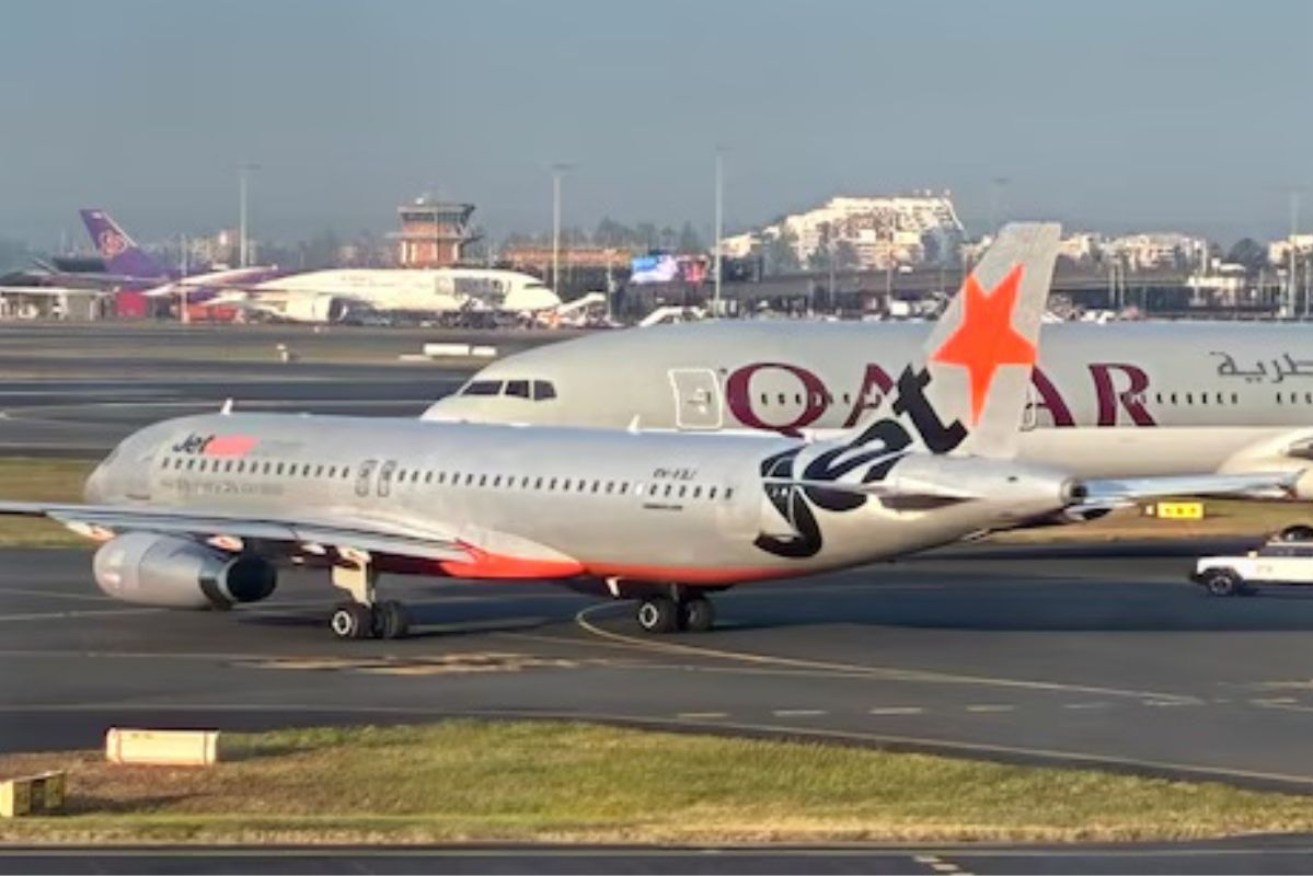
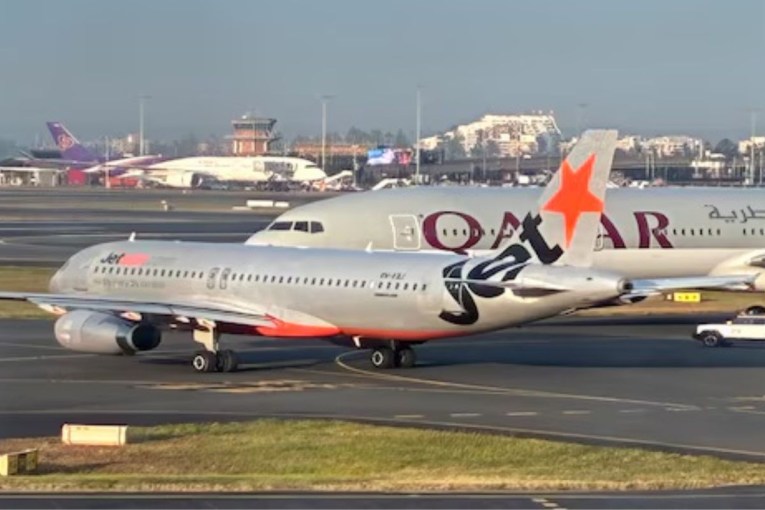
A flight attendant fractured her wrist when Jetstar and Qatar Airway planes nearly collided at Sydney Airport in August. Photo: Supplied
Fatigue and a shortage of air traffic controllers are being investigated as potential reasons for a spate of concerning near-misses as the country’s busiest airport.
There were four near-misses on runways at Sydney Airport in July and August, including one in which a jet was damaged and unable to turn around.
Each time, ground staff and pilots had to step in to avoid a major collision.
In one incident, a Jetstar flight attendant fractured their wrist after being knocked off their feet.
The four near-misses are among 11 at Sydney in July and August.

“Sydney recorded the highest confliction rate per aircraft movement post-Covid among [Australia’s] major airports, around 20 per cent above the national average. This should, however, be viewed in the context of Sydney Airport being the most complex in the country,” Australia Transport Safety Bureau chief commissioner Angus Mitchell said on Wednesday.
“The analysis also found increases specific to Sydney in potentially high-consequence occurrences, including runway incursions, taxiway near collisions and losses of separation attributed to air traffic control actions.”
Mitchell said the exact role of air traffic control in each incident was being investigated.
“Based on information detailed in our preliminary reports, staff resourcing within Sydney Tower at the time of many of the occurrences has emerged as a recurring area of inquiry,” he said.
“We recognise that air traffic control systems are under strain globally, and I acknowledge the professionalism, training, and commitment of air traffic controllers.”
Mitchell revealed one near-miss that came just seven seconds after an air traffic controller had completed a handover and been sent on a break. That incident was given the most serious safety classification, only the third time the rating has been used since Australian records began.
Post-Covid fatigue and staffing arrangements are being investigated as a growing trend across Australian airports. The ATSB said that did not necessarily mean traffic controllers felt fatigued or that it was affecting their work, but rather that mathematical equations on staffing levels meant they could be.
Other key concerns include use of regular overtime shifts to fill gaps in tower rosters; controllers with simultaneous multiple operational duties; and conducting live training alongside active air-traffic management duties.
A flight attendant fractured her wrist when Jetstar and Qatar Airway planes nearly collided at Sydney Airport in August. Photo: Supplied
Mitchell said air traffic control challenges in Sydney were widely recognised.
“I am encouraged by the work under way to address them,” he said.
“The ATSB does not investigate to apportion blame or liability. Our role is to independently examine the evidence, identify any systemic safety issues that may emerge, and bring them to light early and transparently so those best placed can consider whether any immediate and ongoing safety risks are being effectively managed.”
The Civil Aviation Safety Authority has confirmed an independent review into operational pressures.
“Having reviewed the ATSB’s preliminary reports, CASA remains of the view that none of the incidents indicate an immediate safety risk,” a CASA spokesman said.
“While the ATSB continues its investigation and analysis, CASA is undertaking a safety assurance review focusing on whether there are underlying operational or system issues that could affect safety.”
He said CASA would not hesitate to act if broader safety issues were identified.
The Department of Infrastructure and Civil Aviation Safety Authority is working to improve aviation safety, particularly as new air traffic controllers are trained.
Transport Minister Catherine King said Australians “rightly expect that when they travel, every layer of the system is working to keep them safe”.
“The director of aviation safety, Civil Aviation Safety Authority CEO Pip Spence, has advised me that she considers Australia’s aviation system and Sydney Airport remain safe,” she said.
“Australia has a well-earned reputation for aviation safety. These incidents and the ATSB’s preliminary reports highlight that we must take every opportunity to improve it.”
The federal government has also established an independent panel to oversee investigations into Airservices Australia, which runs air traffic control operations.
“It is important that we let the ATSB complete its work. At the conclusion of these investigations, final reports will be released for all events,” King said.
“The government expects Airservices Australia to cooperate fully with these investigations and act promptly on the issues identified.”
The ATSB’s final reports on the incidents will be released in coming months.
-with AAP
Want to see more stories from The New Daily in your Google search results?
- Click here to set The New Daily as a preferred source.
- Tick the box next to "The New Daily". That's it.