Eight home battery mistakes that could cost you thousands

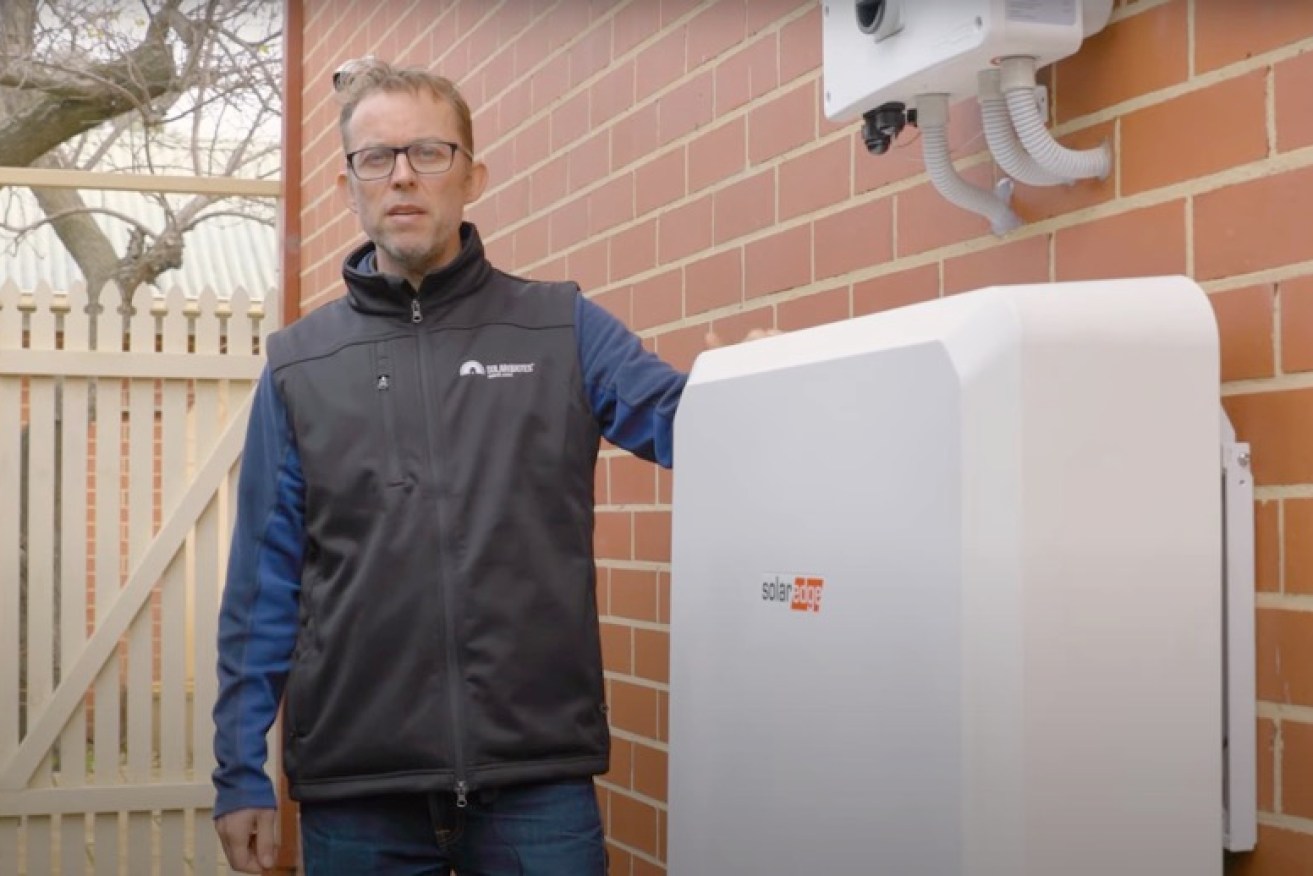
SolarQuotes founder Finn Peacock says there are common – and potentially costly – mistakes to avoid when choosing a home battery. Image: SolarQuotes
There’s been a frenzy of interest in home batteries since the federal battery rebate launched in 2025 – and frenzies are when buyers can make expensive mistakes.
Finn Peacock, a chartered electrical engineer and founder of SolarQuotes, says these are eight common mistakes to avoid before buying a battery.
Mistake #1: Not having enough solar
Most people buy a battery to store excess solar energy. But many homes have solar systems that are too small to generate enough spare energy to charge a battery through winter, crippling their battery savings.
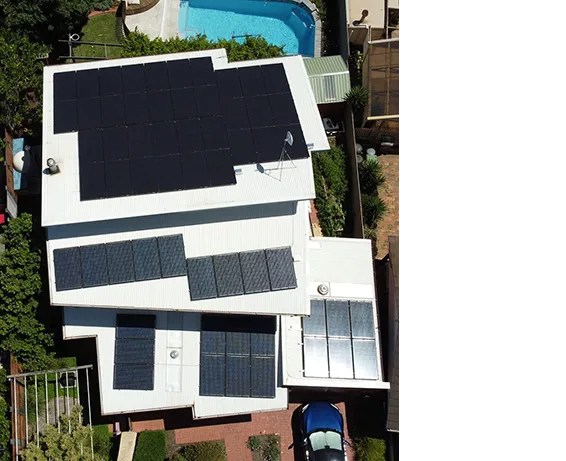
Finn Peacock upgraded his home solar system from 6 kW to 20 kW. Image: SolarQuotes
For most homes, where possible, I recommend at least 10 kW of solar.
Yes, some electricity retailers offer plans with free or very cheap power during parts of the day, which can help top up a battery when solar generation falls short.
But there’s no guarantee these plans will be around forever. Meanwhile, your solar panels will reliably generate energy day-in and day-out for decades.
Mistake #2: Buying the cheapest battery you can find
It’s not rocket science. Cheap battery quotes = low margins for installers = rushed installations with inferior-quality products and little-to-no after-sales support.
A battery is not a set-and-forget appliance. Over its life, you may need firmware updates, warranty claims, monitoring fixes, or a technician back on site.
If you can’t afford a decent battery, properly installed by a company that will still exist in five years, don’t buy one at all.
Mistake #3: Overpaying
Paying more does not automatically guarantee a better battery or installation.
Be wary of high-pressure sales tactics, including door-knocking, letterbox campaigns and arbitrary “end-of-month” deadlines designed to push you into signing quickly.
A high price is no guarantee of a high-quality installation. In my experience, some expensive battery offers still fall short on workmanship.
The solution here is – get multiple quotes. You’ll quickly figure out the market rate for a well-installed battery that suits your needs.
Mistake #4: Having your heart set on one brand
Tesla makes excellent batteries. I bought a Powerwall 2 almost a decade ago and have been very happy with it.
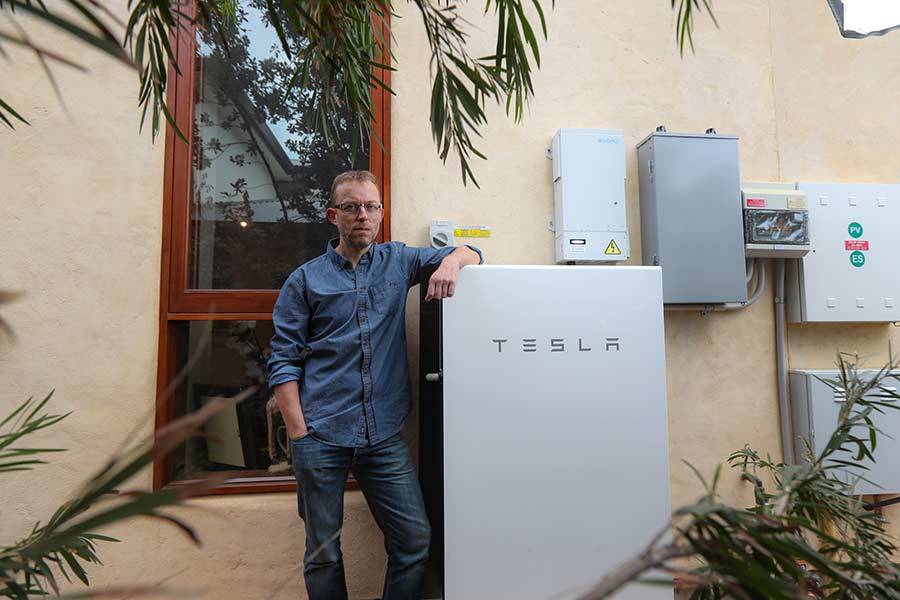
Finn Peacock with his Tesla Powerwall 2, installed almost a decade ago. Image: SolarQuotes
For many years, the Powerwall was, in my view, one of the best options for homeowners: competitively priced, straightforward to use and looked slick.
Today, there are many strong alternatives to Tesla:
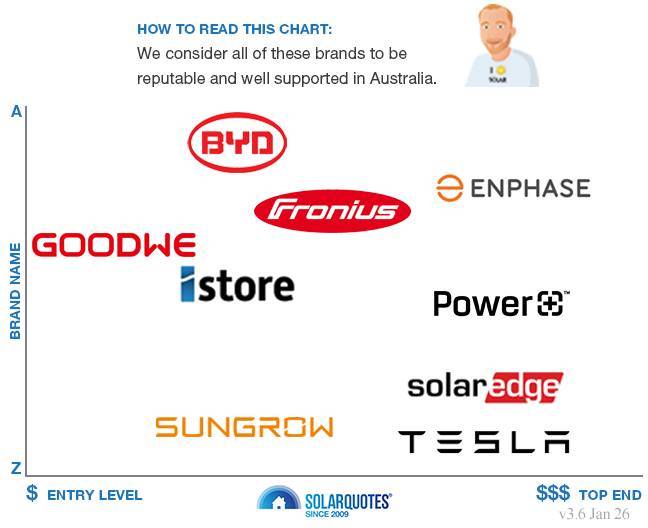
Image: SolarQuotes
Mistake #5: Not understanding your blackout protection
“Blackout protection” can mean very different things. It may mean keeping most of the home running close to normal, or powering only essential circuits such as the fridge and some lights.
Ask your installer to explain exactly what will happen if the grid fails, including which circuits are backed up, how much power is available and whether the battery can recharge from solar during an outage.

A battery-backed home keeping essential power on during a blackout. Image: SolarQuotes
Mistake #6: Not understanding battery-friendly electricity tariffs
Instead of paying one flat rate all day, time-of-use tariffs charge different rates at different times: often highest during the evening peak, lower overnight and cheapest during the middle of the day when solar generation is abundant.
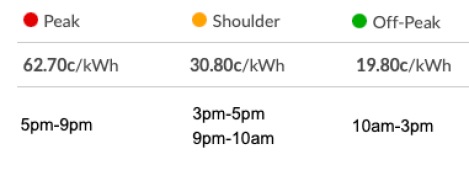
Example of a South Australian time-of-use tariff, with different rates for peak, shoulder and off-peak periods. Image: SolarQuotes
For a home with solar and a battery, that can create an opportunity – charge the battery when electricity is cheaper or solar is plentiful, then use stored energy during the expensive evening peak.
Mistake #7: Buying small and planning to expand later
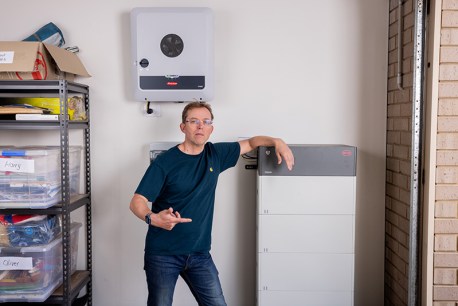
Modular batteries, such as this BYD B-Box, can be expanded by adding compatible modules. Image: SolarQuotes
Many popular batteries in Australia are modular, meaning capacity can be increased later by adding extra modules. That can make starting small and expanding over time sound attractive.
The risk is product turnover. Battery models change, and compatible modules for a particular system may be harder to source several years later.
So choose and size your battery carefully at the outset.
Mistake #8: Not understanding how the federal battery rebate applies
The federal battery rebate has reduced the upfront cost of eligible batteries. For a typical 20 kWh battery installed in 2026, the rebate is worth about $4,100.
But, unlike the solar rebate, it can only be claimed once per household. So you’re incentivised to go as big as you can.
This also means that if you buy a bargain-basement battery with no after-sales support and it breaks, you won’t be able to claim the rebate on its replacement.
The takeaway: compare quotes, size your system carefully and make sure you understand backup performance, tariffs, warranties and rebates before signing a contract.
SolarQuotes helps Australian households and businesses compare quotes from solar and battery installers.
Want to see more stories from The New Daily in your Google search results?
- Click here to set The New Daily as a preferred source.
- Tick the box next to "The New Daily". That's it.