Top Gun: Maverick lawsuit rejected by US judge
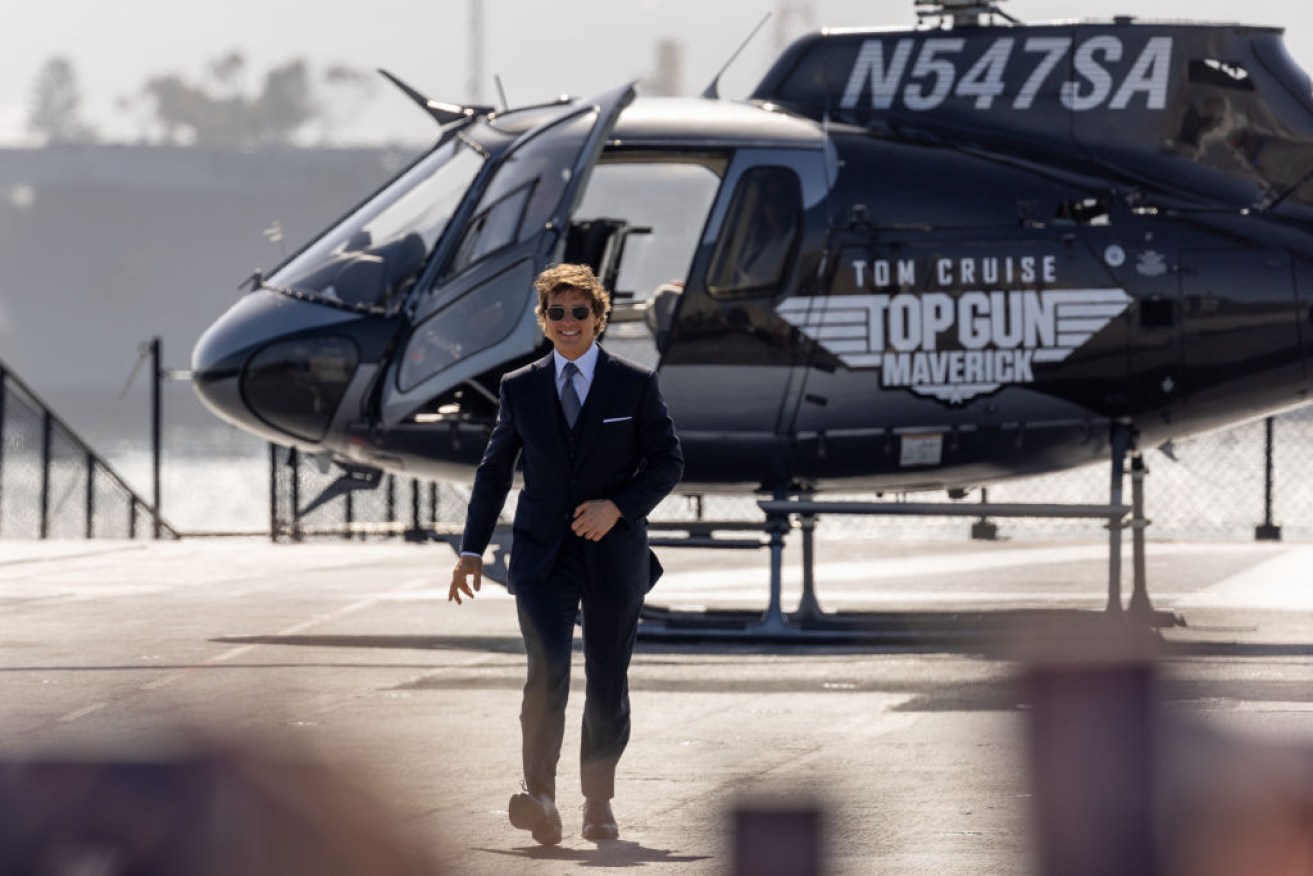
Top Gun: Maverick featured Tom Cruise reprising his role as US Navy pilot Pete "Maverick" Mitchell. Photo: Getty
Paramount Pictures has won the dismissal of a lawsuit claiming its 2022 Tom Cruise blockbuster Top Gun: Maverick borrowed too much from a 1983 magazine article that inspired the original Top Gun film.
US District Judge Percy Anderson in Los Angeles said the sequel was not “substantially similar” to Ehud Yonay’s Top Guns, about the US Navy’s Top Gun fighter pilot training school in San Diego.
Yonay’s widow Shosh Yonay and son Yuval Yonay, heirs to his copyright, said they deserved some of the sequel’s profits, after Paramount built a billion-dollar franchise off an article that “breathed life into the technical humdrum of a navy base.”
The plaintiffs will appeal, their lawyer Marc Toberoff said.
“Once Yonay’s widow and son exercised their rights reclaim his exhilarating story, Paramount hand-waved them away exclaiming, ‘What copyright?'” Toberoff said in a statement. “It’s not a good look.”
Paramount said in a statement, “We are pleased that the court recognised that plaintiffs’ claims were completely without merit.”
Top Gun: Maverick featured Cruise reprising his role as US Navy test pilot Pete “Maverick” Mitchell.
It grossed $US1.5 billion ($2.3 billion) worldwide, becoming Cruise’s biggest film, and is the 12th highest-grossing film according to Box Office Mojo.
The plaintiffs, both from Israel, claimed that the fictional “Maverick” was “derivative” of nonfictional Top Guns because of similar plots, characters, dialogue, settings and themes.
But the judge said copyright law does not protect factual elements such as the identities of real people in Top Guns, or familiar plot elements such as pilots embarking on missions, being shot down or carousing at a bar.
He also said copyright law does not protect themes such as “the sheer love of flying,” or the only specific dialogue – “Fight’s on” – identified in both works.
“No reasonable juror could find substantial similarity of ideas and expression,” Anderson wrote.
Anderson also said Paramount was not required to credit Ehud Yonay in the sequel, as it had in the 1986 original Top Gun with a “suggested by” credit, after the Yonays in 2020 terminated Paramount’s exclusive movie rights to his article.
The article was published in the May 1983 issue of California magazine.