Russia threatens to cut energy to Europe
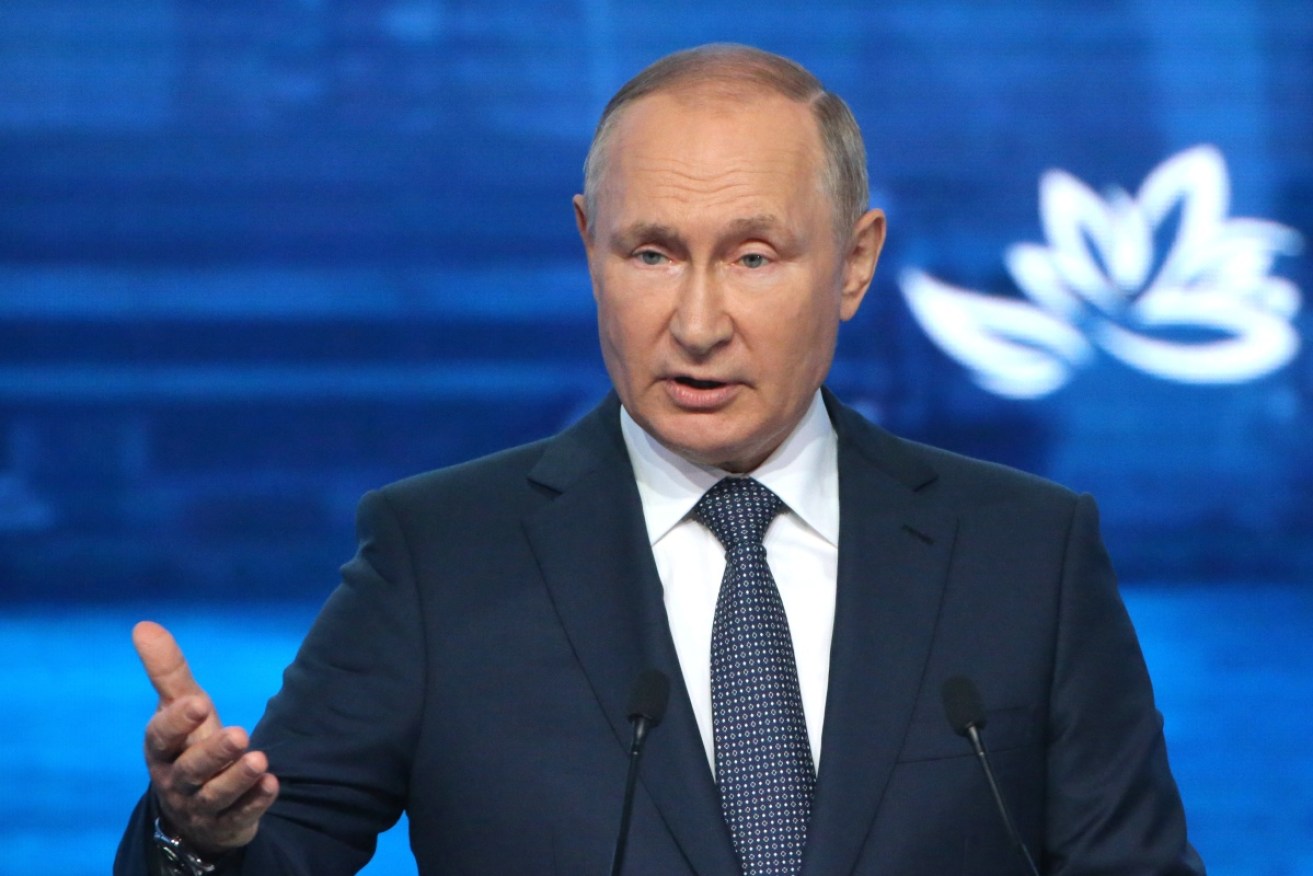
"We will not supply anything" if Brussels caps Russian gas prices, President Vladimir Putin says. Photo: Getty
Russian President Vladimir Putin has raised the idea of adding limits to a UN-brokered deal for Ukrainian grain exports via the Black Sea and threatened to halt all energy supplies to Europe if Brussels caps the price of Russian gas.
In a combative speech to an economic forum in Russia’s Far East region, Putin said Russia would not lose its war in Ukraine, which he says is being waged to ensure Russian security and to protect Russian-speakers there.
Ukraine remained guarded about its counteroffensive in the east but its top general warned Russia could turn to nuclear weapons and other nations could be drawn into a protracted “Third World War”.
Without giving details, Ukrainian President Volodymyr Zelensky reported “good news” from the Kharkiv region east of Kyiv, saying some settlements had been recaptured from Russian forces.
In an evening video address on Wednesday, President Zelensky cited “the extremely successful hits in areas where the occupiers are concentrated” and thanked Ukrainian artillery troops for what he said were successful strikes against Moscow’s forces in the south.
The Pentagon said Ukraine’s forces were making “slow but meaningful progress” on the battlefield and were doing better in the south than Russia.
Asked about what Russia calls its “special military operation” at the forum in Vladivostok, President Putin said: “We have not lost anything and will not lose anything.”
The grain pact, brokered by the United Nations and Turkey, created a protected corridor after Ukraine lost access to its main export route when Russia attacked via land, air and sea.
Designed to help ease global food prices by increasing supplies, the deal has been the only diplomatic breakthrough between Moscow and Kyiv in more than six months of war.
President Putin said the accord was delivering grain, fertiliser and other food to the European Union and Turkey rather than to poor countries, which he said was its original goal.
“It may be worth considering how to limit the export of grain and other food along this route,” he said, adding that Russia would continue to abide by its terms.
The pact is up for renewal in late November.
Ukraine said the terms were being strictly observed and there were no grounds for renegotiation.
President Zelensky accused Russia of “another blatant lie”, saying “a significant part is for the poorest and most needy countries”.
The Istanbul-based co-ordination group that monitors the deal says 30 per cent of cargo has gone to low and lower-middle income countries.
Meanwhile, the United States accused Moscow of war crimes by unlawfully detaining, interrogating and deporting up to 1.6 million Ukrainians, including 1800 children.
US Ambassador to the United Nations, Linda Thomas-Greenfield, told the UN Security Council that Russian officials were overseeing so-called filtration operations that “aim to identify individuals Russia deems insufficiently compliant or compatible to its control”.
Russian UN Ambassador Vassily Nebenzia described the council meeting as a “a new milestone in the disinformation campaign unleashed by Ukraine and its Western backers”.
The European Union prepared to propose a price cap on Russian gas to try to contain an energy crisis threatening widespread hardship this winter. In response, Putin threatened to halt all supplies if it took such a step.
“We will not supply gas, oil, coal, heating oil – we will not supply anything” if that occurs, he said. Europe usually imports about 40 per cent of its gas and 30 per cent of its oil from Russia.
Accusing Russia of “weaponising energy”, White House press secretary Karine Jean-Pierre said the United States had anticipated Russia’s potential move, and increased energy shipments would prepare Europe adequately.
Amid mounting tensions, Valeriy Zaluzhnyi, the Ukrainian army’s commander in chief, said there was a real threat of Russia using nuclear weapons.
“It is also impossible to completely rule out the possibility of the direct involvement of the world’s leading countries in a ‘limited’ nuclear conflict, in which the prospect of a Third World War is already directly visible”, he wrote in an article.
– AAP