Xi Jinping has congratulated Prime Minister Anthony Albanese for spearheading a “full turnaround” in Chinese-Australian relations.
The remarks, made as Albanese met China’s president on the sidelines of the APEC summit, were a far cry from the depths of the diplomatic deep freeze Australia found itself in during the former Coalition government.
”China-Australia friendship is what the people want,” Xi said in Shenzhen on Friday.
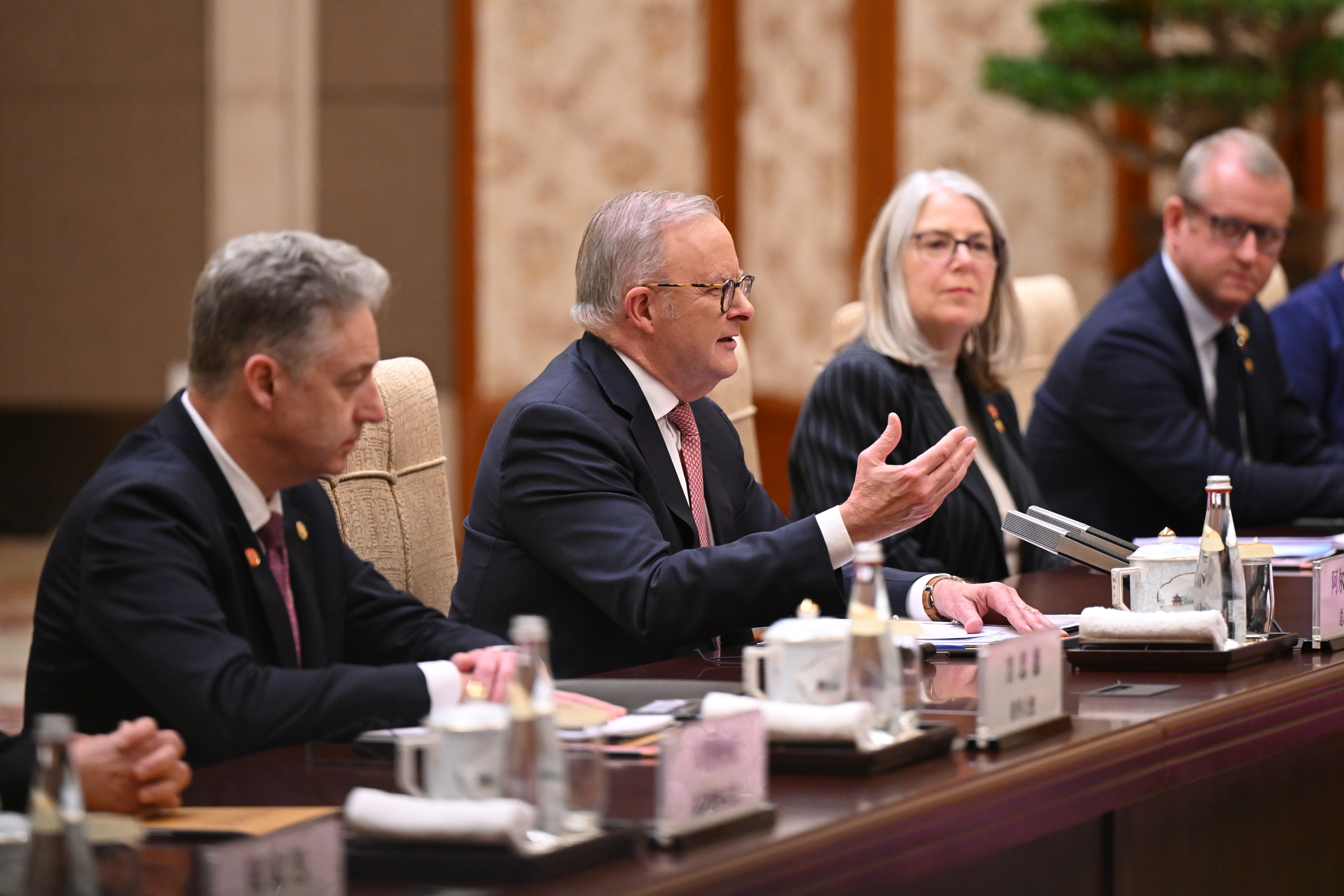
Albanese met top Chinese officials in Beijing with Australian business leaders. Photo: AAP
The Chinese leader welcomed Albanese at Kylin State Guesthouse, the sprawling complex where he hosted US President Donald Trump and Russian leader Vladimir Putin on Thursday.
The two leaders briefly shook hands and posed for photos before entering the meeting room.
Xi nodded appreciatively when Albanese said he’d visited Shenzhen in the late 1980s and said the ”remarkable” development there ”embodies the rise and growth of China”.
As media were ushered from the room for their fifth formal meeting, Xi called Albanese a ”China hand” because he’d visited the country so many times.
The exchange highlights how Albanese has overseen a reboot in the damaged relationship between Australia and its largest trading partner.
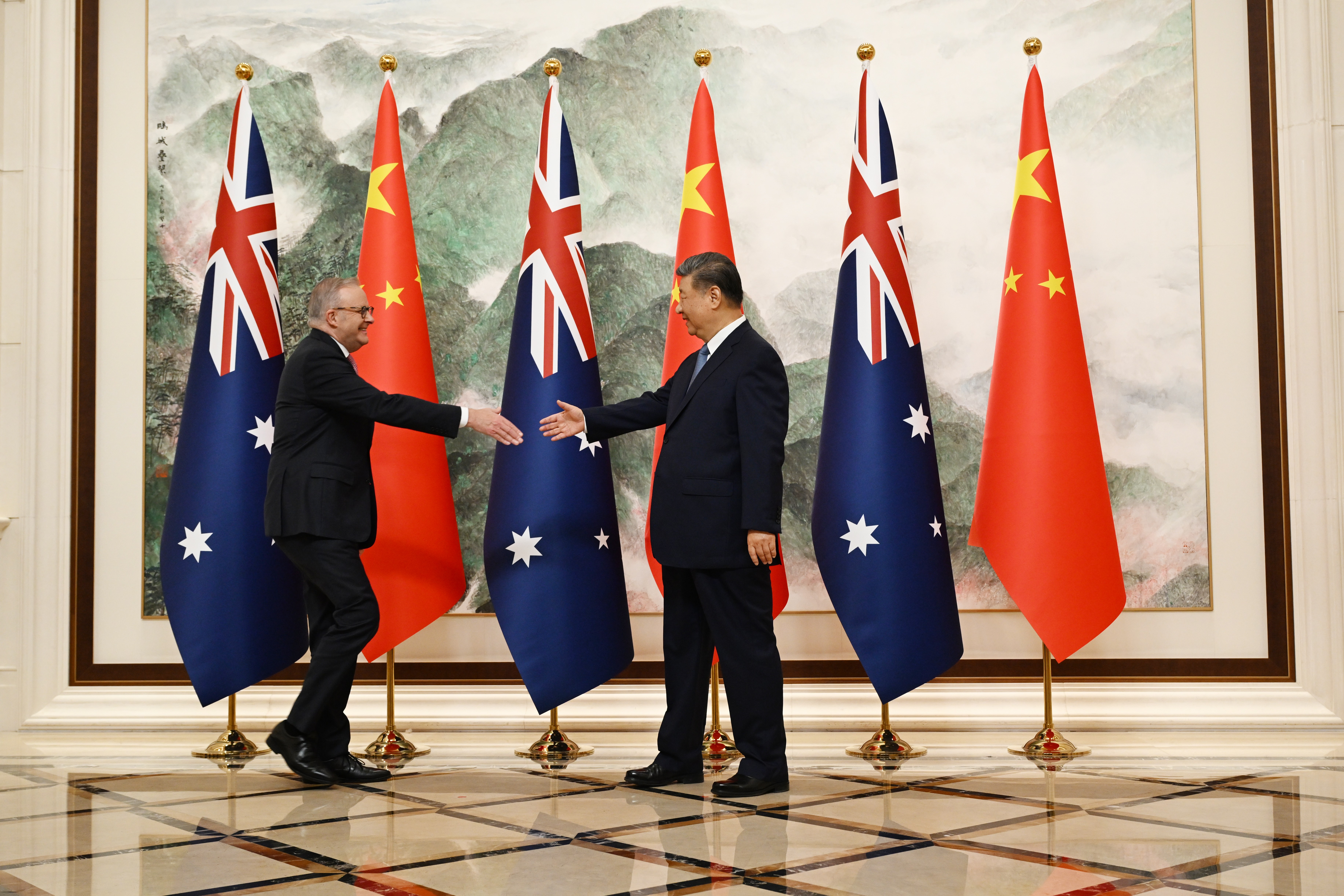
Anthony Albanese was warmly welcomed by Xi Jinping on the sidelines of the APEC Summit. Photo: AAP
Relations hit a nadir after then-prime minister Scott Morrison called for independent investigators to be let into Wuhan to probe the origins of the COVID-19 pandemic.
That resulted in a wave of punitive trade sanctions and economic blocks against Australian products including coal, beef and barley.
While most tariffs have since been lifted, Australian businesses pushed for greater market access for beef, wheat and rice exporters at a CEO roundtable in Beijing later on Friday.
In a bid to protect domestic farmers, China slapped a quota on beef imports from Australia and other countries for three years starting in 2026.
Such is the demand for Australian beef that Chinese importers reached this year’s 205,000 tonne quota in June, triggering a 55 per cent tariff rate on any additional imports.
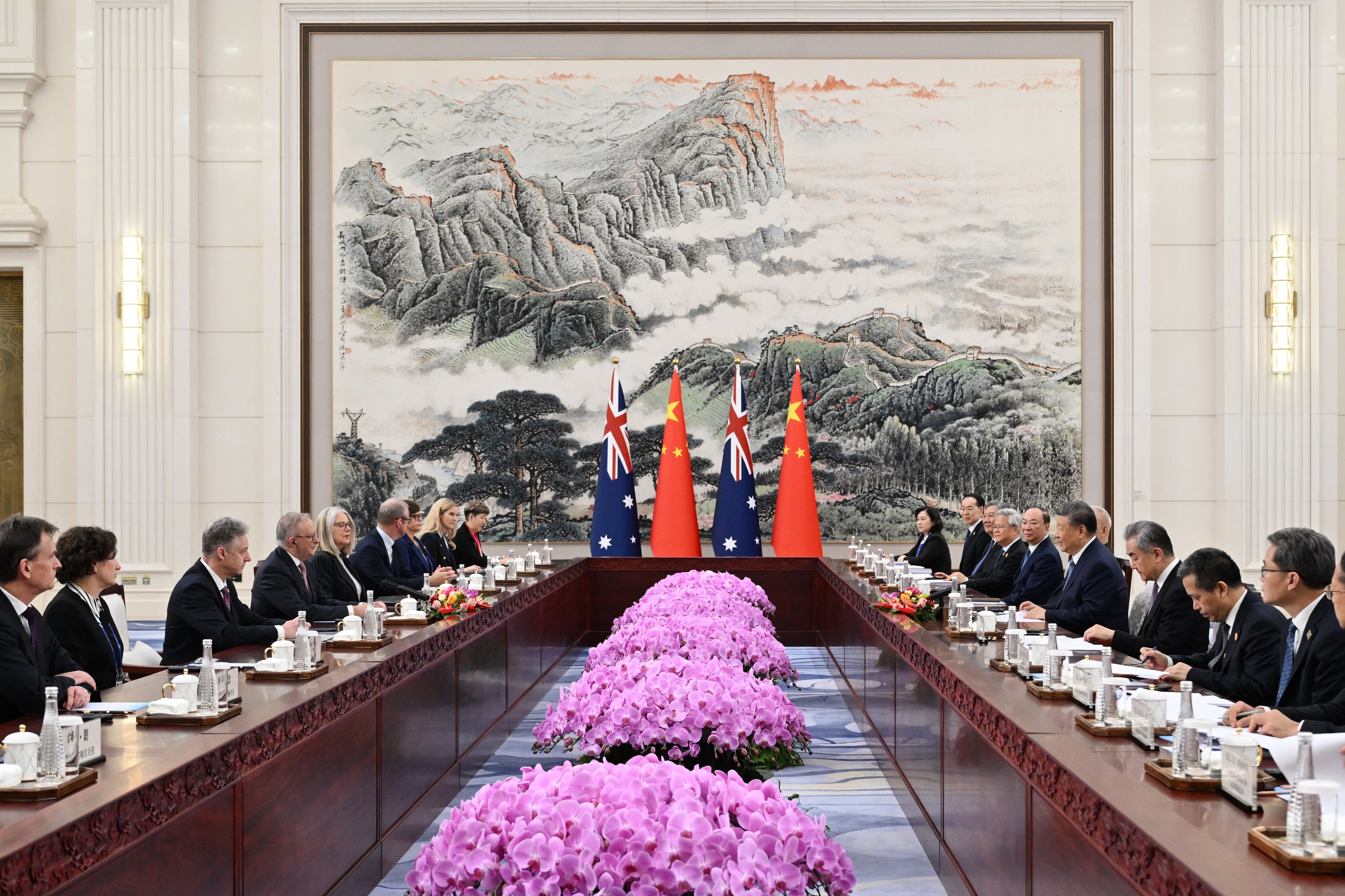
The Australian delegation was treated to a full reception at the Kylin State Guesthouse with Xi. Photo: AAP
Speaking at a supermarket in Shenzhen on Wednesday, Albanese said the speed at which the quota was reached was a sign of Chinese consumers’ love for the high-quality meat.
Given the backlog of demand, RaboBank analyst Angus Gidley-Baird predicts the 2027 quota could be exhausted by May.
The Australian Meat Industry Council has estimated the quota could reduce Australian beef exports to China by about $1 billion a year.
In his address to the roundtable, Premier Li Qiang, China’s second-highest ranking figure, said China took Australian businesses’ concerns seriously.
The positive tenor of the two nations’ relationship had not come easy, but stable relations were important with enough destabilising factors in the world, Li told Mr Albanese.
Albanese agreed.
“In those circumstances, navigating those turbulent seas but keeping our eyes on the horizon means that our relationship can bloom like the flowers that are in front of us here,” Mr Albanese said, gesturing to the lavender flowers in between the tables.
While no tangible progress was reached on the quotas on the night, Li and Albanese agreed to establish a dialogue on AI safety, governance and applications in their annual leaders’ meeting.
That comes despite Australia signing onto a US-led declaration with several other nations designed to break Chinese stranglehold of AI supply chains.