Political Lord of the Flies assumes the worst of us. We should focus on the best

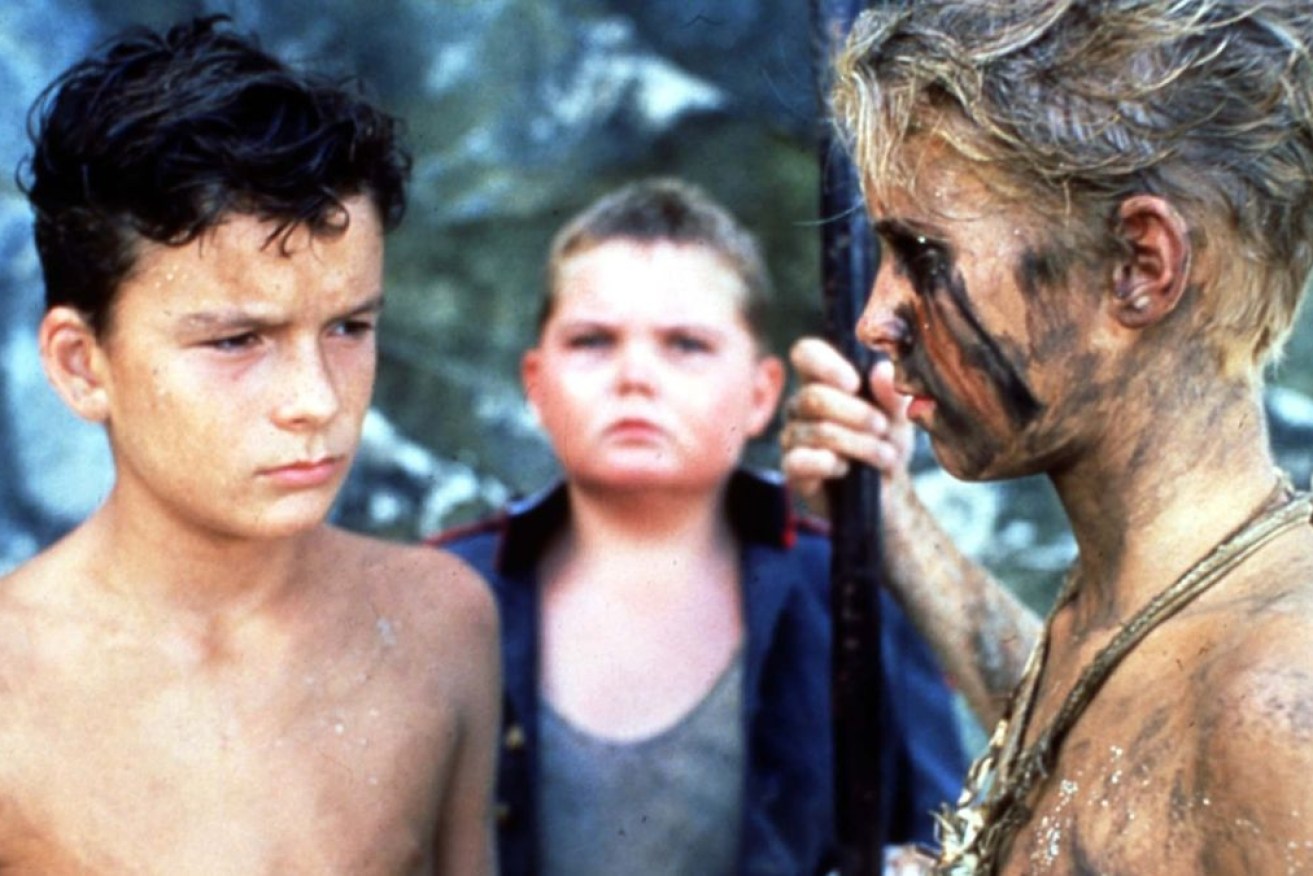
Golding's Lord of the Flies assumes the worst of human nature when the truth is often very different. Photo: AAP/Mary Evans Picture Library
In 1968, American ecologist and eugenicist Garrett Hardin published his essay, the “Tragedy of the Commons”, in Science magazine. It posited that humans, when left to their own devices, would “rationally” and individually exploit resources for their own gain, eventually destroying the resource altogether.
His main example was an open pasture shared by many herders. The herders compete with each other, with each rushing to increase the number of their stock, until the pasture is overrun with animals and everyone starves.
Hardin wasn’t the first to present this sort of argument – which at its core was a rallying cry for control over who was allowed to have children, but he helped popularise it in modern economic and political discourse.
It was, and still is, used as an example of why privatisation and control over resources is necessary – that the few must decide what is good for the many in order for us all to survive.
“Ruin is the destination toward which all men rush, each pursuing his own best interest in a society that believes in the freedom of the commons. Freedom in a commons brings ruin to all,” is one of the more popular lines in the essay, which is still used in arguments today.
But the tragedy in the tragedy of the commons was it always assumed the humans’ worst natures would come to the fore.
Political scientist Elinor Ostrom was among those who proved the theory wrong. In 2009, she became the first woman to win the Nobel prize in economics for her work on “economic governance, especially the commons”.
Ostrom’s work centred around how people organise themselves to share and manage resources naturally, devising boundaries and rules among themselves to prevent degradation of the environment and the shared resource.
When resources are exploited tends to be when it is for commercial gain, or owned by the few, rather than any collective responsibility towards nature or the resource. Of course, there will always be those who seek to take as much as they can, but to assume that is the default paints a picture of why so many people seem to hunger for the controls offered by regressive politicians pushing regressive policies around immigration, women’s bodies, welfare and tax.
Assuming the worst of human nature always travels further then considering actual human nature, which is multifaceted and flawed and generous and, more often than not, surprisingly kind.
In 1954, William Golding published his first novel, Lord of the Flies, which was the school boy version of what would become known as the tragedy of the commons.
A plane crash lands a group of boys on a deserted island. In the absence of guides, the group descends into paranoia, fights for control, violence and eventually death.
The novel was of its time – the division that followed World War II and the remnants of hate we never truly snuffed out. But, again, the book’s themes are taken as fact for many, who believe that we would revert to our lizard brains almost immediately.
But in 1965, six boys who got bored with boarding school life in Tonga stole a fishing boat and went on an adventure. A a storm blew them off course and, after eight days adrift at sea, the boys made it to a remote, uninhabited island.
They lived there together for 15 months, surviving by working together. As one of the boys, Sione Filipe Totau, told the ABC in 2020, it was the Tongan way to lean on community:
“A group of people … don’t know where they are and don’t have enough food and water … maybe they don’t agree on the same thing, but they have to try to get together and work together and make everything work so they can survive.”
The actual tragedy is we automatically assume we can do no better, even in the face of every day evidence that we can, and do.
Today’s politics reflects this. The worst of human nature is being exploited. Modest tax changes are presented as tax grabs that will be the end of “everyday wealth”. Migration is presented as “other people” stealing from “everyday” Australians (whoever they are supposed to be).
Fossil fuel companies and the subsidies and tax breaks they hold so dear are considered sacrosanct as controllers of our resources for our own good. But people accessing the National Disability Insurance Scheme are ripping us off.
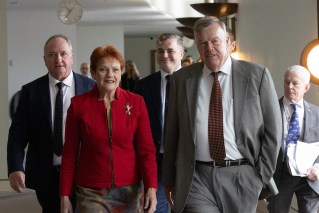
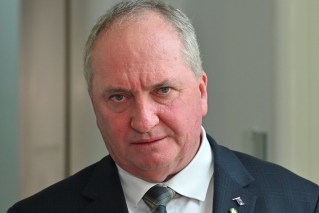
The politicians benefiting most from this tragedy are those who are working the hardest to uphold the status quo. Pauline Hanson and Barnaby Joyce never criticise the ultra-wealthy, or those who hold most of our resources – they spread their messages.
Hanson and Joyce are no friends to the worker, and Hanson is not only independently wealthy, she is part of the elite she claims to be fighting. But in the absence of hope, and a more equal distribution of our wealth and resources, it’s easy to see how people fall for the Lord of the Flies version.
That’s the actual tragedy of the commons.
Amy Remeikis is a contributing editor for The New Daily and chief political analyst for The Australia Institute
Want to see more stories from The New Daily in your Google search results?
- Click here to set The New Daily as a preferred source.
- Tick the box next to "The New Daily". That's it.
Libs' top culture warrior tied in free-speech knots

Did the Prime Minister dabble in pork barrelling?


Pauline Hanson doubles down over ‘traitor’ cartoon
Economy not the only reason for One Nation's rise
Joyce sort-of apologises for One Nation cartoon