Remote Australian island to be evacuated over bird flu fears
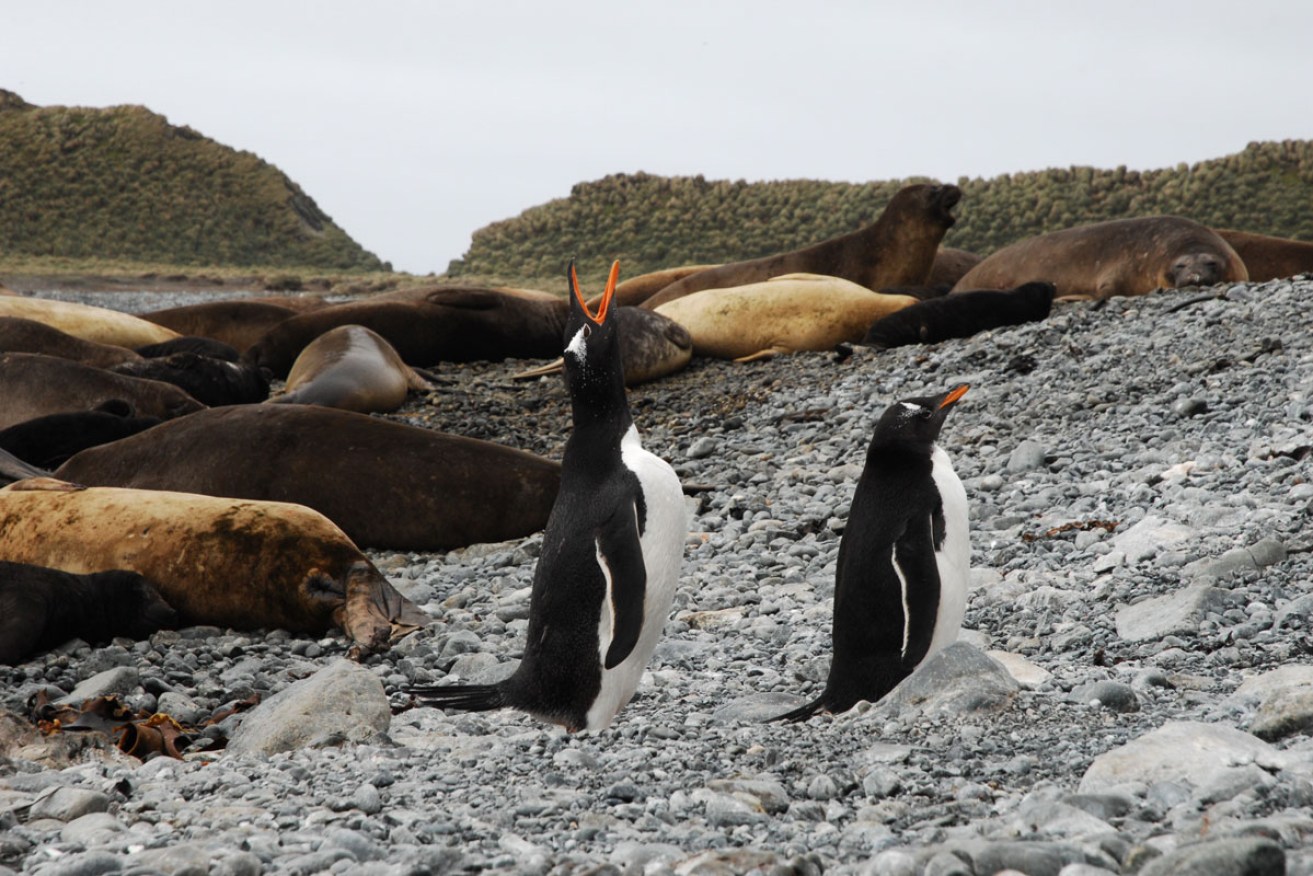
A bird flu outbreak on Macquarie Island would be devastating. Photo: AAP
Researchers on a remote World Heritage island will be evacuated amid the worsening bird flu outbreak, as it was confirmed that a dead dolphin in South Australia has tested positive for the deadly virus.
The Australian Antarctic Division said on Friday it will withdraw staff from the Australian territory of Macquarie Island in the Southern Ocean to protect the mental well-being of scientists.
While the government maintains the risk to human health from HN bird flu remains low, there are fears that a significant mortality event during the upcoming seal breeding season could cause severe psychological harm.
Macquarie Island, a World Heritage area, is home to large colonies of seals, including more than 80,000 southern elephant seals, and millions of breeding seabirds including several penguin species.
While the island is officially yet to be impacted by HN, the government’s decision is an indication that it is taking the likelihood of the virus reaching its shores seriously.
The Department of Climate Change, Energy, Environment and Water is predicting a high likelihood of a significant mortality event during the upcoming breeding season.
The island, where 24 expeditioners currently live and work, was established on the Southern Ocean island in 1948. It is roughly half-way between Tasmania and Antarctica.
The health of expeditioners had to be the highest priority, the department’s deputy secretary Sean Sullivan said.
“Our expeditioners already live and work in one of the world’s most remote and challenging environments,” he said.
“It is important that we minimise any additional risks that could affect the well-being of our people and the safe operation of our stations.”
Elephant seals have proved particularly susceptible to H5 bird flu, with pup mortality rates of more than 90 per cent discovered in some colonies in the sub-Antarctic external territory of Heard Island and McDonald Islands.
Australia’s icebreaking research and supply vessel, RSV Nuyina, will travel to the island in early October to pick up workers and essential cargo.
A bird flu outbreak on Macquarie Island would be devastating, Sullivan said.
“There would be thousands of deaths. You can imagine the impacts that would have in terms of being restricted to base,” he told the ABC.
“Obviously the distress of being around a mass mortality event, as well as impacts with respect to air quality … that would have long-term impacts on staff.”
The move comes as South Australia – the state hardest hit by bird flu – on Friday reported 46 new events, including the first detection of the virus in a common dolphin.
SA’s chief veterinary officer Skye Fruean told ABC News it was likely the dolphin had “eaten a bird or interacted closely with a wild bird”.
“We know that dolphins are highly susceptible, which means they are at risk,” she said.
Other species to succumb to the virus include a fox, a brown falcon – the first Australian detection of the H5 strain in a bird of prey – and an Australian raven.
Meanwhile, Sullivan said the Australian Antarctic Division was exploring options for monitoring the situation on Macquarie Island, with a view to returning expeditioners to the station in coming seasons.
“We remain committed to maintaining a long-term presence on Macquarie Island,” he said.
Want to see more stories from The New Daily in your Google search results?
- Click here to set The New Daily as a preferred source.
- Tick the box next to "The New Daily". That's it.



Jumping castle tragedy inquest set to begin